
The Russia sanctions impact is becoming increasingly visible across the country’s economy, according to the European Union’s sanctions envoy, who warned that Moscow’s war-driven economic model may face mounting strain as early as 2026.
In an interview with The Guardian, EU sanctions envoy David O’Sullivan said Western measures are having a “significant impact” on Russia’s economy, even if they fall short of being a decisive solution on their own. While acknowledging persistent efforts to evade restrictions, O’Sullivan argued that the cumulative pressure is reshaping Russia’s financial and industrial landscape.
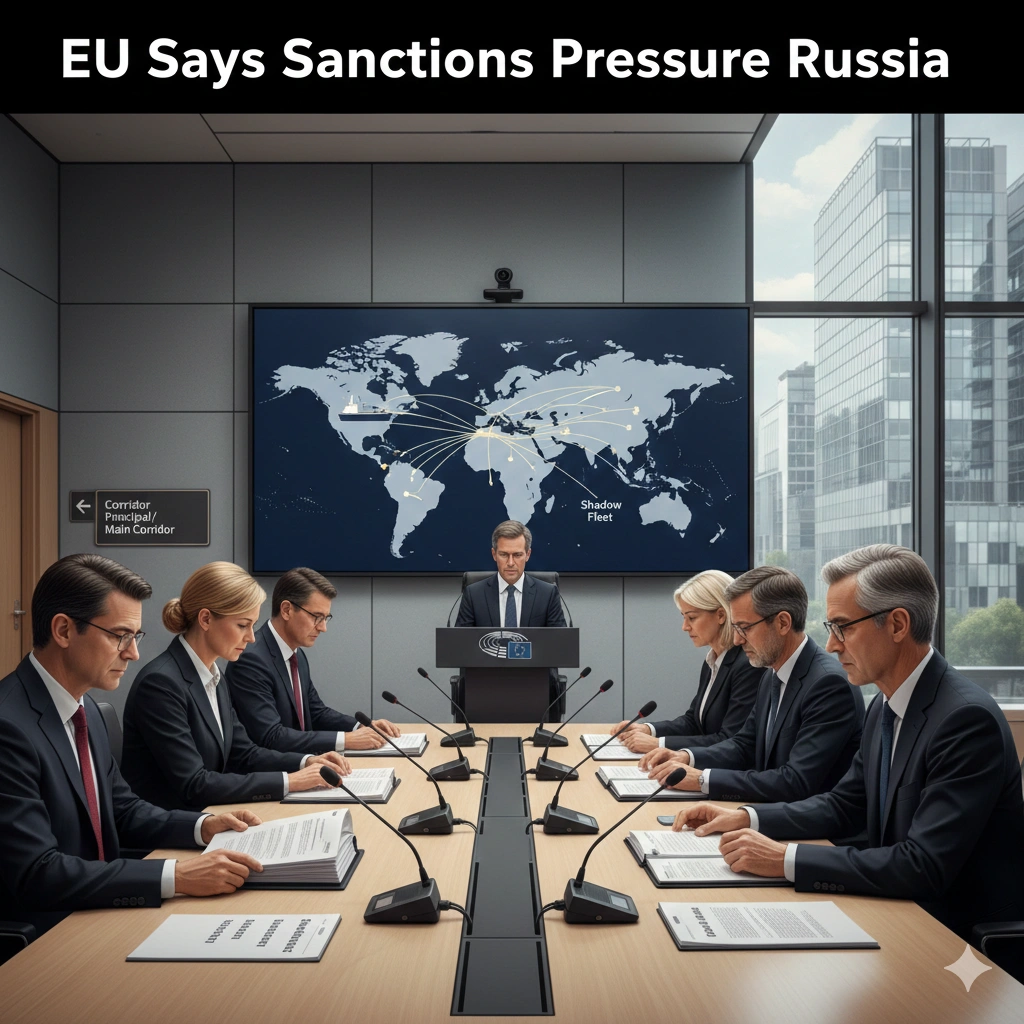
EU Envoy: Sanctions Are Not a ‘Silver Bullet’
O’Sullivan cautioned against viewing sanctions as an instant fix, describing them as “not a silver bullet.” However, he emphasized that the Russia sanctions impact is steadily compounding, particularly as Moscow pivots more deeply toward a war-focused economic model.
According to the envoy, the prioritization of military production and defense spending is increasingly distorting Russia’s civilian economy. He suggested that 2026 could mark a turning point, when sustaining this model becomes more difficult due to resource constraints, reduced revenues, and structural inefficiencies.
This assessment reflects growing confidence within EU institutions that the long-term Russia sanctions impact—rather than immediate shock—is the central objective of the sanctions regime.
Crackdown on Sanctions Evasion and the ‘Shadow Fleet’
A key element of the EU’s strategy has been tightening enforcement to limit circumvention. O’Sullivan said Brussels has focused heavily on blocking re-export routes for critical components used in Russian weapons systems.
These routes have included parts of Central Asia, the Caucasus, Turkey, Serbia, the United Arab Emirates, and to a lesser extent Malaysia, according to the envoy. Efforts have also intensified against Russia’s so-called “shadow fleet”—a network of vessels used to move oil outside traditional shipping and insurance systems.
Targeting these channels is intended to reduce Russia’s ability to finance the war while maintaining energy exports.
China’s Role Raises Ongoing EU Concerns
O’Sullivan also addressed China’s relationship with Russia, stating that Beijing is “backfilling” support, though not through direct military equipment. He said EU leaders have repeatedly raised concerns with Chinese officials about the flow of goods that could indirectly support Russia’s war effort.
While stopping short of accusing China of violating sanctions outright, the envoy suggested that economic and technological support remains a sensitive issue in EU-China relations.
Falling Energy Revenues Add Financial Pressure
Separate reporting by Reuters adds weight to the EU’s assessment. Russia’s oil and gas revenues, a crucial funding source for the federal budget, fell sharply in January 2026 to their lowest level since July 2020, according to data from Russia’s finance ministry.
The decline was attributed to lower global crude prices and a stronger rouble, both of which have reduced export earnings. The drop highlights the vulnerability of Russia’s fiscal position as sanctions continue to constrain energy income.
For the EU, these figures reinforce the argument that the Russia sanctions impact is gradually narrowing Moscow’s economic room for maneuver.
War Economy Faces Mounting Trade-Offs
O’Sullivan argued that Russia’s increasing reliance on defense production comes at the expense of broader economic stability. Civilian industries, consumer markets, and long-term investment are being sidelined as resources are redirected toward sustaining the war.
This imbalance, he suggested, may become harder to manage over time—particularly if revenues remain under pressure and access to technology and capital continues to be restricted.
Conclusion
The EU’s latest assessment suggests that Russia sanctions are biting more deeply than headline resilience figures may suggest. While Moscow has adapted to restrictions, the growing strain on energy revenues, trade flows, and the civilian economy is raising questions about the sustainability of a prolonged war economy.
As enforcement tightens and evasion routes narrow, 2026 may emerge as a critical test of whether Russia can continue to absorb the economic costs of the conflict.
For more details & sources visit: The Guardian (with Reuters context)
For more regional updates and industry insights, visit our Russia News Page