
Summary
Russia’s formal withdrawal from a decades-old plutonium disposal agreement with the United States marks the latest setback in post–Cold War nuclear cooperation — though experts say the move is largely symbolic.
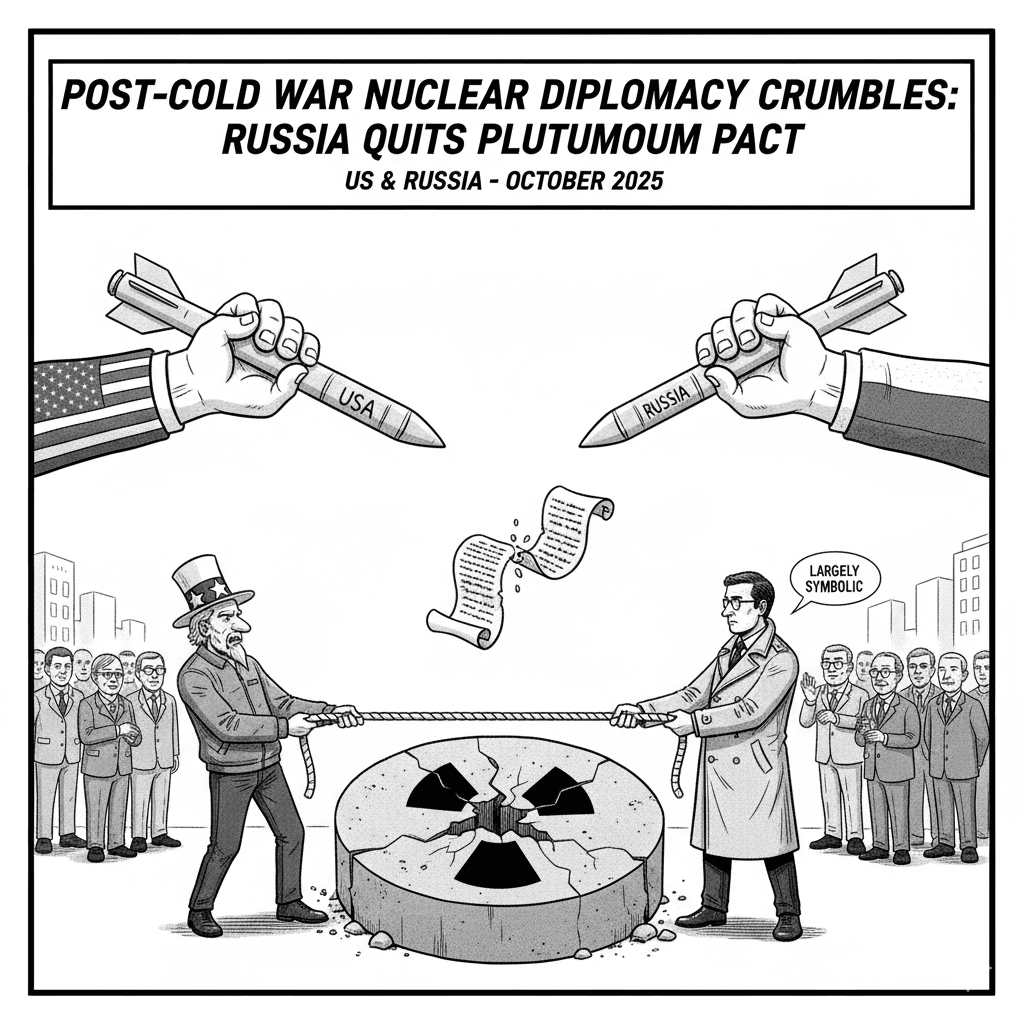
The original deal, signed in the 1990s, aimed to reduce nuclear risks by dismantling warheads and safely disposing of their fissile materials. While uranium from decommissioned weapons was successfully converted into nuclear power fuel under the Megatons to Megawatts program, plutonium disposal proved far more contentious.
The U.S. favored vitrification — mixing plutonium with glass to render it unusable — while Russia insisted on reprocessing it into nuclear reactor fuel. Critics argued that Moscow’s method allowed for the material’s potential reuse, undermining the pact’s purpose.
With the latest withdrawal, both nations retain vast plutonium reserves, and the cooperative framework for securing these materials effectively collapses. Analysts note the move underscores a broader unraveling of U.S.–Russia arms control efforts rather than an immediate security threat.