
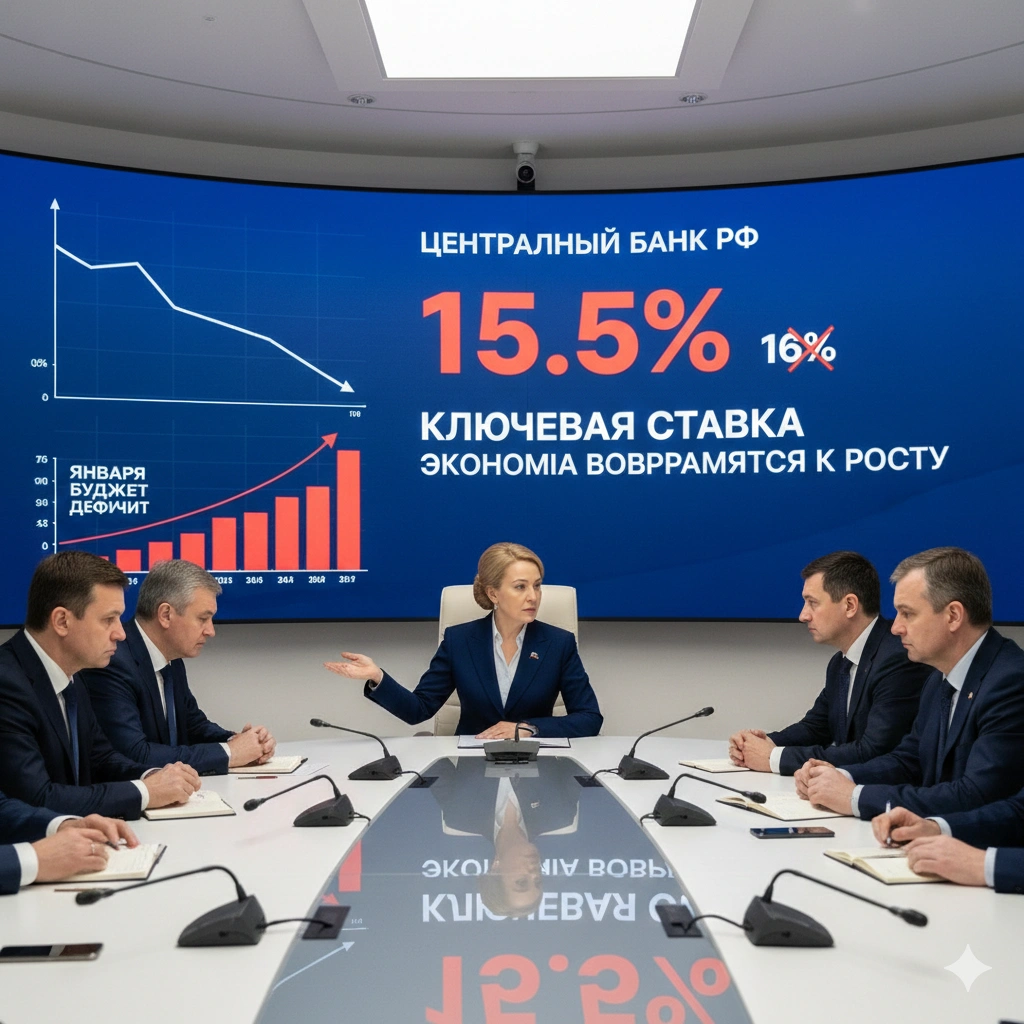
Russia economy crisis dynamics have shifted significantly as the Bank of Russia recently trimmed its key interest rate from 16% to 15.5%. This pivotal move suggests that while officials claim the nation is returning to a “balanced growth path,” the underlying structural strains tell a much more volatile story. As military spending continues to dominate the fiscal landscape, the cooling of inflation serves as a double-edged sword for a Kremlin trying to manage a sluggish GDP and a ballooning budget deficit.
The Reality of the Russia Economy Crisis in 2026
The current Russia economy crisis is defined by a delicate balancing act between aggressive military funding and the necessity of domestic price stability. By lowering the benchmark rate by 50 basis points, the Central Bank is signaling a transition toward a looser monetary stance. However, this transition is fraught with risk. The economy grew by a mere 1% in 2025, a stagnation that President Vladimir Putin described as “man-made,” attributing the slowdown to the very high-interest rates previously used to curb inflation.
While the Bank of Russia aims to steer inflation toward its 4% target, the reality on the ground remains complex. A one-off jump in prices occurred in January due to expanded Value-Added Tax (VAT) coverage, yet policymakers argue that underlying pressures are dissipating. For the average citizen, the Russia economy crisis manifests as a high cost of living despite the technical cooling of consumer price indices. The bank’s willingness to cut rates now indicates a desperate need to stimulate investment in non-military sectors that have been starved of capital for nearly two years.
Russia Economy Crisis
The “Russia economy crisis” is not merely a reflection of interest rates but a direct consequence of the massive 1.718-trillion-ruble deficit recorded in January alone. This figure represents nearly half of the government’s entire budget gap target for the year 2026. When nearly 50% of a yearly deficit is realized in a single month, the term “crisis” becomes an understatement. The shortfall is largely driven by a 32% drop in oil and gas revenues compared to targets, highlighting Russia’s increasing vulnerability to global price fluctuations and Western-led energy pressures.
Furthermore, the Russia economy crisis is exacerbated by the strengthening of the ruble, which, paradoxically, hurts the budget by reducing the local currency value of energy exports. As the Finance Ministry struggles to fill the coffers, the reliance on the National Wealth Fund increases, leaving the state with fewer buffers for future shocks. This H2 section confirms that the Russia economy crisis is deeply structural, tied to the state’s inability to diversify revenue streams away from volatile hydrocarbons while maintaining a wartime footing.
Oil Revenue Volatility and the Energy Deficit
A major pillar of the Russia economy crisis is the plummeting revenue from the energy sector. In January 2026, energy receipts were roughly half of what they were in the same month the previous year. This decline is attributed to several critical factors:
- Lower global crude prices driven by increased production from non-OPEC+ nations.
- Steeper discounts required to move Russian Urals grade oil to Asian markets.
- Pressure from the Trump administration on major buyers like India to scale back purchases.
Without a recovery in oil prices or a significant reduction in the discounts offered to “friendly” nations, the Russia economy crisis will likely see the full-year deficit exceed 5 trillion rubles. This fiscal gap forces the Central Bank to maintain a cautious path; they must lower rates to help businesses survive, but they cannot lower them so fast that the ruble collapses, further fueling the Russia economy crisis.
The Impact of Military Spending on GDP
The Russia economy crisis is uniquely characterized by “military Keynesianism,” where high state spending on defense keeps unemployment low but stifles innovation in the private sector. The 2025 GDP growth of 1% is a testament to how an overheated labor market—driven by military recruitment and defense manufacturing—actually hampers long-term expansion. With the labor force stretched thin, companies are forced to raise wages, which contributes to the very inflation the Central Bank is trying to fight.
Economists like Sofia Donets have noted that the central bank’s recent guidance is the clearest signal since 2023 of a turning point. However, this turning point is conditional. If the Russia economy crisis deepens due to further sanctions or a total loss of the Indian energy market, the “looser stance” could be abruptly reversed. The “man-made” slowdown mentioned by Putin suggests a rift between the Kremlin’s desire for growth and the Central Bank’s mandate for stability.
Transitioning to a Balanced Growth Path?
The Central Bank claims the move to 15.5% helps move the nation toward a “balanced growth path.” To achieve this, several hurdles must be cleared:
- Inflation Stabilization: Bringing the current 6.3% inflation rate down to the 4% target consistently.
- Investment Recovery: Encouraging private firms to borrow again after the 21% rate peak of 2024.
- Fiscal Discipline: Managing the deficit without printing money, which would destroy the ruble’s value.
Despite these goals, the Russia economy crisis remains a shadow over every policy decision. The “balanced growth” mentioned by officials seems more like a controlled descent into a low-growth, high-debt environment. For investors still navigating the Russian market, the Russia economy crisis represents a period of extreme unpredictability where geopolitical shifts can override economic fundamentals in an instant.
Future Outlook: Risks and Projections for 2026
Looking ahead, the Russia economy crisis will be dictated by the interaction between Moscow and Washington. The Trump administration’s influence on global energy trade is a wildcard that could either stabilize or shatter the Russian budget. If India significantly reduces its intake of Russian crude, the Russia economy crisis will enter a new, more dangerous phase of revenue starvation.
The Bank of Russia has hinted that further cuts are possible, but only if inflation continues its downward trend. If the Russia economy crisis causes the ruble to weaken significantly against the dollar or yuan, the bank may be forced to hike rates again, creating a “stop-go” economic cycle that kills long-term planning. The resilience of the Russian consumer is also being tested, as the VAT increases have already eaten into disposable income, making the Russia economy crisis a lived reality for millions.
Conclusion: Navigating the Fragile Economy
In summary, the Russia economy crisis is not solved by a 0.5% rate cut. It is a deeply embedded structural issue where war spending, energy sanctions, and fiscal deficits collide. While the Central Bank attempts to project an image of “balanced growth,” the January budget data suggests a different story—one of a nation burning through its reserves to maintain a status quo that is increasingly under pressure.
The Russia economy crisis will remain the dominant theme for the remainder of 2026. Stakeholders must watch the deficit numbers and the ruble’s exchange rate more closely than the official inflation figures. As the Kremlin navigates this Russia economy crisis, the margin for error is slimmer than ever, and the cost of failure is a return to the hyper-inflationary risks seen in decades past.
For more details & sources visit: The Moscow Times
For more regional updates and industry insights, visit our Russia News Page