
A recent Chinese study has identified ribosomal dysfunction as a key driver of age-related infertility, offering new insights into reproductive aging. The research, led by Nankai University, demonstrates that abnormal ribosomal activity in eggs and surrounding cumulus cells disrupts protein synthesis, impairing embryo development.
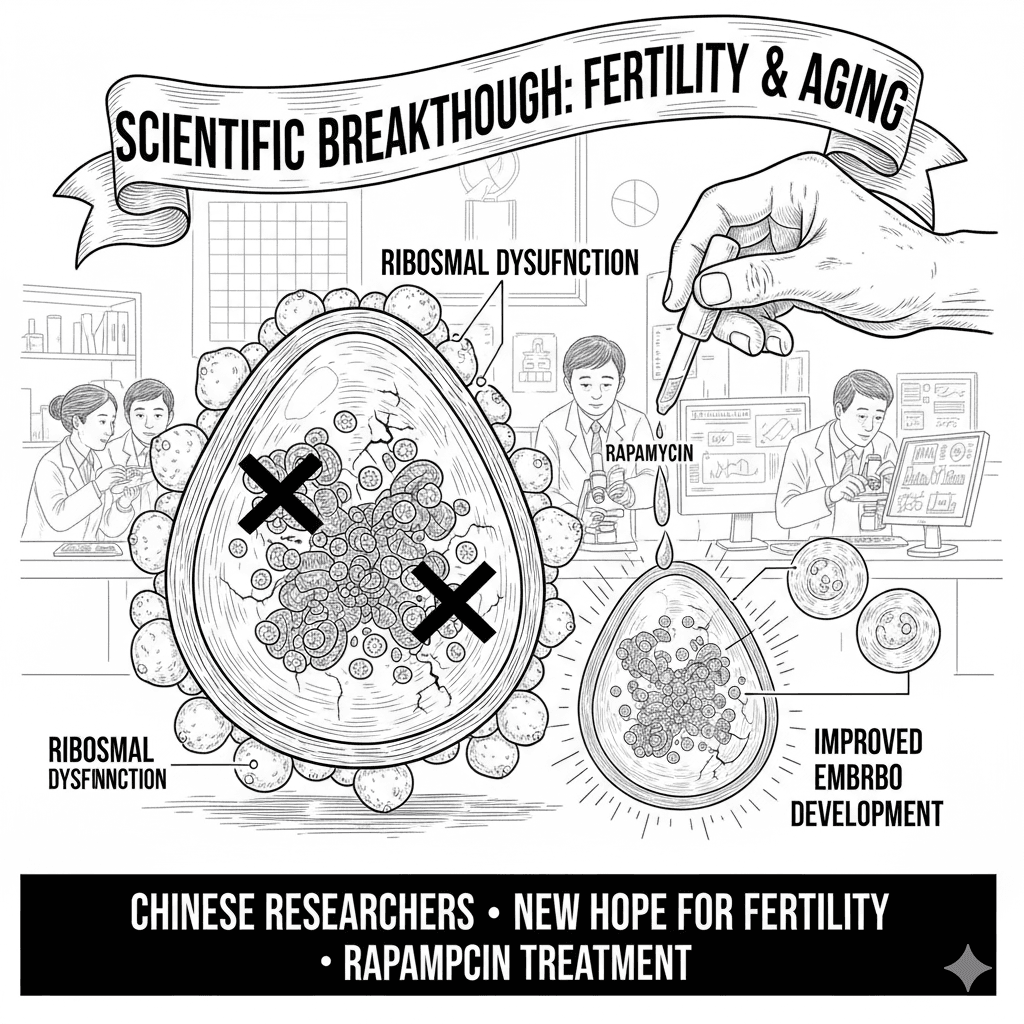
Ribosomal Dysfunction and Its Impact on Fertility
Researchers found that women in their mid-thirties often experience abnormal ribosomal gene translation in oocytes. This disruption in protein production causes chromosome separation errors, reducing egg quality and hampering embryo development.
Additionally, cumulus cells, which support the ovarian environment essential for egg maturation, also show ribosomal dysfunction. This weakens the ovarian niche, further contributing to age-related fertility decline.
Rapamycin Restores Egg Quality
The team tested rapamycin, a ribosomal translation inhibitor, and observed significant improvements in both egg quality and the surrounding ovarian environment. In clinical trials, women who had previously experienced embryo development failures received short-term rapamycin treatment. Results showed the production of high-quality blastocysts, resulting in successful pregnancies and live births.
This discovery highlights ribosomal activity as a previously overlooked factor in reproductive aging and offers a potential therapeutic target to combat fertility decline in older women.
Implications and Future Research
The study emphasizes the need for larger, multi-center trials to confirm rapamycin’s efficacy and refine treatment protocols. Scientists hope that further research will expand clinical options for women struggling with age-related infertility and improve overall success rates in assisted reproductive technologies (ART).
This breakthrough underscores the growing importance of molecular-level studies in fertility research and opens doors for innovative therapies targeting cellular aging mechanisms in reproductive medicine.
Xinhua News: Chinese Study on Ribosomal Dysfunction and Fertility
For more China-related updates, visit our China News page.