
The wave of recall petitions in Alberta has escalated, with Premier Danielle Smith now among 21 provincial representatives targeted by efforts to remove them from office. This growing political movement reflects mounting public discontent across multiple constituencies and underscores the contentious use of recall mechanisms in Canadian politics.
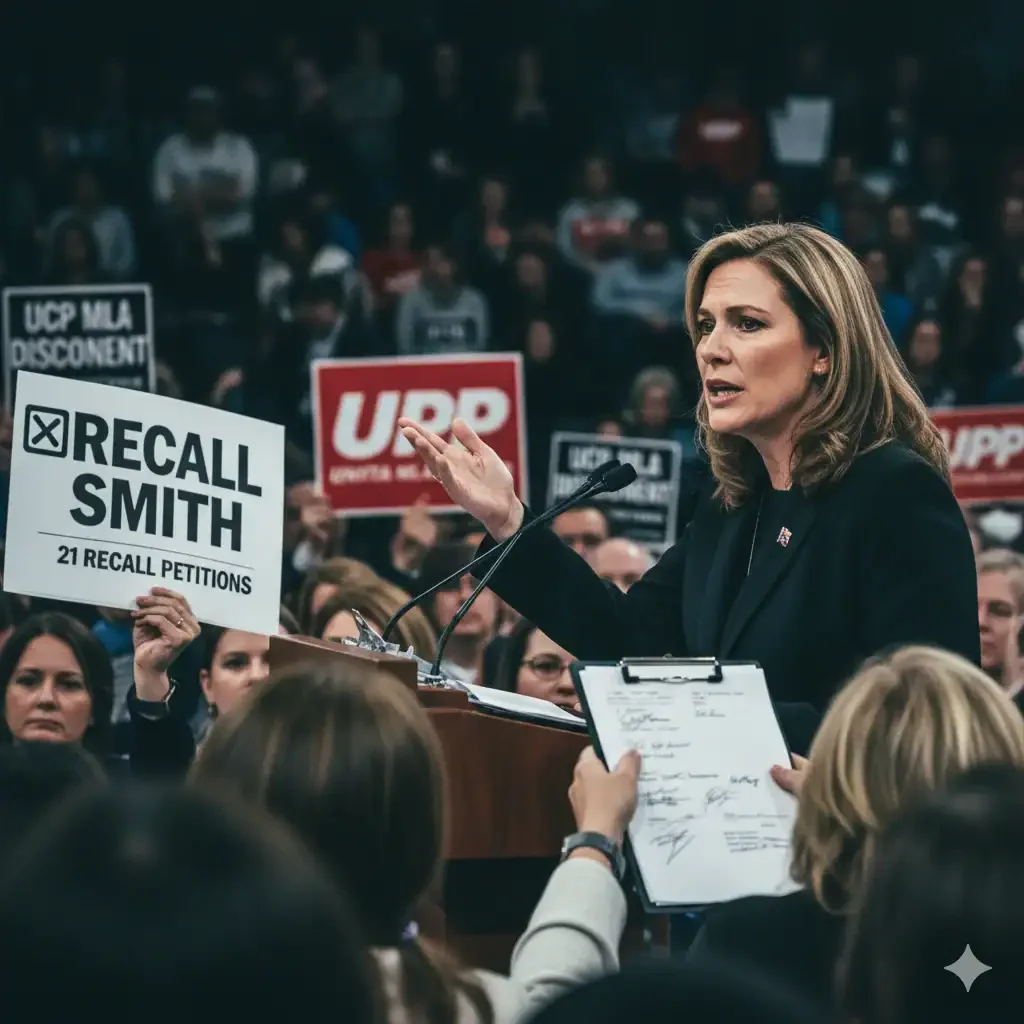
Alberta’s Recall Petitions Process Explained
Alberta’s recall rules allow voters to petition for the removal of their elected representatives if they believe their MLA has failed to perform their duties effectively. Petitioners must gather signatures from at least 60% of registered voters in a riding within three months. Once successful, a vote is triggered to determine whether the MLA retains their seat. While the process is designed to address serious misconduct, its increasing use for political disagreements has sparked debate over potential reform.
Premier Danielle Smith Responds to Recall Petitions
Elections Alberta recently approved new recall petitions targeting Premier Danielle Smith, Environment Minister Rebecca Schulz, and Technology and Innovation Minister Nate Glubish. The petition against Smith, filed by Heather VanSnick, accuses the premier of neglecting her Brooks–Medicine Hat constituency and failing to stay engaged with local concerns.
Premier Smith rejected these claims, highlighting her involvement in major regional projects and regular town hall meetings as evidence of her commitment to constituents. She also warned that the proliferation of petitions suggests the recall process is being “weaponized” for political purposes rather than addressing genuine misconduct, and she called for a potential legislative review of the mechanism.
Political and Public Implications of Recall Petitions
The United Conservative Party (UCP) has defended its members, emphasizing that recall petitions are intended for serious misconduct, not political disagreements. Nevertheless, the surge in petitions demonstrates growing dissatisfaction among voters and reflects broader tensions in Alberta’s political landscape. Even unsuccessful petitions can shape public debate, highlight constituent concerns, and pressure elected officials to address local issues more effectively.
Political observers note that recall petitions can serve as a tool for democratic accountability, but their increasing use raises questions about balance between legitimate oversight and political maneuvering. Analysts argue that Alberta’s current rules may need updating to ensure that the mechanism fulfills its intended purpose without being exploited for partisan advantage.
The Growing Recall Petition Movement in Alberta
Alongside Premier Smith, 20 UCP MLAs are now facing recall petitions, signaling a broader campaign against the ruling party. The petitions reflect dissatisfaction over issues ranging from perceived neglect of local concerns to broader policy disagreements. While each petition’s success depends on collecting the required signatures, the movement itself is already reshaping political discourse in the province.
The debate over recall petitions also brings attention to the role of citizen engagement in holding elected officials accountable. Advocates argue that recalls are a vital part of democratic governance, empowering voters to take direct action when they feel representation falls short. Critics, however, caution that frequent or politically motivated petitions could undermine stability and distract lawmakers from effective governance.
Conclusion: Recall Petitions as a Reflection of Public Sentiment
The approval of recall petitions against Premier Danielle Smith and 20 other Alberta MLAs highlights both the strengths and challenges of direct democratic tools in provincial politics. While the petitions serve as a check on elected officials, they also spark debate over fairness, intent, and legislative oversight. As Alberta voters engage with this process, the outcome of these petitions—whether successful or symbolic—will likely influence political strategies, policy priorities, and public discourse across the province.
For more updates and related stories, visit our Canada News page.