
Real-time economic data is the cornerstone of a new initiative by the Office for National Statistics to provide faster insights into the UK’s financial health. By utilizing experimental indicators, the ONS can now track high-frequency shifts in energy consumption, transport patterns, and consumer behavior before traditional reports are even finalized. These official statistics are designed to bridge the gap between long-term trends and the immediate reality of the market. This shift toward rapid-response data allows policymakers and businesses to react to fluctuations with unprecedented speed and accuracy in an ever-changing landscape.
The integration of novel data sources into the real-time economic data framework marks a significant evolution in how the United Kingdom monitors its social and economic change. Instead of waiting for monthly or quarterly summaries, stakeholders can now access daily gas prices and weekly fuel demand figures. This granular level of detail is essential for understanding the immediate impact of global events on the domestic economy. As the ONS refines these innovative methods, the UK moves closer to a fully data-driven model of governance that prioritizes transparency and agility.
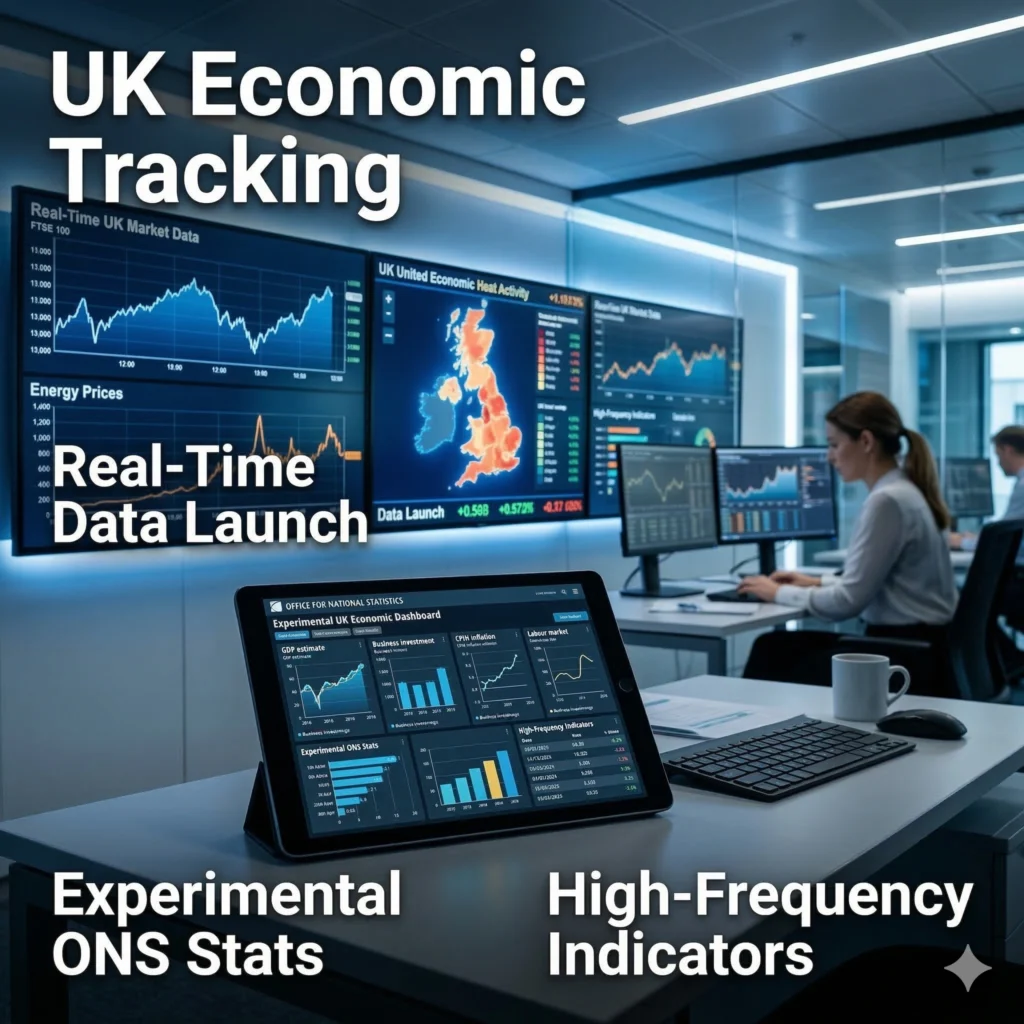
Real-Time Economic Data
The newly released real-time economic data focuses heavily on the energy sector to provide an immediate snapshot of national market fluctuations. Daily monitoring of Great Britain’s gas prices and electricity system prices allows for a constant pulse check on the cost of living and industrial overheads. Additionally, weekly figures for automotive fuel demand per transaction offer a clear look at mobility trends and consumer spending at the pump. These high-frequency energy indicators are vital for identifying inflationary pressures long before they appear in broader consumer price indices.
Beyond energy, the real-time economic data initiative monitors the transport sector through daily UK flight counts and monthly vehicle registration reports. Tracking the volume of air travel provides a proxy for both business connectivity and the recovery of the tourism industry. Meanwhile, new vehicle production levels serve as a primary indicator of the health of the manufacturing sector. By combining these diverse metrics, the ONS creates a comprehensive view of how people and goods move across the country, reflecting the underlying strength of the national economy.
Labor Market Stability and Business Activity
A critical component of the real-time economic data set is the weekly tracking of potential redundancies across Great Britain. This metric provides a leading indicator of labor market health, allowing the government to anticipate shifts in unemployment before they become systemic. Monitoring business activity through these weekly notifications ensures that interventions can be targeted toward vulnerable sectors in a timely manner. This proactive approach to labor statistics represents a departure from traditional, retrospective reporting styles that often lag behind the actual economic cycle.
Furthermore, real-time economic data includes an analysis of business resilience through financial transaction monitoring. By observing how companies manage their operational costs and debt obligations, the ONS can identify signs of distress early. This high-frequency data is particularly useful during periods of economic transition or external shocks when monthly data is too slow to capture the full picture. The goal is to provide a safety net of information that supports both small businesses and large corporations in navigating a volatile marketplace.
Consumer Behavior and Financial Resilience
Consumer spending is the engine of the UK economy, and real-time economic data captures this through weekly debit card transaction indices. These figures, provided by specific financial institutions, offer an anonymous yet detailed look at where and how citizens are spending their money. Whether it is a surge in retail therapy or a tightening of belts in the grocery sector, these indices reveal the public’s financial sentiment in real time. This information is invaluable for retailers trying to manage inventory and for economists forecasting future growth.
- Weekly indices track spending patterns across diverse retail categories.
- Monthly statistics on Direct Debit failure rates highlight household stress.
- Average transaction amounts help gauge the impact of inflation on individuals.
- Footfall data provides a regional breakdown of high street health.
Financial resilience is also measured through the monitoring of Direct Debit failures and transaction averages within the real-time economic data framework. A rise in failed payments often serves as an early warning sign of household financial pressure and potential debt crises. By tracking these failures monthly, the ONS can provide a clearer picture of which regions or demographics are struggling most. This data-driven insight allows for more effective social policy and targeted support for those facing the greatest financial challenges.
Housing Market and Energy Performance
The housing market remains a primary pillar of national wealth, and real-time economic data now includes weekly counts of Energy Performance Certificates. In England and Wales, the issuance of these certificates is a strong proxy for residential property transactions and new construction activity. Because every home sold or rented requires a certificate, this high-frequency count offers a more current view of the market than traditional land registry data. It allows analysts to see immediate reactions to interest rate changes or housing policy announcements.
The inclusion of energy efficiency data within the real-time economic data set also reflects the UK’s commitment to social and environmental change. By tracking the quality of the housing stock alongside transaction volumes, the ONS provides a multi-dimensional view of the market. This intersection of economic activity and environmental standards is increasingly important for long-term urban planning. As more data becomes available, the relationship between property values and energy efficiency will become a key focus for both investors and homeowners.
Retail Footfall and Regional Prosperity
Monitoring retail footfall is essential for understanding the vitality of the UK’s high streets and shopping centers. The real-time economic data provided by the ONS categorizes footfall by location and region, offering a detailed map of economic activity across the country. A decline in footfall in specific urban centers can signal a shift toward online shopping or a localized reduction in consumer confidence. Conversely, high footfall in regional hubs suggests a robust local economy and successful community engagement.
- Footfall counts are updated weekly to reflect seasonal shopping trends.
- Data is segmented by high streets, retail parks, and shopping malls.
- Comparisons between regions reveal disparities in economic recovery.
- This information helps local councils plan for infrastructure and transport.
Using real-time economic data to gauge retail health allows for more nuanced economic development strategies at the local level. Instead of a one-size-fits-all approach, policymakers can identify which specific areas require regeneration or support. This geographic granularity ensures that the benefits of national economic growth are tracked and encouraged in every corner of the United Kingdom. It also provides businesses with the evidence they need to make informed decisions about store locations and regional investments.
Experimental Methodologies and Future Development
The ONS explicitly labels these new indicators as experimental because they utilize innovative methods that are still under development. While the real-time economic data is highly accurate, the methodologies for rapid response surveys and big data integration are constantly being refined. This transparent approach allows the ONS to iterate on its techniques while providing the public with access to the most current information available. It represents a “living” statistical framework that evolves alongside the technology it uses.
As the program matures, the real-time economic data set will likely expand to include even more diverse sources, such as satellite imagery or social media sentiment. The goal is to create a seamless flow of information that connects every aspect of British life to its economic consequences. This initiative places the United Kingdom at the forefront of global statistical innovation, setting a benchmark for other nations to follow. The transition from static reports to dynamic data streams is an essential step toward modernizing the national administrative infrastructure.
Impact on Policy Monitoring and Governance
The primary benefit of real-time economic data is its ability to inform policy in a way that was previously impossible. When a sudden shift occurs in energy prices or labor demand, the government can see the impact within days rather than months. This speed is critical for mitigating the effects of economic crises and for maximizing the benefits of positive growth trends. Data-driven governance ensures that decisions are based on the latest evidence rather than outdated assumptions or late-arriving reports.
- Policymakers can simulate the impact of new regulations using current data.
- Emergency support can be triggered faster based on redundancy alerts.
- Public spending can be adjusted in real time to meet changing needs.
By making this real-time economic data available to the public, the ONS also increases institutional accountability and transparency. Citizens and researchers can independently verify the health of the economy using the same metrics as the government. This democratized access to information fosters a more informed public debate and a deeper understanding of the complexities of modern economic life. It is a cornerstone of a more resilient and responsive democratic society in the 21st century.
Conclusion: A New Era for UK Statistics
The release of experimental real-time economic data by the ONS marks the beginning of a new era for United Kingdom statistics. By embracing high-frequency indicators and novel data sources, the country is better equipped to navigate the challenges of the future. The ability to monitor social and economic change as it happens provides a competitive advantage in the global market. While these indicators are still experimental, their potential to transform our understanding of the economy is already becoming clear.
As we look toward the remainder of 2026, the continued development of real-time economic data will be a priority for the Office for National Statistics. Each update brings a more precise view of how the UK lives, works, and spends. This initiative is not just about numbers; it is about providing a clearer picture of the collective journey of the nation. With this powerful new tool, the United Kingdom is well-positioned to build a more stable and prosperous future for all its citizens.
The integration of these indicators into the daily lives of businesses and policymakers will eventually make them as common as the weather forecast. In a world where every second counts, having access to real-time economic data is no longer a luxury—it is a necessity. The ONS has taken a bold step toward this future, ensuring that the UK remains a leader in statistical excellence and economic transparency. The journey of data innovation continues, promising even deeper insights in the years to come.
For more details & sources visit: IndexBox
For more updates about the United Kingdom, visit our UK news page.