
The Qatar Iran mediation strategy is emerging as a crucial diplomatic channel amid escalating US-Iran tensions and rising Gulf security risks. Doha is positioning itself as a mediator to maintain communication between Washington and Tehran, reducing the likelihood of rapid regional spillover that could destabilize energy, security, and political landscapes across the Gulf.
Rising US-Iran Tensions and Regional Risks (H2)
The US-Iran confrontation has intensified, with direct strikes, sharper rhetoric, and weakening informal restraints heightening the danger of unintended escalation. Dense energy infrastructure, strategic shipping lanes, and critical military installations in the Gulf make any miscalculation costly.
Qatar’s mediation approach emphasizes containment: keeping open lines to both parties while creating political space for restraint when direct talks are infeasible. Analysts argue that Doha’s method is less about neutrality and more about pragmatic risk management in a highly volatile region.
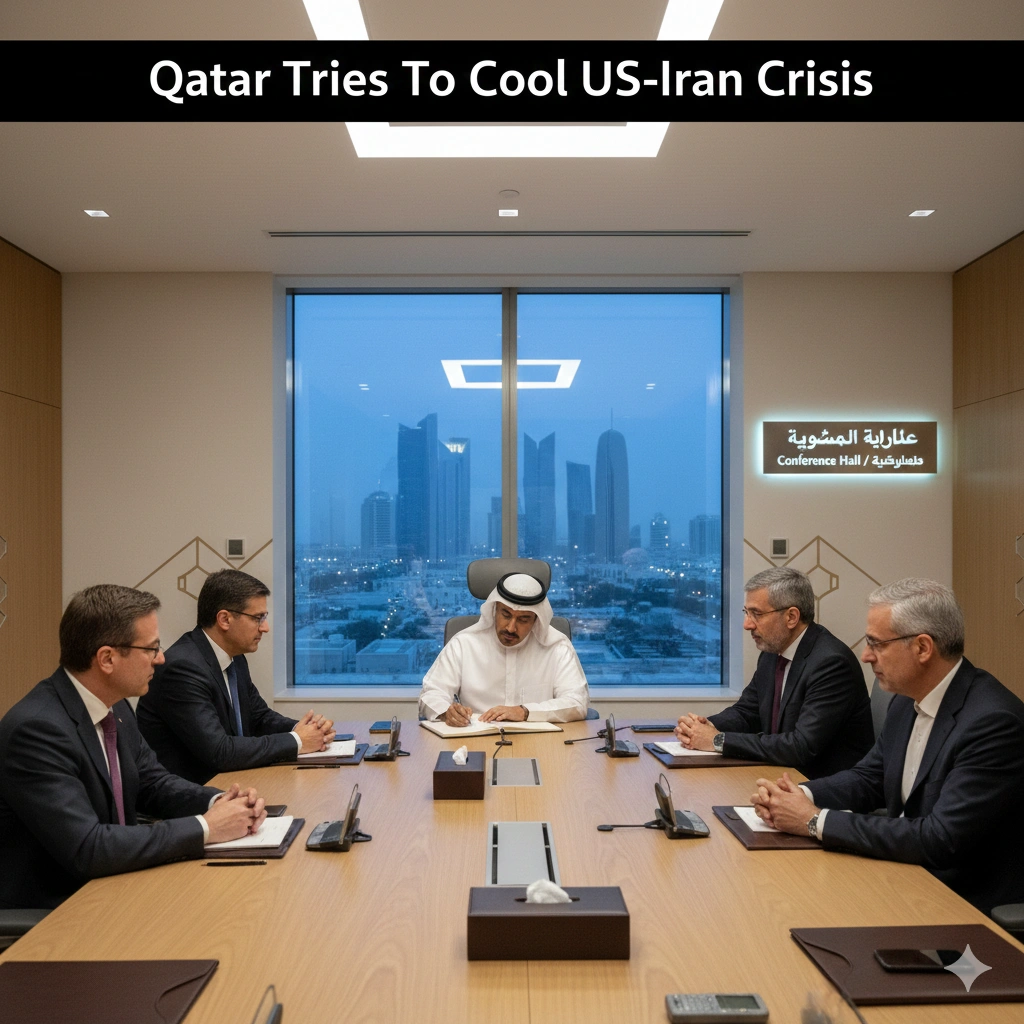
Qatar’s Track Record in Diplomacy (H2)
The Qatar Iran mediation track record includes several high-profile interventions:
- September 2023: Facilitated a US-Iran prisoner exchange
- Negotiated the release of previously frozen Iranian funds for humanitarian purposes after months of indirect talks
- June 2025: Engaged both sides after US attacks on Iranian nuclear facilities and a subsequent Iranian missile strike on Al Udeid Air Base in Qatar, helping sustain a fragile ceasefire
These examples demonstrate Doha’s ability to act as a credible, trusted intermediary capable of mitigating escalation risks.
Containment over Escalation: Regional Alignment (H3)
Qatar’s approach increasingly aligns with other Gulf states, particularly Saudi Arabia and Oman, which favor dialogue-first strategies. This regional alignment underscores a shared preference for containment over regime-toppling conflict, even under mounting pressure from Iran-aligned groups.
By maintaining channels to both Washington and Tehran, Qatar reduces the probability of miscalculation and external shocks, including:
- Refugee flows
- Maritime insecurity
- Energy-market disruptions
This risk-averse strategy ensures Gulf states are better prepared to absorb potential spillovers without destabilizing domestic economies.
Strategic Calculations Behind Qatar Iran Mediation (H3)
The Qatar Iran mediation strategy reflects several calculated considerations:
- Maintaining Doha’s credibility as a neutral facilitator in Gulf diplomacy
- Reducing the risk of miscommunication that could trigger rapid escalation
- Supporting incremental progress when direct negotiations are stalled
- Safeguarding Gulf economic and security interests
This strategy highlights Qatar’s long-term vision: balancing diplomacy, influence, and regional stability while protecting national and allied interests.
Potential Implications for Gulf Security (H2)
Without proactive mediation, the Gulf faces multiple risks from US-Iran tensions, including:
- Escalating missile exchanges targeting critical bases and infrastructure
- Political fragmentation within Iran if escalation pressures the regime
- Spillover effects on trade routes and global energy supply
- Strained humanitarian systems due to potential refugee flows
Qatar’s mediation role aims to prevent these outcomes by fostering communication, trust-building, and incremental agreements that maintain stability.
Conclusion: Qatar Iran Mediation as a Stabilizing Force (H2)
The Qatar Iran mediation initiative represents a pragmatic approach to a highly unstable regional landscape. By leveraging trust with both Washington and Tehran, Doha provides a critical buffer against escalation while supporting Gulf security and economic stability.
With tensions likely to persist, Qatar’s role in facilitating dialogue, sustaining ceasefires, and enabling humanitarian and political initiatives positions it as a central actor in Gulf diplomacy. The strategy underscores the value of measured diplomacy over confrontation, offering a roadmap for regional containment amid uncertainty.
For further insights, see the Al Jazeera report.
For more news, visit 360 News Orbit.