
President Karol Nawrocki Signs Law Barring High-Risk Cybersecurity Vendors to protect the nation against escalating foreign digital threats. This landmark legislation marks a significant turning point in Poland’s approach to national defense in an increasingly volatile digital landscape. By enacting these strict measures, the government aims to eliminate vulnerabilities within critical infrastructure that have previously been exploited by hostile actors.
The new law specifically targets high-risk vendors from non-NATO countries, with a primary focus on securing the telecommunications and energy sectors. President Karol Nawrocki emphasized that digital security is no longer an optional luxury but a fundamental component of Poland’s broader national defense strategy. As the country faces a record number of cyberattacks, this move signals a proactive stance against external interference.
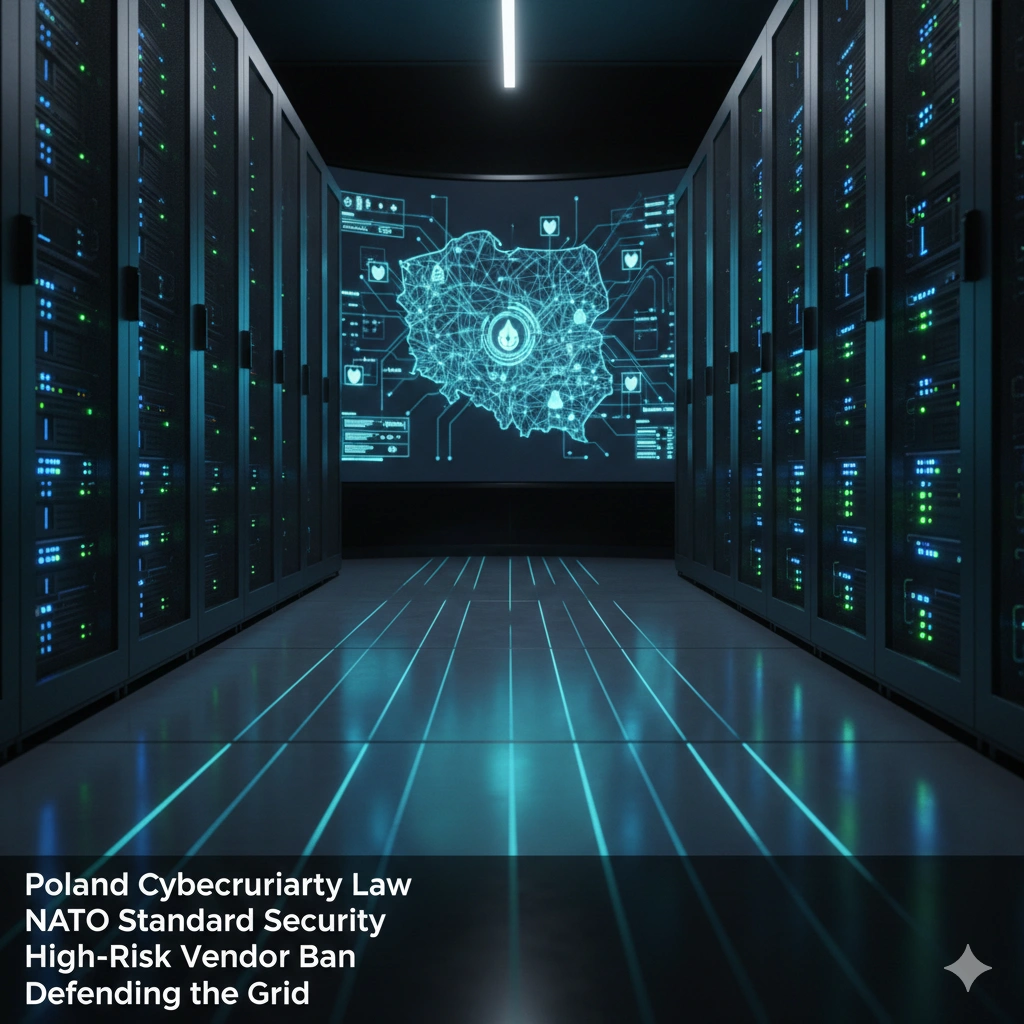
President Karol Nawrocki Signs Law Barring High-Risk Cybersecurity Vendors
The legislative journey of this bill reflects a rare moment of political unity within the Polish Sejm. With 407 members voting in favor, the mandate for President Karol Nawrocki Signs Law Barring High-Risk Cybersecurity Vendors was clear and decisive across the spectrum. This overwhelming support underscores the perceived urgency of the digital threats facing the modern Polish state today.
The implementation of this law aligns Poland with broader European Union directives designed to secure essential economic sectors. By establishing a legal framework to exclude high-risk suppliers, the government can now systematically audit and remove equipment that poses a potential threat. This process is essential for maintaining the integrity of sensitive state data and public utility networks.
Implementation of European Union Digital Security Directives
Poland’s decision to tighten its borders against untrusted technology is deeply rooted in its obligations to the European Union. The directive provides a roadmap for member states to identify and mitigate risks associated with 5G networks and other vital communication systems. Adopting these standards ensures that Poland remains a reliable partner within the integrated European security architecture.
Furthermore, the legislation addresses specific vulnerabilities identified in recent technical audits conducted by internal security agencies. These audits revealed that reliance on certain foreign components created “backdoors” that could be exploited during a conflict. By mandating the removal of these high-risk elements, the state is effectively closing doors to potential digital espionage.
Addressing the Proliferation of Global Cyberattacks
Data from the Microsoft Digital Defense Report recently highlighted a sobering reality for the Polish government and its citizens. The report indicated that Poland suffered the highest number of cyberattacks in the EU over the past twelve months. This statistic served as a catalyst for President Karol Nawrocki Signs Law Barring High-Risk Cybersecurity Vendors without further administrative delay.
The nature of these attacks has shifted from simple data theft to sophisticated attempts at infrastructure sabotage. Cybercriminals and state-sponsored actors have frequently targeted Polish government portals and financial institutions with increasing frequency. This constant bombardment necessitated a robust legal response that goes beyond traditional firewall protections and enters the realm of geopolitical strategy.
Protecting the National Power Grid from Sabotage
A major cyberattack on the Polish power grid in late December served as a final wake-up call for the administration. This incident nearly resulted in a nationwide blackout, which would have had catastrophic consequences for hospitals and emergency services. The narrow escape highlighted the physical dangers posed by digital vulnerabilities in the energy sector.
Because the power grid relies on automated systems, the hardware used in these networks must be beyond reproach. President Karol Nawrocki Signs Law Barring High-Risk Cybersecurity Vendors to ensure that no compromised hardware can trigger a total system failure. Protecting the energy supply is now viewed as being just as critical as guarding the physical borders of the nation.
Strategic Shifts in Modern Warfare Tactics
During the signing ceremony, the President offered a poignant justification for the strict rules governing high-risk technology. Nawrocki stated that modern warfare often begins with digital clicks rather than physical gunshots, highlighting a shift in global conflict. This perspective recognizes that a country can be paralyzed through its screens before a single soldier crosses a border.
By treating cybersecurity as a theater of war, the Polish government is allocating resources more effectively toward digital deterrence. The new law empowers the military’s cyber defense units to work closely with private providers to ensure compliance. This collaborative approach is designed to create a “digital shield” that is resilient against both state and non-state aggressors.
The Targeted Exclusion of Non-NATO Suppliers
High-risk vendors from non-NATO nations, such as China, are the primary targets of the restrictive measures within the bill. These companies often face allegations of having close ties to their respective intelligence services, creating a conflict of interest. For Poland, a frontline NATO member, the risk of using such technology in sensitive areas was deemed unacceptably high.
While the law does not explicitly name specific corporations in every clause, the criteria for “high-risk” are clearly defined. Factors such as the supplier’s corporate structure and the legal environment of their home country are now under intense scrutiny. This shift marks a move away from cost-based procurement toward a security-first procurement model for state infrastructure.
Balancing National Security and Economic Costs
Despite the widespread support for the bill, some business groups have expressed anger regarding the high costs of compliance. Replacing existing infrastructure from barred vendors is an expensive and logistically challenging undertaking for many private enterprises. These organizations argue that the government should provide financial assistance to ease the transition to approved NATO-sourced equipment.
The cost of ripping and replacing telecommunications hardware could run into billions of zlotys over the next decade. Businesses are concerned that these expenses will eventually be passed on to Polish consumers in the form of higher service fees. However, the government maintains that the cost of a successful large-scale cyberattack would be infinitely higher for the economy.
President Karol Nawrocki Signs Law Barring High-Risk Cybersecurity Vendors
The President referred the act to the Constitutional Tribunal to address legal concerns raised by these private sector groups. While President Karol Nawrocki Signs Law Barring High-Risk Cybersecurity Vendors, he wants to ensure the law stands up to rigorous legal challenges. This dual approach allows the law to take effect while seeking a final judicial stamp of approval.
This referral is a strategic move to prevent future litigation from derailing the security initiatives established by the bill. By proactively asking the Tribunal to review the text, the President is attempting to provide long-term stability for the tech industry. It ensures that once the transition begins, there will be no legal reversals that could leave infrastructure in a state of limbo.
Political Continuity in Digital Affairs
The legislation was originally initiated under the previous administration and finalized by the current government led by Donald Tusk. This continuity demonstrates that cybersecurity is a non-partisan issue in Poland, transcending traditional political rivalries. Both current and former digital affairs ministers urged the president to approve the measure to maintain national momentum.
Such cooperation is rare in the current Polish political climate, which speaks volumes about the perceived threat level. The transition of the bill through two different government cabinets ensures that the technical requirements remain consistent. This administrative stability provides a clear roadmap for the telecommunications industry to follow over the coming years as they phase out restricted vendors.
Impact on Polish Telecommunications Infrastructure
As the President Karol Karol Nawrocki Signs Law Barring High-Risk Cybersecurity Vendors, the telecom sector must now pivot its long-term strategy. The rollout of 5G networks in Poland will now rely exclusively on vendors from trusted democratic nations. This ensures that the backbone of the future digital economy is built on a foundation of transparency and mutual security interests.
Service providers are now required to conduct regular security audits and report any potential breaches to the National Cybersecurity System. These new reporting requirements are designed to create a real-time map of the digital threat landscape. By sharing information across the industry, Poland can respond more quickly to emerging patterns of cyber aggression from high-risk entities.
Future Implications for Foreign Relations
The signing of this law is likely to have significant implications for Poland’s diplomatic relations with non-NATO countries. Specifically, it signals a cooling of tech-based trade relations with nations that do not meet the new security criteria. This shift is part of a larger global trend where nations are choosing security over the cheapest available technology.
While this may lead to short-term diplomatic tensions, the Polish government views it as a necessary trade-off for sovereign safety. The priority remains the protection of Polish citizens and their data from foreign surveillance and interference. Moving forward, Poland will likely seek deeper technological integration with its Baltic and European neighbors to bolster collective resilience.
Strengthening the National Cybersecurity System
The bill also introduces enhancements to the National Cybersecurity System (KSC), granting it more power to intervene in emergencies. This body will oversee the classification of vendors and provide guidance to both public and private entities. With the President Karol Nawrocki Signs Law Barring High-Risk Cybersecurity Vendors, the KSC becomes a central pillar of the nation’s defense apparatus.
Investment in domestic cybersecurity talent is another expected outcome of this legislative shift. By moving away from foreign-controlled systems, there is a greater incentive for Polish firms to develop local solutions. This could lead to a burgeoning tech sector focused on secure communications and defensive software tailored to the specific needs of the Polish state.
Summary of Restricted Vendor Criteria
To ensure transparency, the law outlines several key criteria that qualify a vendor as “high-risk” under the new regime. These criteria are not arbitrary but are based on the likelihood of the vendor being influenced by a foreign government. The goal is to remove any ambiguity for businesses currently using equipment from non-NATO regions.
- Political Influence: The degree of control a foreign government exercises over the vendor’s operations.
- Legal Framework: Whether the vendor’s home country has laws requiring them to cooperate with intelligence services without judicial oversight.
- Historical Conduct: Any past evidence of the vendor’s equipment being involved in security breaches or unauthorized data transfers.
- Supply Chain Transparency: The ability of the vendor to provide full visibility into their software and hardware manufacturing processes.
Public Reaction to New Digital Security Measures
The general public has shown a mix of support and caution regarding the new cybersecurity laws enacted today. Many citizens recognize the need for better protection following the high-profile attacks on the power grid and government servers. There is a growing awareness that digital safety is directly linked to personal and financial security in a modern society.
However, some civil liberty groups are monitoring the implementation closely to ensure that “security” is not used as a pretext for overreach. The balance between state surveillance and national protection remains a sensitive topic for many in the post-communist era. The government has countered these concerns by emphasizing that the law focuses on hardware and infrastructure rather than monitoring individual citizens.
Advancing Digital Sovereignty in Central Europe
Poland’s move is being watched closely by other nations in Central and Eastern Europe facing similar digital threats. By taking a firm stand, Poland is positioning itself as a leader in digital sovereignty within the region. This leadership is crucial as the “Suwalki Gap” of the digital world becomes a focal point for geopolitical tension.
The success of this law will depend on the speed and efficiency of its implementation over the next several years. If Poland can successfully transition its infrastructure without major service disruptions, it will serve as a model for others. The President Karol Nawrocki Signs Law Barring High-Risk Cybersecurity Vendors to ensure that Poland remains a secure and resilient digital fortress for years to come.
Conclusion and Future Outlook
In conclusion, the enactment of this legislation represents a comprehensive effort to safeguard Poland’s future against digital aggression. President Karol Nawrocki Signs Law Barring High-Risk Cybersecurity Vendors to address immediate threats while planning for long-term stability. While challenges remain regarding costs and legal reviews, the primary goal of national safety takes precedence.
As the Constitutional Tribunal begins its review, the operational aspects of the law will already be moving forward. Companies are expected to begin auditing their systems immediately to identify any high-risk components that require replacement. This marks the beginning of a new era for Polish cybersecurity, one defined by vigilance, sovereignty, and a commitment to democratic alliances.
For more details & sources visit: Notes from Poland
Read more on Poland news: 360 News Orbit – Poland.