
The pound sterling experienced a notable decline after briefly reaching a four-month high of 1.16 against the euro, as investors reacted to renewed UK political uncertainty surrounding Prime Minister Keir Starmer and the controversial appointment of Peter Mandelson.
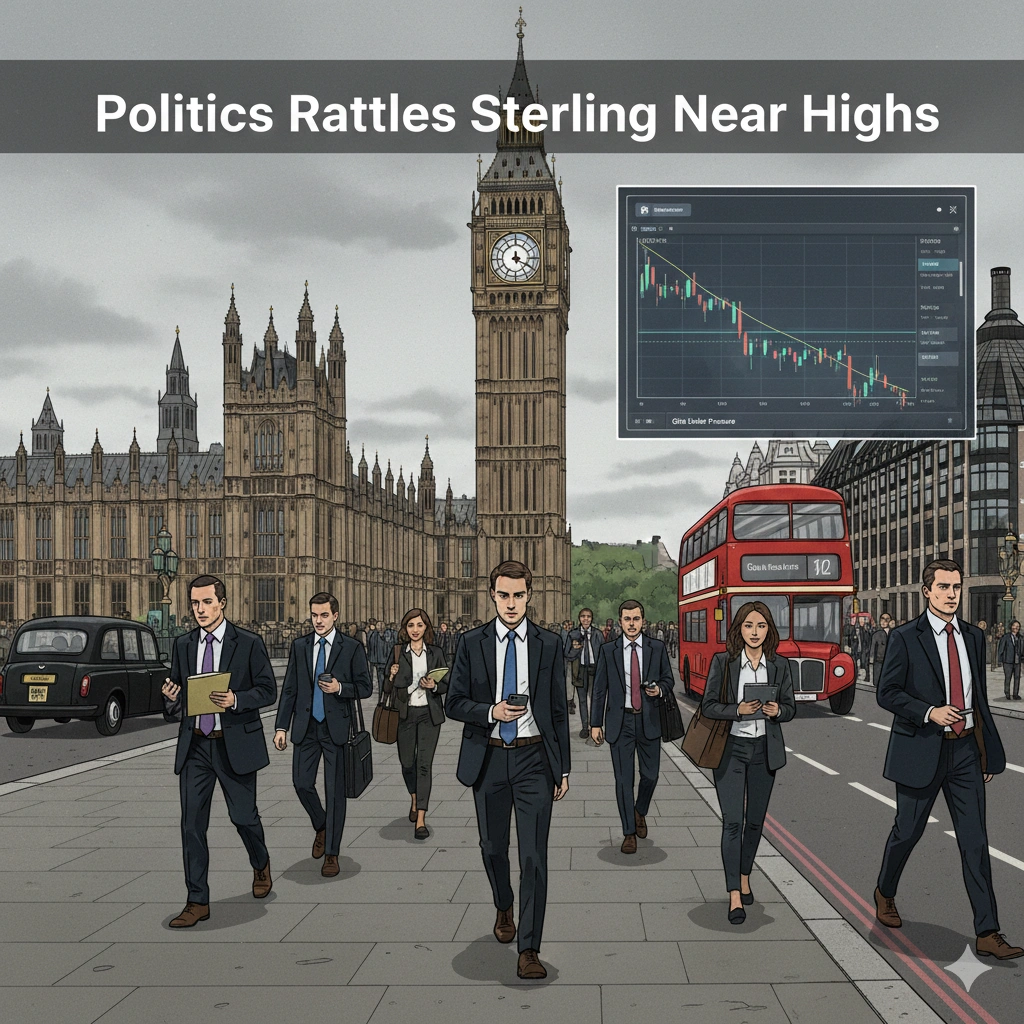
GBP/EUR Hits 1.16 Before Falling
In early February 2026, GBP/EUR climbed to near 1.16, marking its highest level in four months. However, the gains proved short-lived, with the pair retreating to around 1.1560 following an intense parliamentary session. During the session, Starmer acknowledged receiving prior warnings about sensitive details involving Mandelson before appointing him as UK ambassador to the United States.
The market reaction highlighted how political developments directly impact sterling, with traders pricing in the potential risks of further instability within the Labour Party. By the next trading session, GBP/EUR slipped further to around 1.1543, reflecting lingering uncertainty.
Sterling and Gilts Under Pressure
The political turbulence did not only affect the forex market. UK government bonds, or gilts, also came under pressure. According to Deutsche Bank’s Jim Reid, 10-year gilt yields rose against the global trend as investors expressed concern over Starmer’s political position. The combination of weakening confidence in sterling and rising yields underscores the interconnected nature of UK politics and financial markets.
Starmer Faces Mounting Political Pressure
Reports from Reuters confirmed that Starmer faced growing pressure to release documents concerning Mandelson’s appointment. After initially resisting, he agreed to a partial release, adding further uncertainty for investors and markets.
UK media coverage also highlighted unrest among Labour MPs. Notably, Deputy Leader Angela Rayner reportedly played a pivotal role in urging Starmer to reverse his stance. The political dynamics at Westminster created an environment in which sterling was particularly sensitive to developments.
Bank of England Holds Rates Amid Political Uncertainty
Compounding the political backdrop, the Bank of England decided to keep the Bank Rate at 3.75% following a narrow 5–4 vote. The central bank also signaled that further rate cuts could be possible, highlighting the dual influence of monetary policy and political risk on GBP performance. Analysts suggest that both interest rate expectations and political developments will continue to be key drivers for sterling throughout 2026.
Brexit Legacy and Pound Sterling Volatility
Even as the UK navigates post-pandemic recovery, lingering effects from Brexit continue to influence pound sterling movements. Trade negotiations and regulatory shifts create sporadic market reactions, particularly when investors reassess the UK’s access to European markets. This adds an extra layer of volatility beyond immediate political developments.
Recent trade reports have shown that import-export imbalances can impact GBP valuations in subtle ways. While the economy shows resilience, any unexpected Brexit-related news could trigger short-term swings in pound sterling, making it crucial for forex traders to stay alert to trade policy updates and EU-UK relations.
Inflation Trends and Pound Sterling Strength
Inflation data released in early 2026 has had a direct impact on pound sterling sentiment. Persistent inflation pressures raise concerns over consumer spending, prompting speculation about Bank of England interventions and influencing market confidence in the currency. Traders closely monitor inflation trends as a key driver of GBP volatility.
Analysts note that when inflation expectations rise, pound sterling can either strengthen or weaken depending on investor interpretation of monetary policy signals. A balanced approach to interest rate projections, coupled with inflation monitoring, remains critical for understanding potential GBP trends in the coming months.
Global Risk Sentiment and Pound Sterling Movements
The pound sterling is also sensitive to global risk sentiment. In times of geopolitical tension or major market shocks, investors often shift capital to perceived safe-haven currencies, impacting GBP’s relative strength. This external influence adds another dimension to the currency’s performance, independent of UK domestic politics.
Currency strategists highlight that fluctuations in commodities, the US dollar, and European economic indicators can indirectly affect pound sterling valuations. Keeping an eye on global macroeconomic trends helps investors anticipate potential GBP movements, allowing for more informed trading and hedging strategies.
What This Means for Traders and Investors
For traders and investors, the recent movements in GBP/EUR and UK gilts indicate heightened volatility driven by political uncertainty. The Starmer-Mandelson saga demonstrates that even temporary political scandals can influence forex rates, bond yields, and broader market sentiment.
Market watchers will continue monitoring developments, especially as Labour Party dynamics and future Bank of England decisions could further sway pound sterling valuations. Investors are advised to consider both fundamental UK political risks and macro-financial indicators when making currency and bond market decisions.
For more details & sources visit: Pound Sterling Live
For more updates about the United Kingdom, visit our UK news page.