
The Pipeline Cinema facts explored in Mona Damluji’s latest work reveal a fascinating intersection of industrial extraction and cultural production. Released as an open-access study, the book titled “Pipeline Cinema” examines how British oil companies used documentary film as a form of cultural infrastructure. These media projects were designed to normalize petroleum extraction in the Middle East during the mid-twentieth century.
Damluji uncovers how companies like the Iraq Petroleum Company (IPC) and the Anglo-Iranian Oil Company (AIOC) utilized film units to frame their presence as a benevolent force for modernization. By analyzing these visual archives, the Pipeline Cinema facts shed light on a hidden history of corporate propaganda. This research bridges the gap between energy studies and media history, providing a critical lens on neocolonialism.
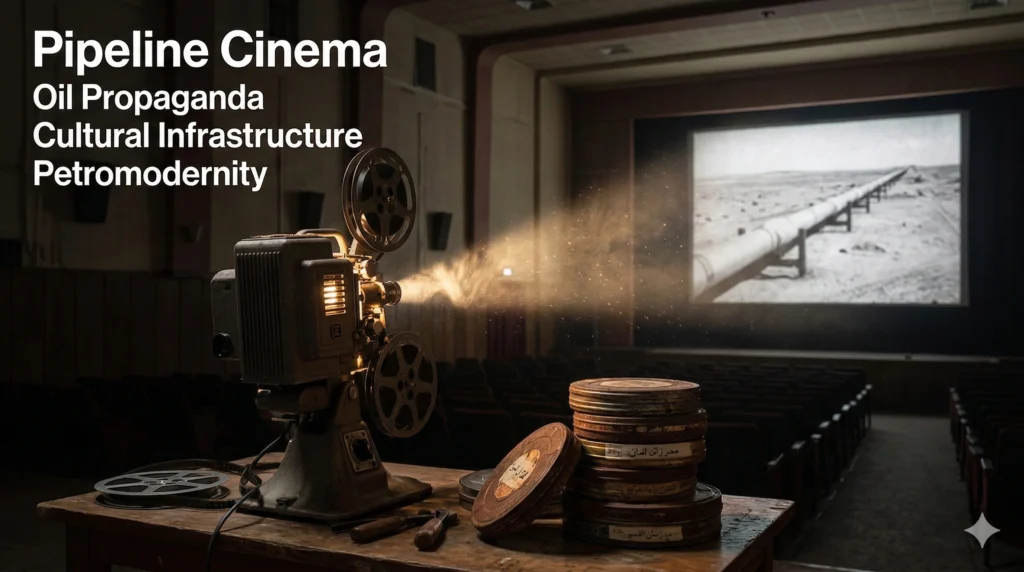
The Cultural Infrastructure of British Petroleum Companies
The core of the Pipeline Cinema facts lies in the concept of cultural infrastructure, where film was treated as a tool for engineering public opinion. British-controlled companies from the 1920s to the 1970s did not just build pipelines and refineries; they built a visual narrative of Western-led progress. By sponsoring high-quality documentaries, these corporations sought to convince local populations and global audiences that oil extraction was synonymous with regional prosperity.
These films often showcased the construction of massive industrial sites as symbols of the “Third River,” a metaphorical framing of pipelines as life-giving arteries. Just as the Tigris and Euphrates sustained life, the oil industry was presented as the modern lifeblood of the nation. The Pipeline Cinema facts highlight how these metaphors were strategically deployed to prevent growing sentiments of nationalization among the local workforce and political classes.
Damluji’s investigation began with the 1954 Technicolor documentary titled Ageless Iraq, which exemplified this positivist narrative of development. Through vibrant cinematography, the film portrayed the coexistence of ancient heritage and modern oil machinery, suggesting that British presence was a natural evolution of Mesopotamian history. This tactical use of media across the borders of Iraq and Iran allowed the companies to maintain a foothold in the region during a period of intense geopolitical shifting.
Local Creative Labor and Corporate Hierarchies
One of the most compelling Pipeline Cinema facts is the revelation of the role played by local creative workers within these corporate hierarchies. Despite the exploitative nature of neocolonial extraction, many Iraqi and Iranian intellectuals and artists found employment within these film units. These individuals had to navigate the rigid structures of British management while attempting to contribute to their own regional film culture and artistic traditions.
Damluji discovered a personal connection to this history when she found that her own great-grandfather had been a writer for the Iraq Petroleum magazine. This discovery bridges the gap between academic research and personal lineage, adding a layer of intimacy to the Pipeline Cinema 10 facts. It illustrates how deeply these oil companies were woven into the social and professional fabric of middle-class life in cities like Baghdad and Abadan.
A notable figure mentioned in the study is the Palestinian intellectual Jabra Ibrahim Jabra, who served a dual role as a writer and oil company translator. Jabra’s involvement shows how local employees used these corporate platforms for creative expression, even as they were part of a machinery designed to uphold British interests. The Pipeline Cinema facts emphasize that these workers were not passive participants but active agents who negotiated their creative identities under the shadow of oil.
Pipeline Cinema 10 Facts
The study of Pipeline Cinema facts provides a roadmap for understanding how industrial film evolved in response to political crises, such as the 1951 nationalization of oil in Iran. This event served as a major turning point, forcing British media strategies in Iraq to become even more sophisticated and defensive. The companies realized that simply extracting oil was not enough; they had to win “hearts and minds” to ensure the long-term survival of their operations.
- British companies used films to promote a “positivist” view of modernization.
- The “Third River” metaphor framed oil as a natural resource essential for life.
- Film units were organized as formal departments within the oil corporations.
- Documentaries like Ageless Iraq used Technicolor to create a romanticized view of industry.
- Local translators and writers were essential for tailoring content to regional audiences.
- Nationalization in Iran directly influenced the tone of propaganda in Iraq.
- Archives from British Petroleum (BP) reveal the internal labor politics of film production.
- The study covers a 50-year period of media tactical evolution (1920s–1970s).
- Propaganda aimed to depict oil companies as partners in national development.
- The book is published open-access to facilitate global scholarly discussion.
Neocolonialism and the Strategic Prevention of Nationalization
The Pipeline Cinema facts demonstrate that these public relations campaigns were not merely about brand awareness; they were tactical defenses against sovereignty. As local movements for self-determination grew, the film units ramped up production to showcase the benefits of foreign management. These films emphasized technological complexity, suggesting that local populations were not yet ready to manage such “advanced” systems without Western guidance.
By framing the oil industry as a complex partnership, the companies attempted to make the idea of nationalization seem like a path to economic ruin. The Pipeline Cinema facts reveal how visual media was used to obscure the reality of wealth extraction, focusing instead on the social clubs, hospitals, and schools built for employees. This “welfare capitalism” was a central theme in the documentaries, designed to foster a sense of loyalty among the domestic population.
However, the visual evidence also betrays the neocolonial nature of the relationship, as these films often centered British expertise while relegating local workers to background or manual roles. Damluji’s analysis of the Pipeline Cinema facts forces a re-evaluation of these archives, seeing them not just as historical artifacts but as active participants in the struggle for control over the region’s resources. The legacy of this media strategy continues to influence how energy companies present themselves today.
The Impact of Iran’s 1951 Nationalization
The nationalization of the Iranian oil industry in 1951 was a shockwave that fundamentally altered the Pipeline Cinema facts regarding British corporate strategy. When the AIOC was expelled from Iran, the IPC in Iraq realized it faced an existential threat. This led to an immediate increase in the budget and sophistication of the IPC Film Unit, as they sought to prove their indispensability to the Iraqi government and public.
This period saw the production of some of the most technically advanced documentaries of the era. The films became more nuanced, moving away from simple “industry is good” messages toward more complex stories about social change and national future. The Pipeline Cinema facts highlight this tactical shift as a desperate attempt to maintain the status quo by colonizing the imaginative space of the Iraqi public.
The archives show that filmmakers were given specific instructions to highlight “Iraqi progress” to appease nationalist sentiment while ensuring that the British remained the invisible hand behind that progress. This delicate balancing act is a key focus of Damluji’s work, showing how film was used to bridge the gap between corporate interest and national pride. The failure of these strategies to prevent eventual nationalization in Iraq adds a layer of irony to the Pipeline Cinema facts.
Scholarly Significance and Open-Access Reach
“Pipeline Cinema” is a significant contribution to the fields of energy humanities and media studies because it shifts the focus from the oil itself to the culture surrounding it. By making the book open-access, Damluji ensures that the Pipeline Cinema facts are available to researchers and students in the Middle East who might not otherwise have access to expensive academic texts. This democratic approach to scholarship mirrors the book’s intent to reveal hidden histories of labor and power.
The research utilizes a vast array of primary sources, including personal correspondences and internal corporate memos that detail the day-to-day operations of the film units. This “bottom-up” approach to corporate history provides a much clearer picture of the human labor involved in creating propaganda. The Pipeline Cinema facts are therefore not just about big companies, but about the photographers, editors, and writers who lived and worked within this system.
As we transition into a new era of energy awareness, understanding the visual history of the oil age becomes vital. The Pipeline Cinema facts remind us that every energy transition is accompanied by a massive cultural campaign to justify the status quo. By deconstructing the “Pipeline Cinema” of the past, we gain the tools to analyze the corporate media of the present. Damluji’s work is a powerful reminder of how images can be as powerful as the resources they depict.
Summary of the Cultural Infrastructure of Oil
The Pipeline Cinema facts provide a deep dive into how documentary film served as the cultural infrastructure for oil extraction. Mona Damluji’s research exposes the calculated efforts of British companies to frame neocolonialism as a benevolent modernization project. Through the “Third River” metaphor and the labor of local creative workers, these companies built a narrative designed to preserve their power and prevent nationalization.
The transition from the 1920s to the 1970s shows a clear evolution in media tactics, particularly following the political shifts in Iran and Iraq. These films are more than just historical records; they are blueprints of corporate public relations that still resonate in the energy industry today. The Pipeline Cinema facts highlight the tension between corporate propaganda and the creative agency of those who worked within its confines.
Ultimately, the story of “Pipeline Cinema” is a story of how oil shaped the visual world as much as it shaped the physical landscape. By making this history accessible through open-access publishing, Damluji invites a new generation of scholars to explore the complex relationship between energy, media, and power. The Pipeline Cinema facts offer a vital perspective on the cultural costs of the petroleum age and the enduring power of the moving image.
For more details & sources visit: Jadaliyya
Read more about Iraq news on 360 News Orbit – Iraq.