
The Palestinian economy crisis has reached alarming levels in 2025, with Gaza experiencing a near-total economic collapse and the West Bank facing significant contraction in trade and production. According to a joint report by the Palestinian Central Bureau of Statistics and the Palestine Monetary Authority, Gaza’s GDP fell 84% compared to 2023, while the West Bank economy contracted by 13%. Rising unemployment, withheld revenues, and mounting debt have placed immense pressure on key state institutions, threatening their ability to maintain essential public services.
Palestinian Economy Minister Mohammed al-Amour emphasized that $4.5 billion in clearance revenues have been withheld by Israeli authorities, exacerbating the fiscal strain. While some sectors in the West Bank showed modest improvement, the overall economic environment remains dire, with analysts warning of potential institutional collapse without external intervention.
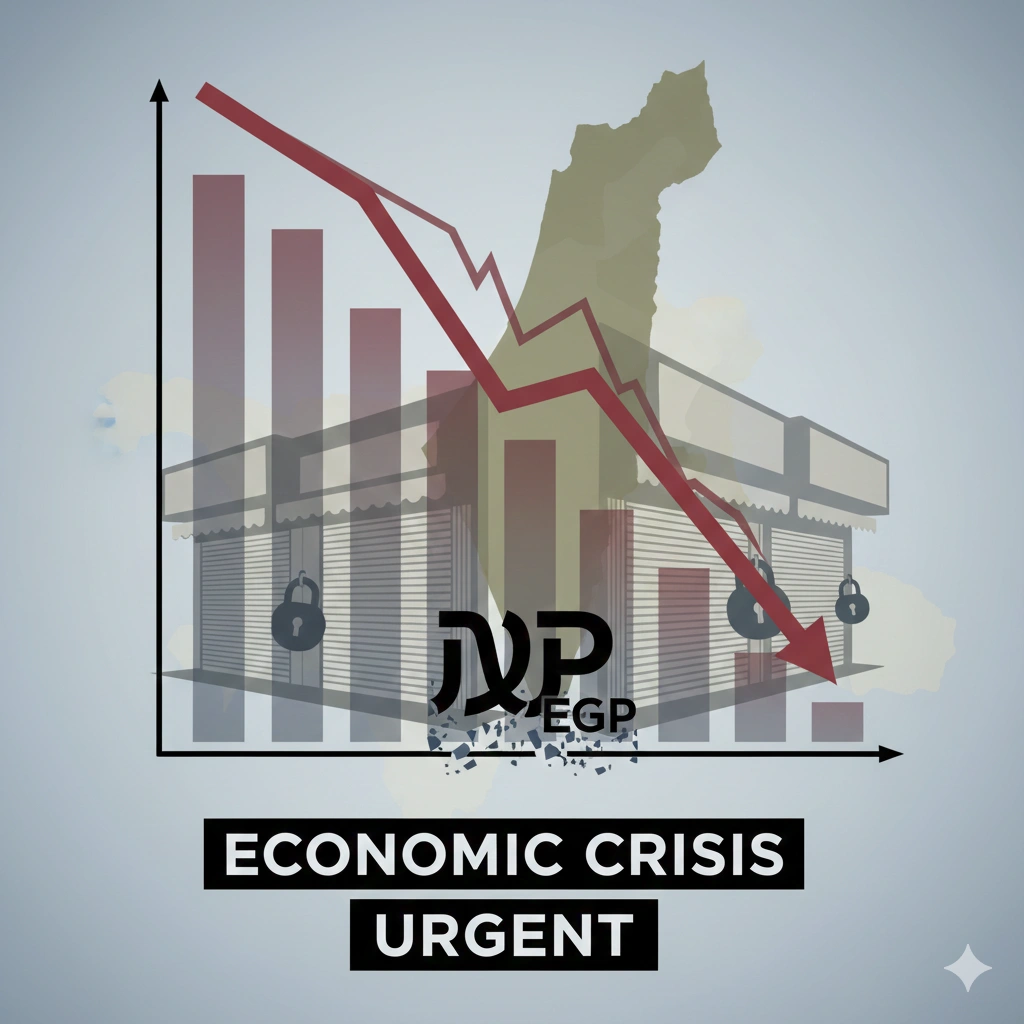
Gaza Faces Unprecedented Economic Collapse
Gaza’s economic situation is particularly severe. With unemployment exceeding 77%, the region is experiencing near-total inactivity in industrial, commercial, and service sectors. Trade volumes have shrunk dramatically, and businesses struggle to operate under persistent restrictions and limited access to essential materials.
This collapse affects everyday life for residents. Shortages of food, medicine, and fuel are intensifying, while public sector workers face delays in salary payments. The economic paralysis is not only a fiscal issue but also a humanitarian concern, as families struggle to meet basic needs. Experts warn that if the current trajectory continues, Gaza’s economy could take years to recover even with external aid.
West Bank Trade and Production Contraction
The West Bank economy, while more resilient than Gaza, is also under significant stress. Key sectors, including manufacturing, agriculture, and exports, have declined due to trade restrictions and political uncertainties. GDP contraction of 13% signals that economic stagnation is spreading beyond Gaza, affecting investment, employment, and overall growth prospects.
Delays in clearance revenues, combined with rising debt obligations, limit the Palestinian Authority’s ability to fund public services, pay salaries, and sustain infrastructure projects. Analysts suggest that without targeted international assistance, the West Bank could experience further economic deterioration in 2026.
Rising Debt and Fiscal Strain
The withholding of $4.5 billion in clearance revenues has placed an enormous burden on the PA’s budget. Debt levels are increasing, and with declining domestic revenue, the government struggles to maintain basic functions. Essential services such as healthcare, education, and public administration are at risk, threatening social stability and the delivery of critical services to citizens.
Economic experts emphasize that restoring financial flows and implementing targeted fiscal support is crucial. Without external funding and policy interventions, the Palestinian economy crisis may deepen, potentially leading to severe social and political consequences.
Impact on Citizens and Public Services
The economic crisis is felt acutely by ordinary Palestinians. Unemployment, particularly in Gaza, has reached unprecedented levels, leaving families without steady income. Delayed salaries for public sector employees further exacerbate hardships, while inflation and scarcity of goods drive the cost of living higher.
Social programs and public infrastructure projects face delays or cancellations due to budget shortfalls. This undermines public confidence in state institutions and risks long-term social unrest. Experts highlight that citizen resilience is being tested as the Palestinian economy crisis continues to worsen.
Outlook and International Intervention
Analysts stress that urgent external intervention is necessary to prevent institutional collapse. Humanitarian aid, financial support, and policy coordination can help stabilize Gaza and the West Bank. International actors may need to ensure the timely release of clearance revenues and provide emergency funding to sustain public services.
In the absence of timely intervention, the Palestinian economy crisis could deepen further in 2026, with long-lasting implications for regional stability, public welfare, and economic recovery. Policymakers and international agencies face a critical window to mitigate the economic and social fallout of this unprecedented downturn.
For more details & sources visit: Al Jazeera
For the latest updates from Palestine, visit our Palestine news page.