
The Palestinian economy collapse has reached unprecedented levels, according to a new report by the United Nations Conference on Trade and Development (UNCTAD). The report reveals that decades of socioeconomic gains in Gaza and the West Bank have been erased by two years of ongoing Israeli military operations and long-standing restrictions, placing the occupied territory among the world’s 10 worst economic contractions since 1960.
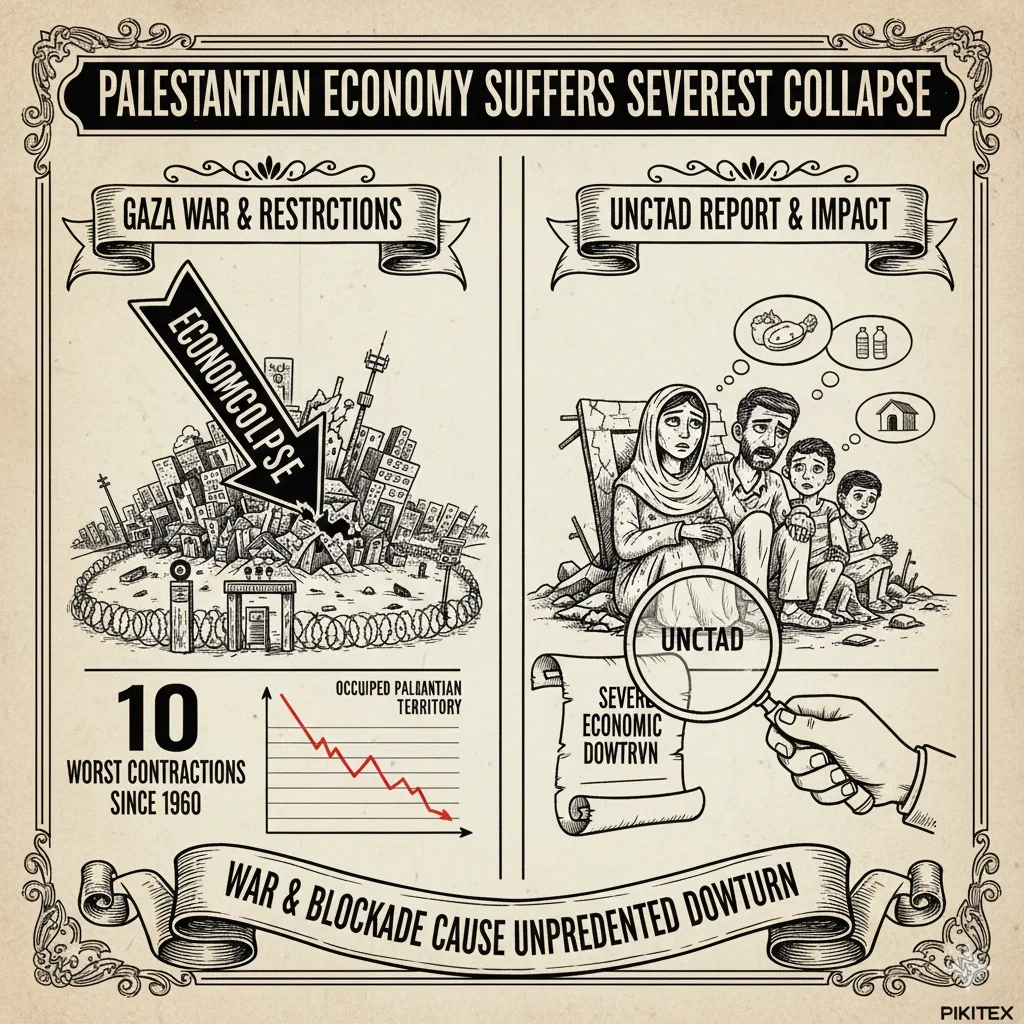
Gaza Faces Unprecedented Economic Decline
UNCTAD highlights Gaza as the epicenter of the economic crisis. Over the past two years, Gaza’s GDP has shrunk by an astonishing 87 percent, with per capita income now among the lowest globally. The report attributes this decline to continuous airstrikes, infrastructure destruction, and tightened blockades, which have left the population heavily dependent on international aid.
Hospitals, schools, and essential utilities remain in critical condition, compounding the humanitarian toll. Civilian livelihoods are under severe strain as the destruction of businesses and industrial facilities continues. With the economy essentially paralyzed, residents face rising unemployment and scarcity of basic goods.
West Bank Also in Deep Economic Freefall
While Gaza bears the brunt, the West Bank is not immune. UNCTAD reports the territory is experiencing its deepest downturn on record, exacerbated by movement restrictions, closures, and job losses. The withholding of $4 billion in tax revenues by Israel has further crippled the Palestinian Authority’s capacity to provide services, leaving local institutions unable to meet citizens’ needs.
The report warns that without the restoration of these fiscal transfers, public sector employees will continue facing delayed salaries, further destabilizing governance and social cohesion in the West Bank.
International Response and Reconstruction Needs
Rebuilding Gaza will be an immense challenge, with UNCTAD estimating reconstruction costs at more than $70 billion. The report stresses that returning the Palestinian economy to pre-2023 levels could take decades, requiring sustained international support and a durable ceasefire to allow reconstruction and economic recovery.
The agency calls on the global community to immediately intervene, restore fiscal transfers, and work toward sustainable peace to halt the downward spiral. UNCTAD emphasizes that long-term economic stability is impossible without ending hostilities and easing restrictions that impede trade and mobility.
Global Context of the Crisis
The Palestinian economy collapse now ranks among the worst recorded globally since 1960, reflecting not only the intensity of the conflict but also the structural vulnerabilities caused by protracted occupation and restricted economic freedoms. The crisis underscores the intersection of political instability, military conflict, and economic fragility, showing how sustained hostilities can devastate both urban and rural economies.
Conclusion
The UNCTAD report paints a stark picture: Gaza and the West Bank face a historic economic collapse, with livelihoods destroyed, public services crippled, and reconstruction costs soaring. Immediate global action is essential to prevent further deterioration of the Palestinian economy collapse, safeguard civilian well-being, and pave the way for a long-term recovery plan. The report calls for renewed international engagement, restoration of financial flows, and a lasting ceasefire to stabilize the region.
For the latest updates from Palestine, visit our Palestine news page.