
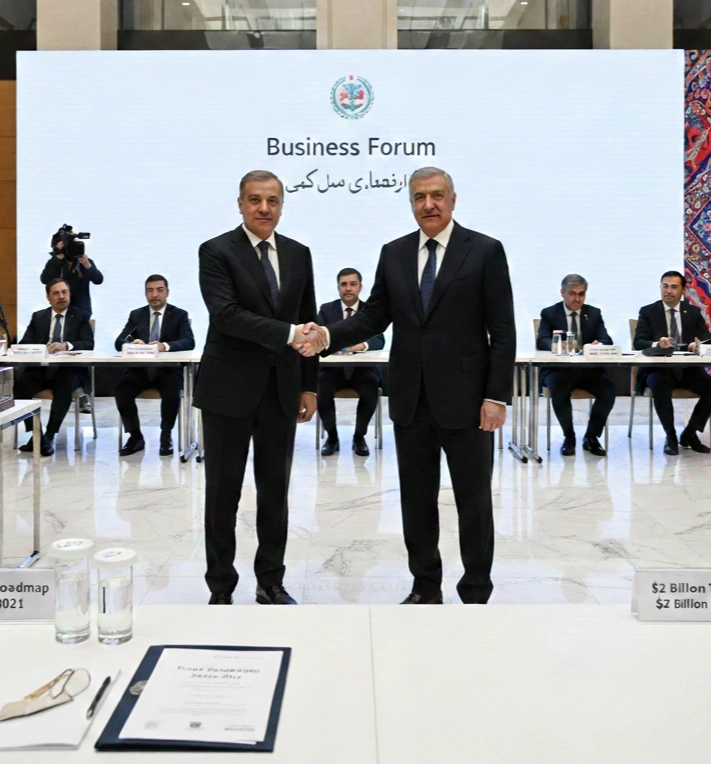
Pakistan Uzbekistan trade has reached a new milestone as both countries set an ambitious $2 billion bilateral trade target, focusing on investment, industrial cooperation, and people-to-people exchanges. The announcement was made during the Pakistan-Uzbekistan Business Forum in Islamabad, attended by Prime Minister Shehbaz Sharif and Uzbek President Shavkat Mirziyoyev, reflecting the growing strategic and economic partnership between the two nations.
The forum underscored that the success of the partnership will be measured by tangible outcomes, including trade flows, investments, joint industrial projects, and enhanced connectivity. Officials described the $2 billion target as achievable with coordinated efforts, business facilitation, and targeted investment strategies.
Investment MoUs and Industrial Partnerships
Prime Minister Sharif highlighted that business-to-business Memorandums of Understanding (MoUs) worth $3.4 billion are expected to materialize. These agreements focus on sectors such as research and development, IT, agriculture, and tourism, offering significant opportunities for Pakistani and Uzbek entrepreneurs.
A working group was also formed to draft a five-year roadmap aimed at expanding trade, investment, and joint cooperation. Sharif described Uzbekistan as a gateway for Pakistani businesses into Central Asia, emphasizing the potential of industrial partnerships and cross-border collaboration to boost regional economic integration.
Expanding Connectivity and Air Links
Connectivity emerged as a key pillar of Pakistan Uzbekistan trade expansion. Both leaders emphasized the importance of direct flights and regional transport initiatives, including the Uzbekistan-Afghanistan-Pakistan Railway Project. President Mirziyoyev announced two additional direct flights, raising weekly flights to six, making travel and trade between the two countries more efficient.
Enhanced air connectivity is expected to promote tourism, cultural exchange, and business travel, reinforcing the broader strategy of linking markets, people, and industries. The leaders also stressed mutual support for sovereignty, independence, and territorial integrity, reflecting a comprehensive approach to bilateral cooperation.
Tax Incentives and Business Facilitation
To encourage trade, Uzbekistan offered facilitation measures for Pakistani businesses, including a reported 10-year tax exemption. This initiative is designed to attract investment, reduce operational costs, and create a favorable environment for entrepreneurs seeking regional expansion.
Both nations agreed that future cooperation will rely heavily on transparent and outcome-oriented trade policies, ensuring that investment projects, industrial partnerships, and commercial exchanges generate measurable economic benefits.
Boosting Technology and Innovation Through Pakistan Uzbekistan Trade
The partnership between Pakistan and Uzbekistan is increasingly emphasizing technology and innovation as drivers of bilateral trade growth. Both nations are exploring collaboration in information technology, fintech solutions, and digital services, enabling startups and established businesses to expand their reach across Central and South Asia. By prioritizing innovation, Pakistan Uzbekistan trade can leverage new markets and create competitive advantages for companies in both countries.
In addition, joint research initiatives are being encouraged in sectors like agriculture technology, renewable energy, and smart logistics. Such projects not only enhance productivity but also strengthen long-term economic ties. Experts suggest that integrating digital innovation into Pakistan Uzbekistan trade could accelerate industrial modernization and improve efficiency across key sectors.
Tourism and Cultural Exchange Driving Pakistan Uzbekistan Trade
Tourism and cultural exchange have emerged as strategic components of Pakistan Uzbekistan trade, offering significant economic and social benefits. Efforts to simplify visa procedures, promote heritage sites, and organize cultural festivals are expected to boost visitor numbers and increase bilateral spending. These initiatives aim to complement traditional trade by creating people-to-people connections that enhance business trust and regional collaboration.
Moreover, tourism-related investments, such as hotel development, travel agencies, and local transport infrastructure, are likely to generate employment and stimulate local economies. By linking trade growth with cultural and tourism initiatives, Pakistan Uzbekistan trade can become more holistic, balancing commercial expansion with social engagement and regional integration.
Strengthening People-to-People and Cultural Ties
Beyond trade and investment, Pakistan Uzbekistan trade talks focused on people-to-people exchanges, cultural collaboration, and educational partnerships. By deepening mutual understanding, the two countries aim to create a sustainable framework for economic and social development in Central Asia and South Asia.
Officials emphasized that such collaboration is key to unlocking long-term economic potential, fostering trust, and creating a foundation for lasting regional stability.
For more details & sources visit: Dawn (reporting Radio Pakistan and Pakistan Foreign Office statements)
For the latest updates from Pakistan, visit our Pakistan news page.