
Pakistan Qatar Strategic Ties are entering a transformative phase as both nations finalize massive investment frameworks and defense protocols following the recent high-level diplomatic summit in Doha. Prime Minister Shehbaz Sharif’s visit to the Qatari capital has successfully laid the groundwork for a new era of bilateral cooperation that moves beyond traditional assistance toward a robust, multifaceted economic partnership. This strategic realignment focuses heavily on the Special Investment Facilitation Council’s role in attracting Gulf capital into Pakistan’s high-growth sectors.
The discussions held between the Prime Minister and Qatari leadership centered on breaking traditional trade barriers while establishing a concrete roadmap for private-sector engagement. Qatar has consistently proven to be a reliable ally, and this latest interaction serves to solidify that bond through formal agreements in agriculture, energy, and defense. By prioritizing business-to-business linkages, both countries are aiming to double their current trade volume within the next three fiscal years.
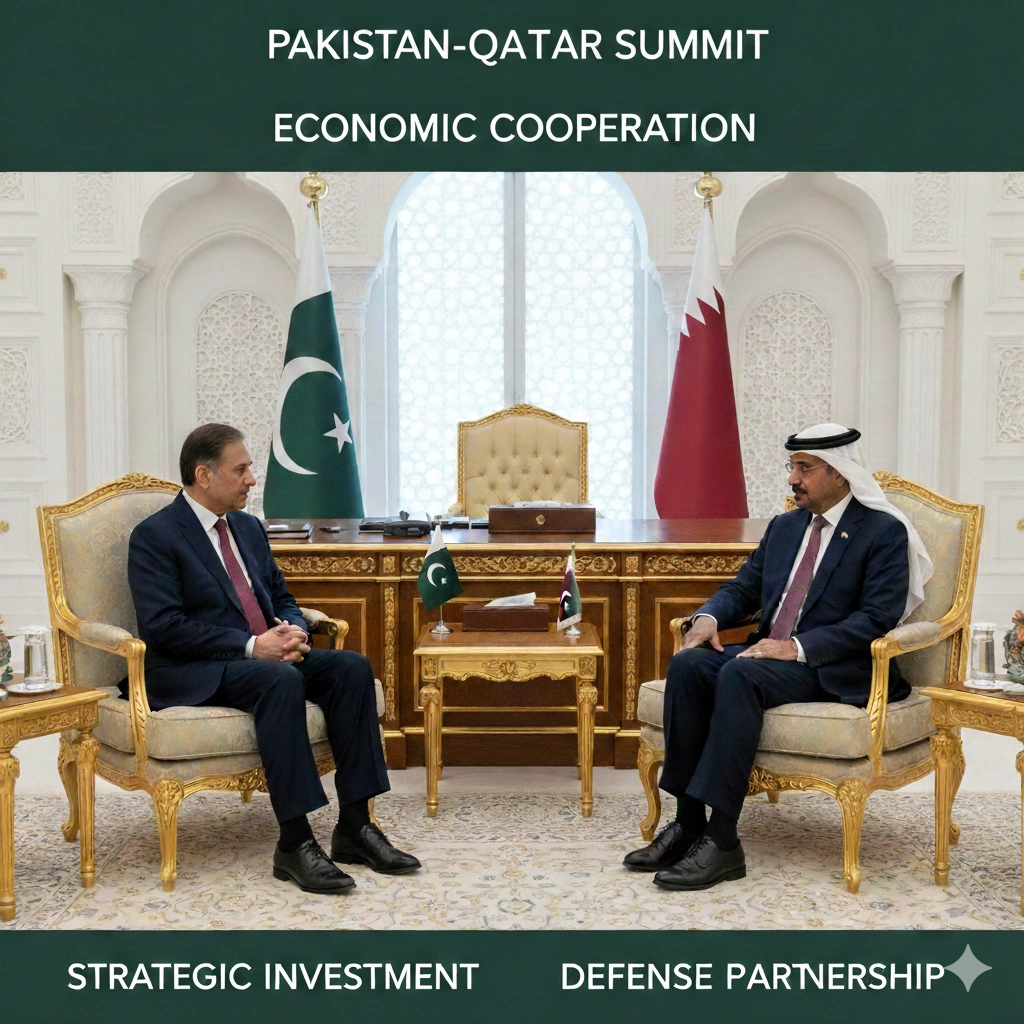
Pakistan Qatar Strategic Ties and Economic Expansion
Pakistan Qatar Strategic Ties have reached a pivotal milestone as the two nations move toward a structured investment regime that targets the agricultural and industrial sectors. During the meetings in Doha, officials emphasized the importance of the Pak-Qatar Joint Business Task Force as the primary vehicle for executing these large-scale projects. This framework is designed to streamline the entry of Qatari capital into the Pakistani market while ensuring sovereign protections for international investors.
The Prime Minister highlighted that the current economic landscape in Islamabad is ripe for foreign direct investment due to comprehensive regulatory reforms. These reforms are specifically tailored to meet the expectations of Gulf investors who seek stability and high returns on their capital. Consequently, the Qatari side expressed a renewed interest in expanding their footprint in Pakistan’s value-added goods sector, which remains an untapped goldmine for regional exporters.
Furthermore, the commitment to enhancing these ties is reflected in the scheduling of a dedicated task force meeting during the upcoming month of Ramadan. This meeting will serve as a technical session to finalize the specifics of various investment proposals that were discussed in principle during the Prime Minister’s stay. Such a proactive approach demonstrates the seriousness with which both Islamabad and Doha are pursuing this revamped economic relationship.
Defense Cooperation within Pakistan Qatar Strategic Ties
A significant portion of the diplomatic visit was dedicated to strengthening the defense and security pillars that support Pakistan Qatar Strategic Ties. Prime Minister Shehbaz Sharif engaged in detailed consultations with the Qatari Deputy Prime Minister for Defense Affairs to review the existing professional collaboration between their respective armed forces. This partnership is vital for maintaining regional stability in an increasingly complex geopolitical environment.
The two countries have historically shared a deep bond in military training and joint exercises, but the new agreements seek to expand this into technical domains. By sharing intelligence and logistical expertise, Pakistan and Qatar are positioning themselves as anchors of peace in the Middle East and South Asia. The leadership noted that a secure environment is a prerequisite for the economic prosperity they both envision.
Moreover, the discussions addressed the evolving security situations in neighboring Afghanistan and Iran, where both nations play critical roles as mediators. The synergy between Pakistani tactical experience and Qatari diplomatic influence creates a formidable force for de-escalation in the region. This defense pillar ensures that the economic investments being made are protected by a shared vision of regional security and mutual defense interests.
Agricultural Investment and Food Security Initiatives
One of the most promising aspects of Pakistan Qatar Strategic Ties is the focus on corporate farming and agricultural technology transfers. Qatar, being a nation that prioritizes food security, views Pakistan’s vast fertile lands as a strategic asset for its long-term supply chain stability. The Prime Minister proposed several joint ventures that would see Qatari technology integrated into Pakistani farming practices to boost yield and quality.
- Establishment of specialized export zones for high-quality organic produce.
- Joint development of modern cold-storage facilities to reduce post-harvest losses.
- Investment in dairy and livestock processing plants for Middle Eastern markets.
- Implementation of water-efficient irrigation systems provided by Qatari tech firms.
These initiatives are expected to create thousands of jobs in Pakistan’s rural areas while providing Qatar with a steady stream of high-quality agricultural products. The Special Investment Facilitation Council (SIFC) has already identified several land parcels that are ready for Qatari investment under this new framework. This synergy represents a classic win-win scenario where resource-rich and land-rich nations combine their strengths for mutual benefit.
The transition toward value-added agricultural exports is a key component of the Prime Minister’s vision for a self-sustaining economy. By moving away from raw commodity exports, Pakistan can significantly increase its foreign exchange earnings through the Qatari market. The Qatari leadership has welcomed this shift, noting that their consumers have an increasing demand for premium Pakistani fruits, vegetables, and grain products.
The Role of SIFC in Pakistan Qatar Strategic Ties
The Special Investment Facilitation Council is currently the backbone of the evolving Pakistan Qatar Strategic Ties, providing a “single window” for Qatari investors. Prime Minister Sharif briefed the Qatari officials on how this council has eliminated the bureaucratic hurdles that previously hindered foreign investment. By offering a streamlined process, Pakistan has become a more attractive destination for the Qatar Investment Authority (QIA).
Qatari officials praised the transparency and speed offered by the SIFC, noting that it provides the necessary confidence for large-scale capital deployment. The council’s focus on minerals, IT, and energy aligns perfectly with Qatar’s diversification strategy under its National Vision 2030. This alignment ensures that the partnership is not just a temporary arrangement but a long-term strategic integration of two growing economies.
As the two nations move forward, the SIFC will continue to play a monitoring role to ensure that all MoUs signed in Doha are translated into tangible projects on the ground. The Prime Minister assured the Qatari delegation that his government is personally overseeing the progress of these projects. This high-level commitment is essential for maintaining the momentum generated during this successful diplomatic mission to Doha.
Regional Stability and Geopolitical Synergy
The broader impact of Pakistan Qatar Strategic Ties extends beyond the bilateral level and into the realm of global geopolitics. Both nations have emerged as key players in international mediation, often working behind the scenes to resolve conflicts in the Muslim world. The Prime Minister and Qatari leadership discussed the importance of a unified stance on international issues, particularly regarding the protection of regional sovereignty.
Stability in Afghanistan remains a top priority for both Islamabad and Doha, as any volatility there directly impacts the security of the entire region. By coordinating their humanitarian and diplomatic efforts, Pakistan and Qatar are helping to create a more predictable environment for trade and transit. This geopolitical synergy is a core component of their strategic partnership, providing a solid foundation for their economic ambitions.
Furthermore, the relationship between Pakistan and Qatar serves as a model for fraternal ties between Islamic nations based on mutual respect and shared goals. The Prime Minister’s visit has reinforced the idea that economic integration is the best way to ensure lasting peace and cooperation. As both countries navigate the challenges of the 2020s, their united front provides a beacon of stability in a rapidly changing world order.
Infrastructure and Energy Collaboration Projects
Within the framework of Pakistan Qatar Strategic Ties, infrastructure development and energy security have taken center stage. Qatar’s role as a leading global supplier of LNG is crucial for Pakistan’s industrial growth, and the latest talks explored ways to optimize this energy supply chain. Discussions included the possibility of long-term concessions and joint investments in terminal infrastructure to lower energy costs for Pakistani manufacturers.
- Expansion of LNG regasification capacities at major Pakistani ports.
- Development of renewable energy parks involving Qatari solar technology.
- Upgrading the national power grid through Qatari private-sector expertise.
- Construction of dedicated industrial zones for Qatari manufacturing units.
These infrastructure projects are designed to provide the physical foundation required for a modern economy. By integrating Qatari capital with Pakistani labor and land, the two nations are building the “hardware” of their future economic relationship. The Prime Minister highlighted that these projects would receive fast-track approval status to ensure they contribute to the national economy as quickly as possible.
The energy sector, in particular, offers immense potential for deeper integration. As Pakistan seeks to diversify its energy mix, the expertise of Qatari firms in managing large-scale energy projects is invaluable. This collaboration not only addresses Pakistan’s immediate energy needs but also aligns with global trends toward cleaner and more sustainable power generation, ensuring long-term viability for the partnership.
Private Sector Engagement and Trade Diversification
The success of Pakistan Qatar Strategic Ties ultimately depends on the active participation of the private sector in both nations. Prime Minister Shehbaz Sharif spent considerable time in Doha meeting with business leaders to encourage them to explore the Pakistani market. The goal is to move beyond government-to-government deals and foster a vibrant ecosystem of private-sector trade and investment.
Pakistan is looking to diversify its exports to Qatar by including high-tech services and manufactured goods alongside traditional exports. The Qatari market offers significant opportunities for Pakistani IT professionals and construction firms, especially as Qatar continues its domestic infrastructure expansion. By facilitating these business-to-business links, the two governments are creating a self-sustaining engine for economic growth.
The Prime Minister’s visit has opened doors for Pakistani entrepreneurs to showcase their capabilities on an international stage. With the support of the Pak-Qatar Joint Business Task Force, these businesses now have a direct line to Qatari investors and partners. This grassroots economic engagement is what will ultimately provide the resilience and longevity to the strategic ties between Islamabad and Doha.
Future Outlook for Pakistan Qatar Strategic Ties
Looking ahead, the trajectory of Pakistan Qatar Strategic Ties appears exceptionally positive, with multiple high-value projects slated for commencement in the next year. The Prime Minister’s proactive diplomacy has signaled to the world that Pakistan is open for business and that its closest allies are ready to invest. The upcoming task force meetings will be the next litmus test for this evolving relationship.
As both nations work toward their respective long-term visions, their partnership will likely become a cornerstone of regional economic activity. The integration of defense, energy, and agriculture creates a comprehensive shield against global economic volatility. This holistic approach ensures that Pakistan and Qatar are not just partners in trade, but partners in progress and prosperity for their people.
The visit of Prime Minister Shehbaz Sharif to Doha has undeniably revitalized the spirit of cooperation between the two brotherly nations. By focusing on concrete results and institutional frameworks, the leadership has moved the relationship from rhetoric to reality. The world will be watching closely as these two strategic partners begin the hard work of implementing their ambitious shared agenda for the future.
Strengthening the Pak-Qatar Joint Ministerial Commission
The Joint Ministerial Commission plays a vital role in the long-term sustainability of Pakistan Qatar Strategic Ties by providing a formal platform for policy alignment. During the recent visit, both sides agreed to follow up on the decisions made during the sixth session of this commission. This ensures that the high-level political will is translated into specific departmental actions across all ministries.
Regular audits of the progress made by the commission will be conducted to ensure that there are no delays in project implementation. This level of institutional oversight is what sets the current era of Pakistan-Qatar relations apart from previous years. The Prime Minister has instructed all relevant Pakistani ministries to prioritize Qatari projects and provide weekly updates on their status.
By strengthening the Joint Ministerial Commission, both nations are building a resilient framework that can withstand changes in the global political climate. This institutional memory is essential for maintaining the consistency of the Pakistan Qatar Strategic Ties. As the commission meets more frequently, the level of trust and cooperation between the various government departments will continue to grow, leading to even more successful ventures in the future.
Cultural and Educational Exchanges
While economic and defense issues often dominate the headlines, the cultural dimension of Pakistan Qatar Strategic Ties is equally important. The Prime Minister discussed expanding educational exchanges and providing more opportunities for Pakistani students in Qatari universities. This people-to-people connection is the bedrock upon which the political and economic structures are built.
- Scholarship programs for Pakistani researchers in Qatari technical institutes.
- Cultural festivals showcasing Pakistani art and heritage in Doha.
- Collaborative research projects in the fields of medicine and renewable energy.
- Increased sports diplomacy through joint training camps and tournaments.
These initiatives help to create a mutual understanding and appreciation between the citizens of both countries. When people understand each other’s cultures, they are more likely to engage in successful business and social collaborations. The Prime Minister’s visit has paved the way for a more vibrant cultural exchange that will enrich the social fabric of both Pakistan and Qatar for generations to come.
Ultimately, the Pakistan Qatar Strategic Ties are about more than just numbers and contracts; they are about a shared history and a common future. By investing in the youth and the culture of both nations, the leadership is ensuring that the bond remains strong long after the current economic projects are completed. This vision of a holistic partnership is what makes the relationship between Islamabad and Doha so unique and enduring.
Conclusion on the Doha Summit Success
The conclusion of the Prime Minister’s visit to Doha marks a significant turning point for Pakistan Qatar Strategic Ties. The agreements reached in defense, investment, and regional security provide a clear path forward for both nations. With the full support of the Special Investment Facilitation Council and the Qatari leadership, the implementation of these projects is set to begin immediately.
The success of this mission is a testament to the diplomatic skill and economic vision of the current Pakistani administration. By securing high-level commitments from one of the world’s most influential economies, Pakistan has significantly bolstered its international standing. The Pakistan Qatar Strategic Ties are now stronger than ever, promising a future of shared prosperity and regional stability.
As the technical teams begin their work in the coming weeks, the focus will remain on delivering results that benefit the ordinary citizens of both countries. The groundwork has been laid, the deals have been signed, and the vision has been set. Now, it is time for the execution of these ambitious plans to transform the landscape of Pakistan-Qatar relations for the better.
For more details & sources visit: Business Recorder
For the latest updates from Pakistan, visit our Pakistan news page.