
Pakistan Indonesia Palm Oil received a major boost in 2026 as both countries signed dual MoUs in Karachi, securing vital edible oil imports for Pakistan, which relies on Indonesia for 75% of its supply. The agreements, inked at a Karachi reception, include a Joint Trade Committee and an industry MoU with GAPKI-Vanaspati, designed to secure sustainable edible oil supply for Pakistan, which relies on imports for 75% of its domestic needs.
Commerce Minister Jam Kamal Khan hailed Indonesia’s vital role in Pakistan’s culinary and economic landscape, noting that structured cooperation will help diversify supply chains while stabilizing local markets. The agreements also set the stage for single-country expos and ASEAN outreach, signaling broader trade ambitions.
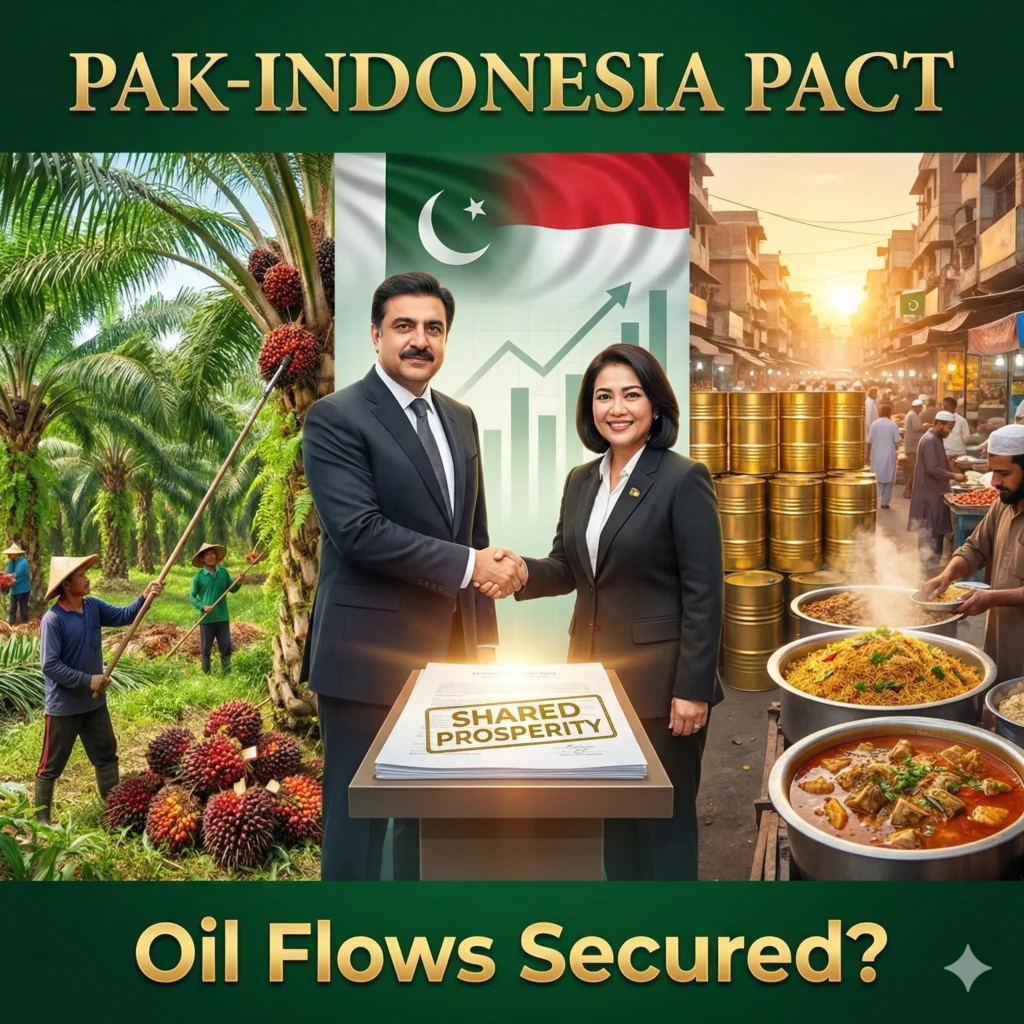
Pakistan Indonesia Palm Oil Trade: Dual MoUs Signed
The ceremony saw Minister Jam Kamal Khan alongside Indonesian Trade Vice Minister Dyah Roro Esty Widya Putri, GAPKI’s Eddy Martono, and Ambassador Lt Gen Sukutjo. The two MoUs target both government-level dialogue and industry-level innovation:
- Joint Trade Committee (JTC): Establishes structured discussions to address trade barriers, monitor supply flows, and plan strategic initiatives for bilateral commerce.
- GAPKI-Vanaspati Industry MoU: Focuses on sustainable palm oil production, supply chain innovation, and promoting “Shared Prosperity” between the two nations.
These agreements strengthen a longstanding partnership that has grown following recent presidential visits and high-level ministerial exchanges.
Securing Pakistan’s Palm Oil Supply
Indonesia remains the largest supplier of Pakistan’s imported cooking oil, essential for meeting three-quarters of the nation’s edible oil requirements. The MoUs ensure that supply chains remain stable amid global volatility, supporting both consumer demand and domestic price stability.
Minister Khan emphasized that the partnerships are not just about imports; they are about long-term collaboration, including planned Pakistan expos in Jakarta, which aim to expand market access and promote Pakistani products in ASEAN markets.
Diversification and Strategic Trade Vision
Beyond palm oil, Pakistan is eyeing diversification into Gulf, Central Asia, and U.S. markets. Khan praised stakeholders for enhancing food security and stabilizing supply chains, highlighting the importance of resilient trade relationships during uncertain global conditions.
The MoUs also signal Pakistan’s intent to modernize its edible oil industry, integrate sustainable practices, and leverage bilateral ties to drive innovation and balanced trade flows. Analysts see these moves as crucial for ensuring affordable cooking oil availability and boosting Pakistan’s standing in regional trade networks.
Boosting Economic Cooperation
The dual MoUs signed in Karachi are not just about edible oil imports—they signal a deeper economic partnership between Pakistan and Indonesia. By establishing structured dialogue through the Joint Trade Committee and industry-focused collaboration via GAPKI-Vanaspati, both countries aim to strengthen trade governance, monitor supply chains, and encourage innovation in production and distribution.
This cooperation reflects a long-term vision for bilateral trade, ensuring that Pakistan Indonesia Palm Oil Trade remains resilient amid global market fluctuations. Experts highlight that integrating government oversight with industry expertise will enhance transparency, reduce bottlenecks, and create a more reliable framework for future agricultural and trade initiatives.
Strategic Impact on Domestic Markets
The agreements have immediate implications for Pakistan Indonesia Palm Oil Trade and the domestic market. With Indonesia supplying 75% of the country’s edible oil needs, stable imports are critical to controlling prices and meeting consumer demand. Minister Jam Kamal Khan emphasized that these partnerships will help mitigate supply shocks, support local distributors, and ensure uninterrupted availability of cooking oil across urban and rural regions.
Beyond supply security, the MoUs encourage technology transfer and sustainable practices in palm oil processing. By adopting modern production techniques, Pakistan Indonesia Palm Oil Trade can gradually reduce dependency on imports, improve product quality, and position itself as a more competitive player in the regional edible oil market. This strategic alignment benefits both consumers and producers while strengthening bilateral trade relations.
Conclusion: A Win-Win Trade Partnership
The 2026 palm oil agreements represent a strategic win for both Pakistan and Indonesia. By combining government oversight with industry collaboration, the MoUs aim to secure a reliable edible oil supply, support sustainable production, and strengthen bilateral trade links.
Looking ahead, Pakistan’s engagement with Indonesia underscores the importance of structured trade diplomacy, ensuring that supply chains remain robust while exploring new markets. With these pacts, Pakistan not only stabilizes its domestic edible oil supply but also positions itself for broader regional trade growth and economic resilience.
For more details & sources visit: APP News
For the latest updates from Indonesia, visit our Indonesia news page.