
Pakistan football ties have entered a transformative new era following a high-level diplomatic meeting in Islamabad this week. PFF President Syed Mohsen Gilani met with Saudi Ambassador Nawaf bin Saeed Al-Maliki to discuss a comprehensive roadmap for sports development. This meeting signifies a major shift in how the two nations approach athletic collaboration beyond traditional sectors. Both leaders expressed a shared vision for elevating the standard of the game through technical exchange and financial investment.
The dialogue focused on reviving the sport from the grassroots level to ensure long-term sustainability. As the nation looks toward international competitiveness, this partnership offers a beacon of hope for millions of fans. By leveraging Saudi Arabia’s growing influence in global football, Pakistan aims to modernize its local infrastructure and coaching standards significantly. This strategic alignment marks the beginning of a robust chapter for national sports diplomacy and talent cultivation.
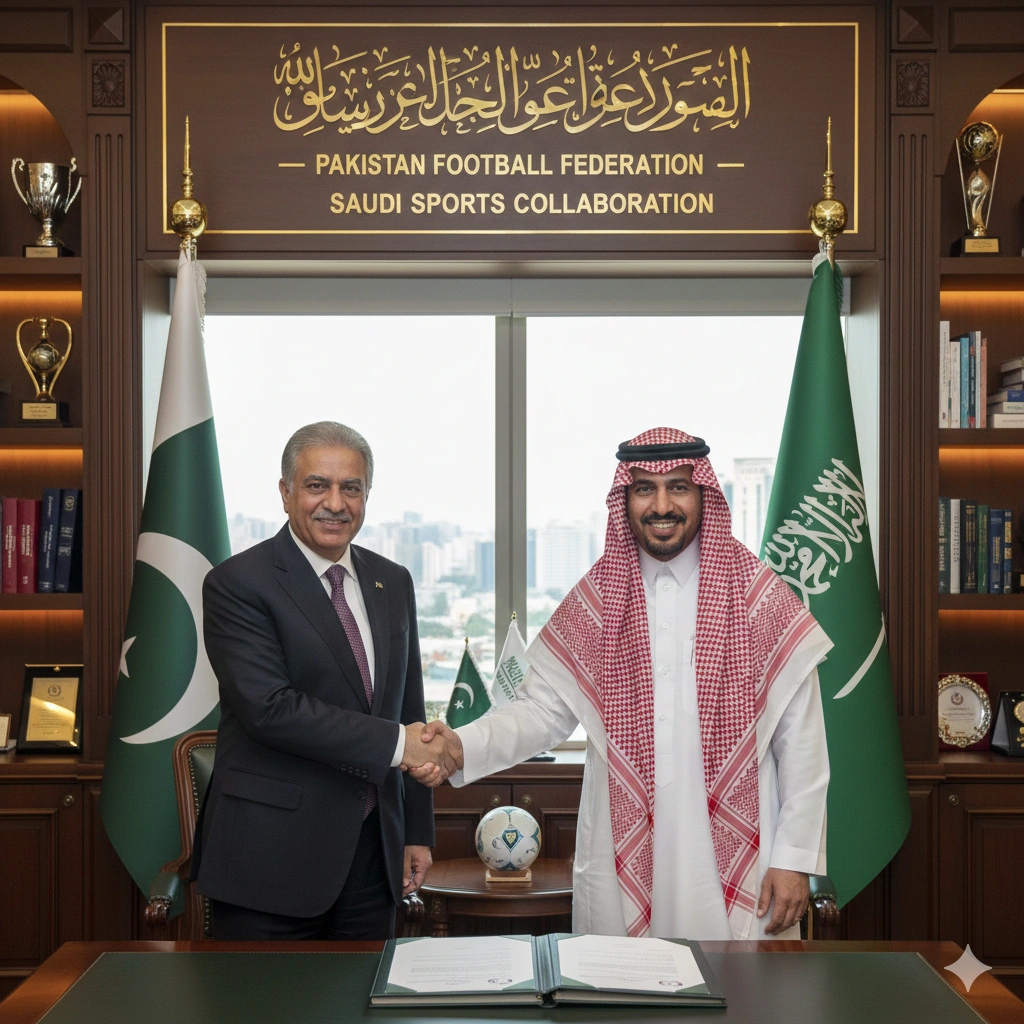
Historical Context of Pakistan Football Ties
The history of Pakistan football ties with the Kingdom of Saudi Arabia is rooted in decades of mutual respect and bilateral support. While previous efforts focused on general cultural exchange, the current trajectory is much more specialized and technical. Riyadh has consistently stood by Islamabad in various developmental sectors, and sports is now a primary focus. This evolution reflects the changing landscape of global sports where regional alliances define success.
Understanding the depth of Pakistan football ties requires looking at the Memorandum of Understanding signed in recent years. These documents laid the groundwork for what is now becoming a practical reality on the pitch. The recent discussions have moved beyond formalities into actionable points that include stadium renovations and specialized training camps. Such a strong foundation ensures that the upcoming projects will have a lasting impact on the local athletic community.
The significance of Pakistan football ties cannot be overstated when considering the geopolitical importance of sports in the Middle East and South Asia. Saudi Arabia’s “Vision 2030” plays a crucial role in this dynamic, as it seeks to expand influence through athletic excellence. Pakistan, with its massive youth population, presents a perfect partner for such an ambitious outreach program. Consequently, the synergy between the two nations is expected to yield unprecedented results for the regional footballing ecosystem.
Pakistan Football Ties
The core of the recent diplomatic breakthrough revolves around the strengthening of Pakistan football ties through direct institutional support. President Mohsen Gilani emphasized that the PFF is committed to a nationwide plan that aligns with international best practices. By partnering with Saudi experts, the federation hopes to bypass years of trial and error in talent identification. This direct collaboration is the most significant development for the sport in recent domestic history.
When we analyze the current state of Pakistan football ties, it is evident that technical assistance is the top priority. The Saudi Ambassador pledged full backing for programs that involve sending Pakistani coaches to Riyadh for advanced certifications. Furthermore, Saudi technical directors are expected to visit Lahore and Karachi to oversee grassroots festivals. This hands-on approach ensures that the knowledge transfer is effective and culturally relevant to the local environment.
The economic aspect of Pakistan football ties is also a major talking point among sports analysts this month. Investment in facilities is required to host international friendly matches, which were a key topic during the meeting. Ambassador Al-Maliki noted that football serves as a powerful bridge between the two brotherly nations. As infrastructure improves, the frequency of these bilateral exchanges will likely increase, fostering a deeper sense of unity through competition.
Infrastructure and Facility Upgrades in 2026
A major pillar of the renewed Pakistan football ties involves the modernization of existing stadiums and the construction of new training centers. Many local facilities have suffered from neglect, hindering the ability of athletes to perform at their peak. The Saudi delegation expressed interest in providing consultancy for high-performance centers equipped with modern technology. These upgrades are essential for meeting the stringent requirements set by international governing bodies.
The development of these facilities under the umbrella of Pakistan football ties will include the installation of high-quality turf and floodlights. Better lighting and playing surfaces allow for more flexible scheduling and reduce the risk of player injuries. Moreover, the inclusion of digital analysis labs will help coaches monitor player performance with scientific precision. This leap in technology is a direct result of the collaboration discussed by Gilani and Al-Maliki.
- Installation of FIFA-standard artificial and natural grass pitches across four major cities.
- Establishment of a national football academy with boarding facilities for youth prospects.
- Renovation of player dressing rooms and media centers to host international broadcasters.
- Implementation of advanced medical and rehabilitation centers for athlete recovery.
Youth Development and Grassroots Expansion
The long-term success of Pakistan football ties depends heavily on the investment made in the younger generation today. During the meeting, both parties agreed that identifying talent at the age of ten or twelve is vital for future World Cup qualifiers. Saudi Arabia has seen success with its own youth academies, and they are willing to share these blueprints. This initiative aims to create a pipeline of players who are tactically proficient from a young age.
To achieve this, the PFF plans to launch school-based leagues supported by the Pakistan football ties framework. These leagues will provide a platform for scouts to identify gifted individuals who might otherwise go unnoticed. Incentives such as scholarships and international exposure trips to Saudi clubs will be used to motivate young athletes. By making football a viable career path, the federation hopes to attract the best sporting talent in the country.
Community engagement is another vital component of the grassroots strategy linked to Pakistan football ties. Local clubs will receive equipment and training manuals translated into local languages to ensure widespread accessibility. The goal is to create a footballing culture that permeates every province, from the mountains of the north to the coastal areas of the south. This inclusivity is what will ultimately drive the popularity and standard of the game upward.
Coaching and Technical Exchange Programs
One cannot discuss the improvement of Pakistan football ties without mentioning the critical need for elite-level coaching. Currently, there is a shortage of Pro-License coaches in the country, which limits the tactical growth of the national team. The Saudi Arabian Football Federation has offered to host Pakistani trainers for intensive workshops and certification courses. This exchange will ensure that the latest global coaching trends are implemented locally.
Under the new Pakistan football ties agreement, senior Saudi coaches will also be seconded to the Pakistan National Team. Their experience in handling high-pressure Asian Cup matches will be invaluable for the local squad. These experts will focus on defensive organization, set-piece tactics, and physical conditioning. Such technical oversight is expected to bridge the gap between Pakistan and its higher-ranked Asian counterparts.
- Monthly webinars between Saudi technical directors and Pakistani provincial coaches.
- Exchange programs for referees to improve the officiating standards in domestic leagues.
- Joint workshops on sports psychology and nutrition for professional athletes.
Strategic Roadmap for International Success
The ultimate goal of enhancing Pakistan football ties is to see the national team rise in the FIFA rankings. President Gilani outlined a five-year plan that targets qualification for major Asian tournaments. This roadmap includes playing more “A” international friendlies during FIFA windows, specifically against Middle Eastern opponents. By facing tougher competition, the Pakistani players will develop the resilience needed for qualifiers.
Regular matches against Saudi clubs are also being scheduled as part of the Pakistan football ties initiative. These matches will provide local players with exposure to the professional environment of the Saudi Pro League, one of the fastest-growing leagues in the world. Learning how to manage game tempo and professional discipline is crucial for the national team’s evolution. The partnership ensures that these opportunities are consistent rather than sporadic.
The role of data analytics in this strategic roadmap is a direct benefit of the Pakistan football ties. Saudi analysts will help the PFF set up a database to track the performance of overseas Pakistani players. Integrating dual-nationals with local talent is a strategy that many successful nations have used. With better data, the coaching staff can make informed decisions about squad selection and tactical adjustments for specific opponents.
Impact of Sports Diplomacy on Bilateral Relations
The strengthening of Pakistan football ties serves as a masterclass in modern sports diplomacy. Beyond the goals and trophies, this collaboration reinforces the political and cultural bond between Islamabad and Riyadh. When athletes travel between these nations, they act as ambassadors, fostering goodwill among the citizens. This soft power is a critical tool for maintaining regional stability and cooperation.
Ambassador Al-Maliki’s personal involvement in these talks highlights the high level of importance Saudi Arabia places on Pakistan football ties. It is not merely a departmental project but a state-level priority aimed at holistic partnership. The enthusiasm shown by the Saudi leadership has been met with equal fervor by the Pakistani public. This mutual excitement is a testament to the universal language of football and its power to unite.
As we look toward the future, the success of these Pakistan football ties will likely inspire similar collaborations in other sports like volleyball or athletics. The template being created here—combining technical expertise with infrastructure investment—is highly replicable. For now, the focus remains on the pitch, where the fruits of this diplomacy will soon be visible. The upcoming friendly matches will be the first true test of this revamped sporting alliance.
Challenges and the Path Forward
Despite the optimism surrounding Pakistan football ties, several challenges must be addressed to ensure success. Bureaucratic hurdles and past administrative instabilities have often slowed down progress in Pakistani sports. Both Gilani and Al-Maliki acknowledged that a transparent and consistent approach is required to maintain momentum. Establishing a dedicated task force to oversee the implementation of these projects is a step in the right direction.
Another challenge for Pakistan football ties is the competition from other popular sports like cricket for airtime and sponsorship. To overcome this, the PFF must market the new Saudi partnership as a premium sporting product. Highlighting the involvement of world-class experts and the potential for international stardom will help capture the public’s imagination. As the results on the field improve, the commercial interest will naturally follow.
- Maintaining consistent funding for long-term projects through private-public partnerships.
- Ensuring the security and safety of visiting international teams and officials.
- Expanding the reach of the sport to women and marginalized communities.
- Navigating the complex politics of international football governance effectively.
Commercial Opportunities and Sponsorships
The revitalization of Pakistan football ties opens up a world of commercial possibilities for local and international brands. Saudi companies looking to expand their footprint in Pakistan see football as an ideal marketing vehicle. Conversely, Pakistani firms can gain visibility in the Gulf region through association with these high-profile sporting events. This economic synergy provides the financial fuel necessary to sustain the ambitious development plans.
Broadcasting rights are another area where Pakistan football ties can generate significant revenue. With the improvement in production quality, local leagues can be aired across the Middle East. This not only generates income but also gives Pakistani players a shop window to be scouted by international clubs. The financial health of the PFF is directly linked to how well it can monetize these new diplomatic and sporting avenues.
The involvement of Saudi airlines and telecommunication giants in Pakistan football ties is already being discussed. These sponsorships can provide the necessary travel and communication infrastructure for the national teams. When the private sector sees the commitment from the government level, their confidence in investing increases. This creates a virtuous cycle of growth that benefits everyone involved in the sporting value chain.
The Role of Media in Promoting Football
The media plays a crucial role in amplifying the benefits of the growing Pakistan football ties. Journalists and broadcasters are the storytellers who bring the excitement of the pitch to the homes of millions. By providing in-depth coverage of the new training programs and facility upgrades, the media helps build a sense of national pride. Positive reporting also encourages parents to support their children’s aspirations in the sport.
Social media campaigns focusing on Pakistan football ties have already started gaining traction among the youth. Short clips of training sessions, interviews with Saudi coaches, and behind-the-scenes footage create engagement. This digital presence is essential for reaching the tech-savvy younger generation who consume sports differently than their predecessors. The PFF’s digital strategy is being revamped to reflect this modern reality.
Furthermore, international media coverage of the Pakistan football ties helps change the global narrative about the country. It showcases Pakistan as a nation committed to development, international cooperation, and sporting excellence. Every successful friendly match or academy launch is a headline that promotes a positive image. The synergy between sports and media is a powerful tool for national branding on the global stage.
Conclusion and Future Outlook
In conclusion, the reinforcement of Pakistan football ties represents a landmark moment for the sport in the region. The meeting between Syed Mohsen Gilani and Nawaf bin Saeed Al-Maliki has set the stage for a revolution in how football is managed and played. From grassroots clinics to high-performance stadiums, the scope of this collaboration is truly comprehensive. While challenges remain, the political will and technical support are stronger than ever before.
The future of Pakistan football ties looks incredibly bright as we head into the latter half of 2026. Fans can expect to see a more professional, disciplined, and tactically sound national team in the coming years. The dream of seeing Pakistan compete at the highest levels of Asian football is no longer a distant fantasy but a reachable goal. Through the continued support of our Saudi brothers, the beautiful game will finally flourish in the heart of Pakistan.
For more details & sources visit: The Express Tribune
For the latest updates from Saudi Arabia, visit our Saudi Arabia page.