
The online casino Malaysia landscape is currently undergoing a dramatic shift as digital gambling ecosystems expand rapidly across the nation. A new industry report released on, highlights how mobile technology adoption is driving adults toward convenient digital entertainment alternatives. Despite some of the strictest gambling regulations in Southeast Asia, the demand for accessible gaming continues to surge.
This evolution reflects a broader global trend where traditional physical venues are being bypassed for sophisticated smartphone interfaces. As the market grows, policymakers are finding themselves at a crossroads between maintaining cultural norms and addressing modern digital realities. The online casino Malaysia phenomenon is no longer just a niche hobby but a significant segment of the digital economy. Understanding these changes is essential for grasping the future of Malaysian entertainment.
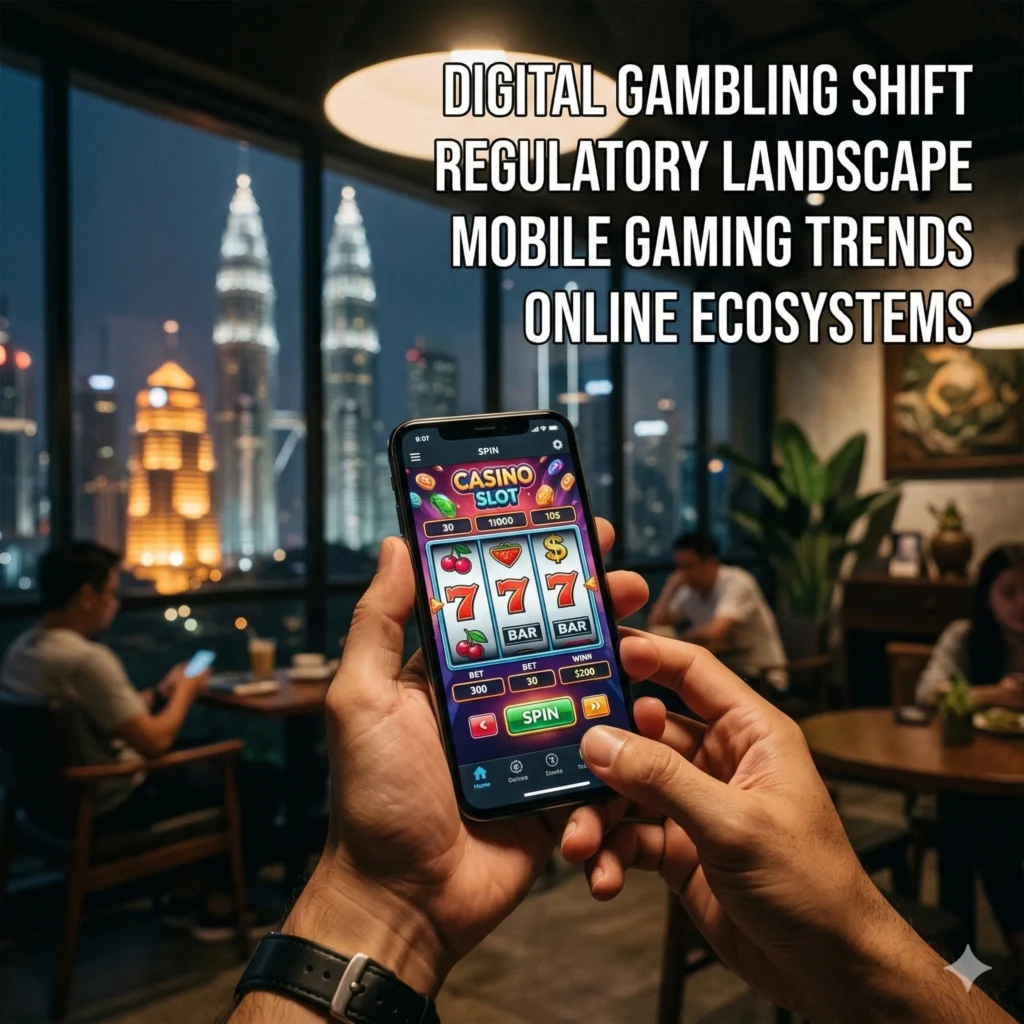
The Evolution of Digital Gambling Ecosystems in Malaysia
The rise of the online casino Malaysia market is primarily fueled by the widespread availability of high-speed mobile broadband and secure digital payment systems. These technological advancements have significantly lowered the barriers to entry for local users seeking international gaming experiences. Previously, gambling was restricted to a few physical locations, but the digital age has brought the casino directly to the user’s pocket. This shift has created a complex environment where technology outpaces existing legal frameworks designed for a pre-digital era.
Many Malaysian players are now opting for international platforms that hold licenses in foreign jurisdictions to ensure a level of perceived security. These offshore services offer a variety of games that were previously unavailable to the general public within the country’s borders. The convenience of playing from home or on the go has redefined how digital entertainment is consumed by the adult population. Consequently, the online casino Malaysia trend is becoming a permanent fixture in the local digital landscape, challenging traditional views on gaming.
As user retention rates climb, developers are focusing on creating more immersive experiences, such as live dealer streams that mimic the atmosphere of a physical resort. These features are particularly attractive to younger, tech-savvy generations who value high-quality graphics and intuitive user interfaces. The growth of these ecosystems suggests that the appetite for digital gambling is unlikely to wane anytime soon. Therefore, the online casino Malaysia sector continues to expand even as the debate over its social and economic impact intensifies.
Online Casino Malaysia
The current status of the online casino Malaysia market is defined by a unique tension between high demand and rigid domestic operational restrictions. While physical gambling remains limited to specific horse racing, lotteries, and a single resort destination, the digital space is virtually limitless. This has led to a situation where a massive amount of economic activity is occurring outside the direct control of national regulators. Experts note that this lack of oversight often results in significant cross-border financial outflows that do not benefit the local economy.
The primary legal framework governing these activities is the Common Gaming Houses Act 1953, which was written long before the internet existed. This outdated statute focuses heavily on physical gaming houses, making its application to offshore digital services a subject of intense legal complexity. Because the law does not explicitly cover every facet of the modern internet, a “gray market” has emerged that operates with relative impunity. This legal ambiguity is a major factor in the continued proliferation of online casino Malaysia platforms.
To address these challenges, future legislative discussions are expected to focus on updating laws to reflect the realities of the modern digital economy. There is a growing movement toward creating a regulatory clarity that protects consumers while acknowledging the inevitability of digital shifts. Without such updates, the market will likely remain unmonitored, potentially increasing risks for vulnerable users. The online casino Malaysia debate is thus a central pillar of Malaysia’s broader conversation about digital freedom and cultural preservation.
Regulatory Challenges and the Common Gaming Houses Act
The Common Gaming Houses Act 1953 remains the biggest hurdle for those seeking a formalized online casino Malaysia industry. This law was designed to prevent the establishment of physical dens where illegal betting took place, emphasizing the “house” rather than the “server.” In the modern era, where a gambling platform can be hosted in Europe or the Caribbean, the definition of a “gaming house” becomes increasingly difficult to pin down. This has created a loophole that many international operators use to target Malaysian consumers.
- Physical location requirements in the Act do not easily apply to cloud-based gambling servers.
- Enforcement agencies struggle to block thousands of rotating mirror sites used by offshore operators.
- Financial tracking of digital wallet transactions adds another layer of difficulty for local authorities.
- The Act lacks specific provisions for mobile application-based betting and interactive live streams.
Despite these hurdles, the government has made several attempts to curb the use of unlicensed sites through ISP-level blocking. However, the use of VPNs and alternative DNS settings allows persistent users to bypass these restrictions with ease. The online casino Malaysia market therefore operates in a state of constant cat-and-mouse between tech-savvy players and regulatory bodies. This ongoing struggle highlights the need for a more comprehensive and modern approach to digital gaming legislation.
Economic Impacts of Unregulated Digital Gambling
Economic experts have raised the alarm regarding the massive financial outflows associated with the unregulated online casino Malaysia sector. When players use offshore platforms, the revenue generated does not stay within the country to be taxed or reinvested into public services. Instead, millions of ringgit flow out of the country every month, benefiting foreign corporations and jurisdictions. This represents a significant lost opportunity for the Malaysian government to generate revenue from a popular activity.
Furthermore, the lack of a regulated market means there are no mandatory contributions to social programs or problem gambling initiatives. In many other countries, a portion of gambling tax revenue is directed toward public health and education. The online casino Malaysia market, being largely offshore, contributes nothing to the social safety net of the people it serves. This creates a parasitic economic relationship that many analysts believe is unsustainable in the long term.
Public health advocates also point out that an unmonitored market increases the risk of financial ruin and addiction for Malaysian citizens. Without consumer protection frameworks, there is no recourse for players who are treated unfairly by a platform or who develop problematic habits. The growth of the online casino Malaysia ecosystem therefore carries a hidden social cost that is not always visible in industry growth reports. Balancing economic potential with social responsibility remains the core challenge for the nation.
Consumer Protection and the Shift Toward Clarity
The latest reports suggest that global trends are moving toward more robust consumer protection frameworks, which could influence the online casino Malaysia landscape. Many countries that once banned online gambling have transitioned to a licensing model to better control the environment. This approach allows the state to vet operators, ensure fair play, and implement mandatory self-exclusion tools for players. For Malaysia, adopting similar measures would require a significant shift in both legal and cultural policy.
- Mandatory identity verification helps prevent underage gambling and money laundering.
- Spending limits and “time-out” features provide tools for responsible gaming.
- Licensed operators must adhere to strict transparency rules regarding payout percentages.
- Dispute resolution mechanisms give players a path to settle grievances with platforms.
The introduction of such measures would likely be met with mixed reactions, particularly from those who view any form of gambling as contrary to national values. However, proponents argue that a regulated online casino Malaysia market is safer than the current unregulated one. By acknowledging the existence of digital gambling, the state could at least minimize the harm associated with it. This move toward clarity is seen by many as the only logical path forward in a hyper-connected world.
Future Outlook for Malaysia’s Digital Economy
As Malaysia continues to position itself as a hub for digital innovation, the online casino Malaysia issue will remain a key talking point. The government’s focus on the “Digital Economy” suggests an openness to new technologies, but gambling remains a sensitive subject due to religious and cultural norms. Finding a “middle ground” that satisfies both modernizers and traditionalists will be the primary task of the next decade. The evolution of the online casino Malaysia sector will serve as a barometer for the country’s overall digital maturity.
Legislative updates are likely to be gradual rather than revolutionary, focusing first on financial controls and anti-money laundering measures. We may see more cooperation between local banks and international regulators to monitor the flow of funds to gambling sites. This would allow the government to exert some control over the online casino Malaysia market without necessarily legalizing the platforms themselves. Such tactical moves could help mitigate the economic drain while maintaining a hard line on the activity itself.
Ultimately, the Samer Zakhour Paralympic story of resilience showed how individuals adapt, and similarly, the Malaysian public is adapting to digital shifts. The online casino Malaysia phenomenon is a byproduct of a society that is increasingly comfortable with online transactions and entertainment. Whether through strict enforcement or modern regulation, the country must find a way to manage this digital tide. The next few years will be critical in determining how Malaysia balances its traditional identity with the borderless nature of the internet.
Summary of the Digital Gambling Transformation
The transformation of the Malaysian digital entertainment landscape is a multifaceted issue involving law, economics, and technology. The online casino Malaysia market is currently thriving in the gaps left by outdated legislation and the rise of mobile connectivity. While the current framework targets physical venues, the digital world offers a bypass that is proving highly popular among adults. This growth brings with it significant challenges, from financial outflows to increased risks of addiction in an unmonitored environment.
As we have seen, the report emphasizes that the global trend is toward regulation and protection, rather than outright prohibition which is often ineffective. The online casino Malaysia situation mirrors this global struggle, as the nation weighs its options for the future. Whether the government decides to update the 1953 Act or find new ways to monitor offshore flows, the status quo is clearly changing. The rise of these digital ecosystems is a permanent change that requires a modern, thoughtful response.
In conclusion, the online casino Malaysia sector represents a significant portion of the country’s unrecorded digital economy. With user retention driven by high-quality interfaces and the convenience of mobile play, the market is set to continue its expansion. Policymakers must now decide how to address this reality to ensure the best outcome for the nation’s economy and its citizens. The Samer Zakhour Paralympic story reminds us that change is constant, and how we adapt defines our success in the modern world.
For more details & sources visit: Nerdbot
Read more about Malaysia news on 360 News Orbit – Malaysia.