
Nokia and AI-Native Networks are at the forefront of a massive telecommunications shift as the Finnish giant announced expanded strategic partnerships with TIM Brasil and Deutsche Telekom. This bold move positions Nokia as a dominant force in the global race to integrate artificial intelligence directly into 5G infrastructure. By collaborating with industry leaders like Nvidia, Nokia is effectively pivoting its business model to capture the burgeoning demand for automated, cloud-based network solutions.
These agreements represent a critical evolution for the company, moving beyond traditional hardware sales into the high-growth sector of AI-driven connectivity. As mobile operators worldwide seek to optimize performance and reduce operational costs, the deployment of Nokia and AI-Native Networks provides a sophisticated roadmap for the future of digital communications.
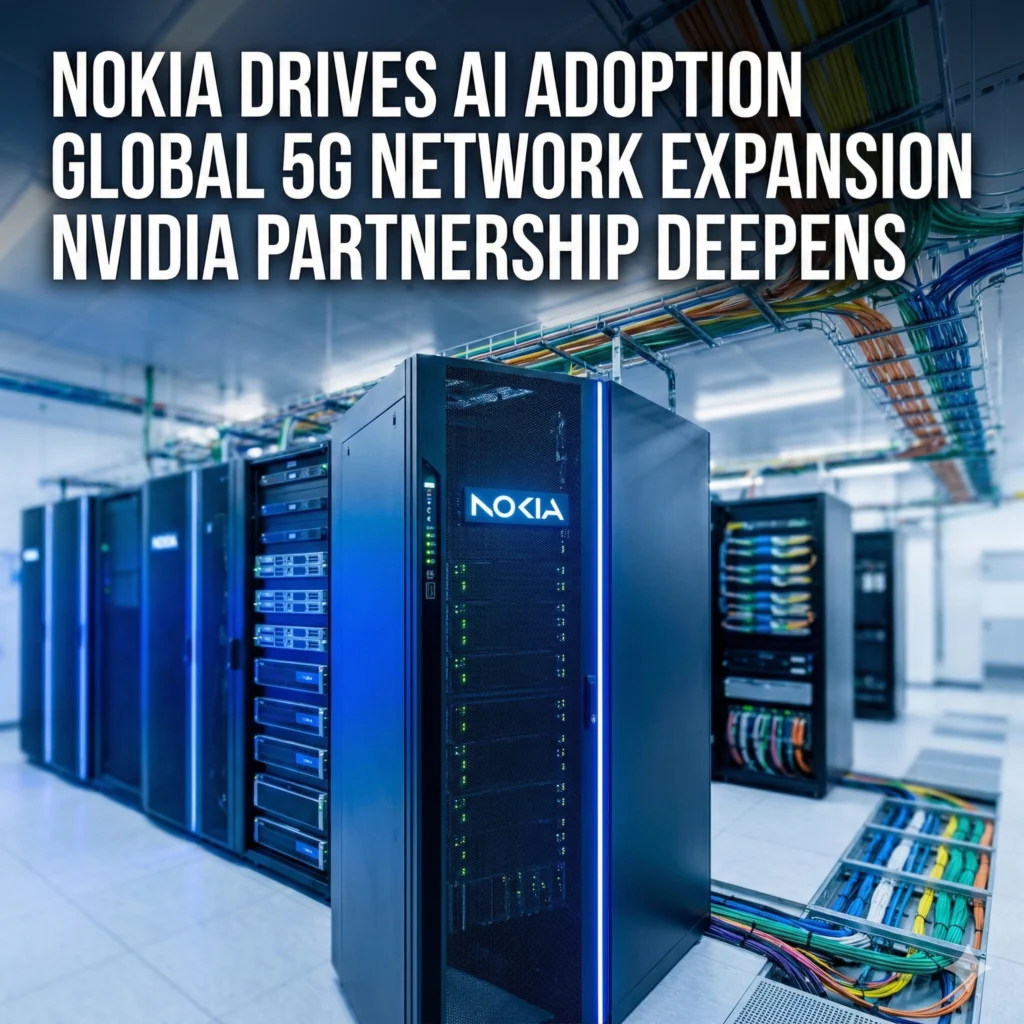
Nokia and AI-Native Networks Drive 5G Growth
The expansion of the partnership between Nokia and TIM Brasil marks a significant milestone in the digital transformation of South America. Under this new agreement, Nokia will deploy its advanced 5G solutions across 14 additional states, covering four major regions of Brazil. This expansion is designed to bring AI-based services and comprehensive network modernization to approximately 42 percent of the Brazilian population. By leveraging the latest in radio access technology, TIM Brasil aims to provide superior connectivity that can handle the massive data loads required by modern enterprise applications.
A key component of this collaboration is the integration of Nvidia AI-RAN platforms, which allow TIM Brasil to offer specialized, AI-driven services to its business customers. This technology enables real-time network optimization, predictive maintenance, and enhanced security protocols that were previously impossible with traditional infrastructure. The synergy between Nokia and AI-Native Networks ensures that the Brazilian market remains competitive on a global scale. Business leaders in the region are already looking toward these upgrades to fuel innovation in sectors such as agriculture, manufacturing, and smart city development.
Furthermore, the scale of this deployment highlights Nokia’s ability to execute complex, large-scale infrastructure projects in emerging markets. The 14-state expansion is not just a hardware upgrade; it is a fundamental shift in how network intelligence is managed at the edge. By bringing AI processing closer to the user, TIM Brasil can significantly reduce latency and improve the overall user experience for millions of subscribers. This project serves as a clear indicator that the demand for high-performance, intelligent networks is no longer confined to North America or Europe.
Nokia and AI-Native Networks
The collaboration with Deutsche Telekom represents a strategic effort to accelerate the development of cloud-based and automated mobile networks in Europe. This partnership focuses on creating a programmable architecture that can adapt to the fluctuating demands of high-speed connectivity in real-time. By utilizing the principles of Nokia and AI-Native Networks, Deutsche Telekom is preparing its infrastructure for the next generation of industrial and consumer applications. The goal is to create a seamless, self-healing network that minimizes downtime and maximizes efficiency through advanced machine learning algorithms.
In Germany, the focus is specifically on the development of Open RAN (Radio Access Network) solutions that allow for greater flexibility and vendor interoperability. Nokia and AI-Native Networks are central to this initiative, providing the software-defined capabilities needed to run complex network functions on standard cloud hardware. This approach reduces the reliance on proprietary equipment and allows operators like Deutsche Telekom to innovate at a much faster pace. As the European market becomes increasingly data-centric, these AI-native solutions provide the necessary scalability to support the anticipated surge in IoT devices and autonomous systems.
- Implementation of AI-driven traffic steering to prioritize critical data packets during peak usage hours.
- Deployment of energy-efficient radio units that use machine learning to reduce power consumption by 20 percent.
- Integration of automated fault detection systems to resolve network issues before they affect the end-user.
- Development of localized edge computing nodes to support low-latency applications in German industrial hubs.
The Nvidia Influence and Strategic Investments
The recent 1 billion dollar equity investment by Nvidia in Nokia has fundamentally changed the competitive landscape of the telecommunications industry. By securing a 2.9 percent stake in the Finnish group, Nvidia has ensured that its cutting-edge AI chips remain at the heart of Nokia’s infrastructure rollout. This investment is a massive vote of confidence in the vision for Nokia and AI-Native Networks, signaling to the market that the future of telecom is inseparable from the future of AI. The partnership allows Nokia to access exclusive silicon technology, giving them a distinct advantage over rivals who are still catching up to the AI-native shift.
This financial backing comes at a crucial time as Nokia undergoes a major restructuring effort to pivot toward data centers and AI demand. The acquisition of the United States optical networking firm Infinera last year was a clear precursor to this shift, strengthening Nokia’s ability to handle the massive data throughput required by AI clusters. By combining optical networking expertise with AI-native radio technology, Nokia is creating a vertically integrated solution that covers everything from the data center to the mobile device. This holistic approach is exactly what major operators are looking for as they plan their long-term capital expenditures.
The strategic moves made by Nokia are already reflecting a shift in revenue streams away from traditional 5G equipment, which has seen a global slowdown in spending. Instead, the company is finding high-margin growth in software-defined networking and AI-enabled services. This transition is essential for maintaining profitability in a mature market where hardware margins are constantly under pressure. The success of Nokia and AI-Native Networks depends on this ability to provide high-value intelligence that goes beyond simple connectivity.
Global Competition and Infrastructure Upgrades
Telecom operators are currently locked in a global race to upgrade their 5G infrastructure to support the broader adoption of artificial intelligence. In this high-stakes environment, Nokia and AI-Native Networks provide a critical edge by offering a platform that is “AI-ready” out of the box. This means that as new AI models are developed, the underlying network can be updated via software rather than requiring expensive physical hardware replacements. This flexibility is a major selling point for operators like Telefonica, who recently signed a multi-year contract with Nokia for data center solutions in Spain.
The move toward AI-native infrastructure is also driven by the need for better network slicing and resource allocation. As more enterprises move their operations to the cloud, the demand for guaranteed bandwidth and low-latency connections has skyrocketed. Nokia and AI-Native Networks allow operators to create virtual “slices” of their network tailored to specific use cases, such as remote surgery, autonomous logistics, or high-frequency trading. This capability transforms the mobile network from a “dumb pipe” into a sophisticated service delivery platform.
- Global 5G infrastructure spending is expected to pivot 30 percent toward AI-integrated solutions by the end of 2026.
- AI-native networks can reduce operational expenditures for telcos by an estimated 15 percent through automation.
- The demand for AI-driven cybersecurity within mobile networks has increased by 50 percent year-over-year.
Enhancing User Experience Through AI Automation
For the average consumer, the deployment of Nokia and AI-Native Networks means a more reliable and responsive mobile experience. AI algorithms can predict where network congestion is likely to occur and preemptively reallocate resources to maintain high speeds. In densely populated areas like Sao Paulo or Berlin, this technology ensures that video streaming and gaming remain smooth even during major events. The automation of these processes removes the human bottleneck, allowing the network to respond to changes in milliseconds.
Moreover, the focus on AI-native design includes significant improvements in upload speeds and signal stability, which are crucial for the growing “prosumer” market. As more people work remotely and rely on high-definition video conferencing, the quality of the uplink becomes just as important as the downlink. Nokia’s AI-enhanced beamforming technology can track a user’s device more accurately, ensuring a consistent connection even in challenging indoor environments. This attention to detail is what defines the quality of modern 5G networks.
The partnership with TIM Brasil specifically targets these improvements to reach the underserved populations in the 14 expanded states. By modernizing these regions with Nokia and AI-Native Networks, the digital divide can be narrowed, providing millions of people with access to high-speed internet for the first time. This social impact is a powerful byproduct of the technological advancements driven by the Nokia-Nvidia-TIM collaboration. As the network grows, it creates a virtuous cycle of increased usage, more data, and better AI optimization.
Future Projections for AI-Native Telecommunications
Looking ahead to 2027 and beyond, the influence of Nokia and AI-Native Networks will likely expand into the realm of 6G development. The lessons learned from the current deployment of AI-native 5G will form the architectural foundation for the next decade of connectivity. We can expect to see even deeper integration between the network and the applications it supports, with AI playing a role in everything from spectrum management to user-device interaction. Nokia’s early lead in this space positions it as a primary architect of the future global communication grid.
The role of data centers will also become increasingly intertwined with the mobile network. As AI processing is distributed across the edge and the core, the distinction between a “telecom company” and a “cloud provider” will continue to blur. Nokia and AI-Native Networks are at the center of this convergence, providing the fabric that connects the two worlds. For investors and industry analysts, the key metric to watch will be the growth of software and services revenue as a percentage of Nokia’s total earnings.
- Anticipated launch of “Autonomous Network” standards by early 2027 based on current AI-native pilot programs.
- Potential for Nokia to expand its AI partnership model to additional regions including Southeast Asia and India.
- Continued collaboration with Nvidia to develop specialized “AI-at-the-Edge” hardware for industrial IoT.
- Focus on “Green AI” initiatives to further reduce the carbon footprint of massive 5G deployments.
Conclusion and Market Impact
In conclusion, the expansion of Nokia’s partnerships with TIM Brasil and Deutsche Telekom signifies a major victory for the Nokia and AI-Native Networks vision. By successfully integrating AI into the heart of 5G infrastructure, Nokia has proven that it can adapt to the rapidly changing technological landscape. These deals are not just about adding more towers; they are about adding more intelligence to the existing global connectivity web. As AI continues to reshape every industry, the telecommunications sector remains the essential foundation upon which all other innovations are built.
The strategic investment from Nvidia and the acquisition of Infinera have provided Nokia with the resources and technology needed to lead this charge. While the competition remains fierce, the combination of Finnish engineering and Silicon Valley AI expertise is a potent mix. As we move deeper into 2026, the success of these partnerships will likely encourage other operators to follow suit, further accelerating the global adoption of AI-native infrastructure. The future of the network is here, and it is powered by Nokia and AI-Native Networks.
Ultimately, the goal of these strategic moves is to create a more resilient, efficient, and capable global communication system. Whether it is a business in Brazil utilizing Nvidia-powered services or a consumer in Germany enjoying seamless 5G, the benefits of this technology are clear. Nokia’s pivot toward AI is not just a survival strategy; it is a bold leap into a new era of human connectivity. As the world becomes more digital, the intelligence behind the network becomes the most valuable asset in the global economy.
For more details & sources visit: Reuters
For more regional updates and industry insights, visit our Brazil News Page.