
The Nigerian 2023 Election has emerged as a defining political moment, placing long-established power brokers against a fast-growing youth movement demanding change. The February 25, 2023 vote featured candidates from Nigeria’s dominant parties, the All Progressives Congress (APC) and the People’s Democratic Party (PDP), facing a strong challenge from the Labour Party’s Peter Obi, whose campaign energized younger voters frustrated by corruption, insecurity, and economic pressure.
As Africa’s most populous country headed into the polls, the contest reflected deeper tensions between entrenched political networks and a new generation seeking accountability and reform.
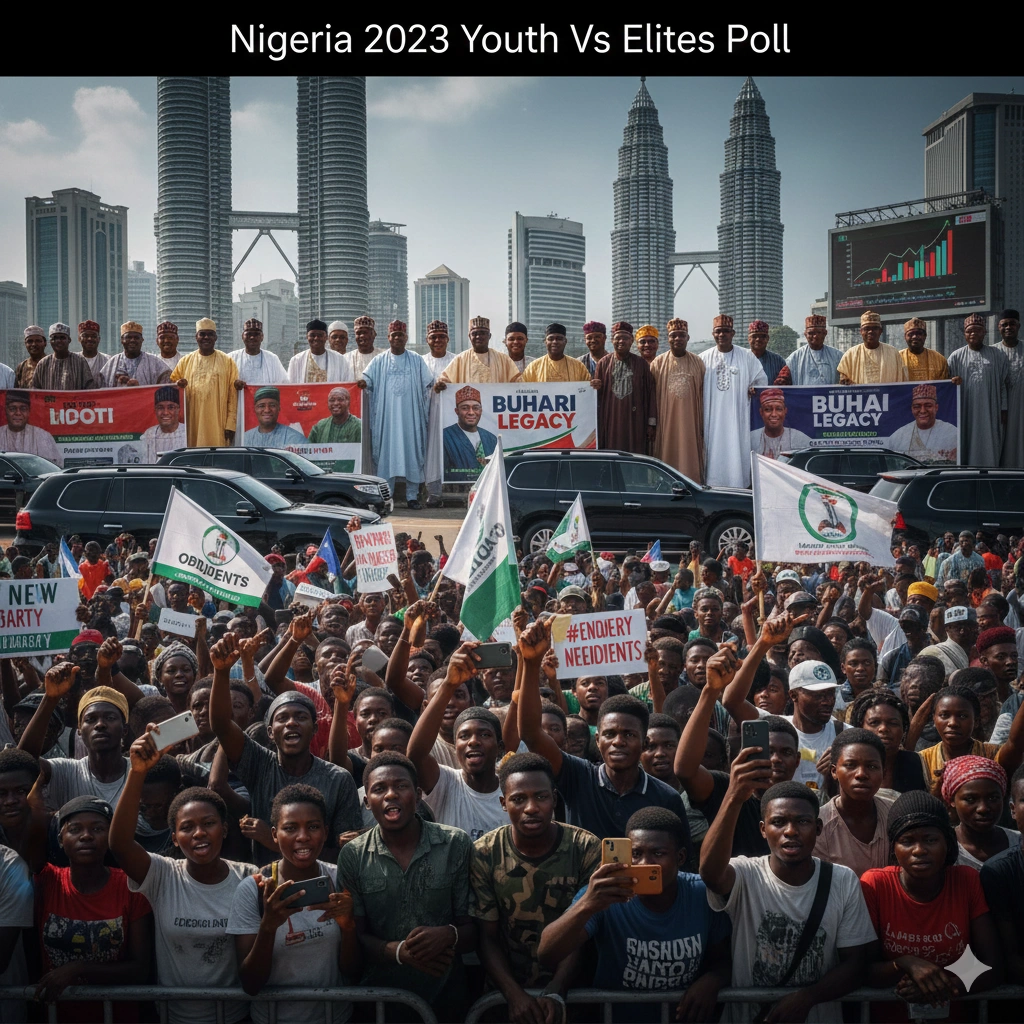
Elite Power Structures Shape the Nigerian 2023 Election
At the center of the race were Bola Tinubu of the APC and Atiku Abubakar of the PDP, both veteran politicians with decades of influence. Their campaigns drew support from established political structures, including state governors, party loyalists, and long-standing patronage networks.
Tinubu’s campaign leaned on his well-known “It’s My Turn” narrative, signaling a belief among allies that his political career and behind-the-scenes influence positioned him for the presidency. His support base included powerful regional leaders and a wide coalition built over years in national politics.
Atiku Abubakar, contesting the presidency for the sixth time, promoted his experience in business and government. His background in customs service and private enterprise was presented as evidence of administrative capacity, even as critics raised longstanding concerns linked to past graft allegations, which he has consistently denied.
Peter Obi and the Youth Surge
In contrast, Peter Obi emerged as a disruptive force in the Nigerian 2023 Election, rallying a coalition of young voters, professionals, and first-time participants. A former governor of Anambra State and once the PDP’s vice-presidential nominee in 2019, Obi repositioned himself as a reform-focused candidate promising improved security, fiscal discipline, and pro-business policies.
His campaign gained momentum through social media engagement, grassroots organizing, and strong appeal among urban youth often described as “makers and millennials.” Many supporters saw his candidacy as an opportunity to break from the dominance of traditional political elites.
The surge also reflected lingering frustration from the aftermath of the #EndSARS protests, which exposed widespread distrust in institutions and concerns about police brutality and governance failures. For many young Nigerians, participation in the election became a way to convert protest energy into political influence.
Trust Deficit and Party Loyalty Challenges
Despite intense campaigning, public trust in political parties remained fragile. Surveys from regional research groups indicated that confidence in party systems hovered around 39 percent, underscoring widespread skepticism toward political leadership.
This trust gap was shaped by repeated allegations of vote-buying, opaque primaries, and impunity within major parties. Critics argued that such practices discouraged participation and reinforced the perception that elections favored established elites.
Strategic Stakes Beyond Nigeria
The implications of the Nigerian 2023 Election extended beyond domestic politics. As a regional power with major economic and security responsibilities across West Africa, Nigeria’s leadership direction influences cooperation on counterterrorism, trade, and diplomatic initiatives.
Observers also noted growing debate among international partners about balancing strategic relationships with concerns over governance standards and human rights. The election therefore became a test of whether Nigeria’s democratic institutions could adapt to rising public expectations while maintaining stability.
A Turning Point in Political Participation
What made this election cycle distinct was not only the rivalry between established figures and a reform candidate, but also the scale of youth engagement. Increased voter registration among younger demographics signaled a shift toward more active civic participation after years of political disengagement.
In that sense, the Nigerian 2023 Election represented more than a contest between three candidates. It reflected a broader struggle over the direction of governance, accountability, and economic opportunity in one of the world’s most influential emerging democracies.
Outlook
The clash between entrenched political networks and energized youth voters highlighted a country at a crossroads. Established leaders still commanded vast resources and alliances, yet the growing demand for transparency and reform signaled that Nigeria’s political landscape is evolving.
If sustained, the participation surge seen around Peter Obi’s campaign could reshape party strategies, candidate selection, and policy priorities in future cycles. Regardless of the immediate outcome, the election underscored that Nigeria’s democracy is entering a phase where public expectations, digital mobilization, and generational change will play a far larger role.
For more details & sources visit: Carnegie Endowment
Read more on Nigeria news: 360 News Orbit – Nigeria.