
Minister He Rong recently announced that the national business environment will undergo a significant legislative overhaul to ensure market stability and legal transparency across all Chinese provinces. The Ministry of Justice is prioritizing the removal of local protectionism to create a more integrated and efficient economic landscape for domestic and foreign investors. By focusing on high-quality growth, the government intends to streamline administrative procedures and eliminate the bureaucratic hurdles that currently hinder cross-regional operations. These reforms are expected to provide a much-needed boost to investor confidence as the country navigates a complex global economic climate.
The Ministry of Justice has already demonstrated its commitment to this cause by rectifying over 60,000 cases involving irregular law enforcement over the past year. This massive nationwide campaign resulted in the recovery of nearly 30 billion yuan for various enterprises, effectively preventing significant economic losses. Minister He Rong emphasized during the “Ministers’ Corridor” interview that the rule of law remains the most critical component for stabilizing the national business environment. Moving forward, the government will implement stricter oversight to ensure that administrative law enforcement remains predictable and fair for every registered business entity.
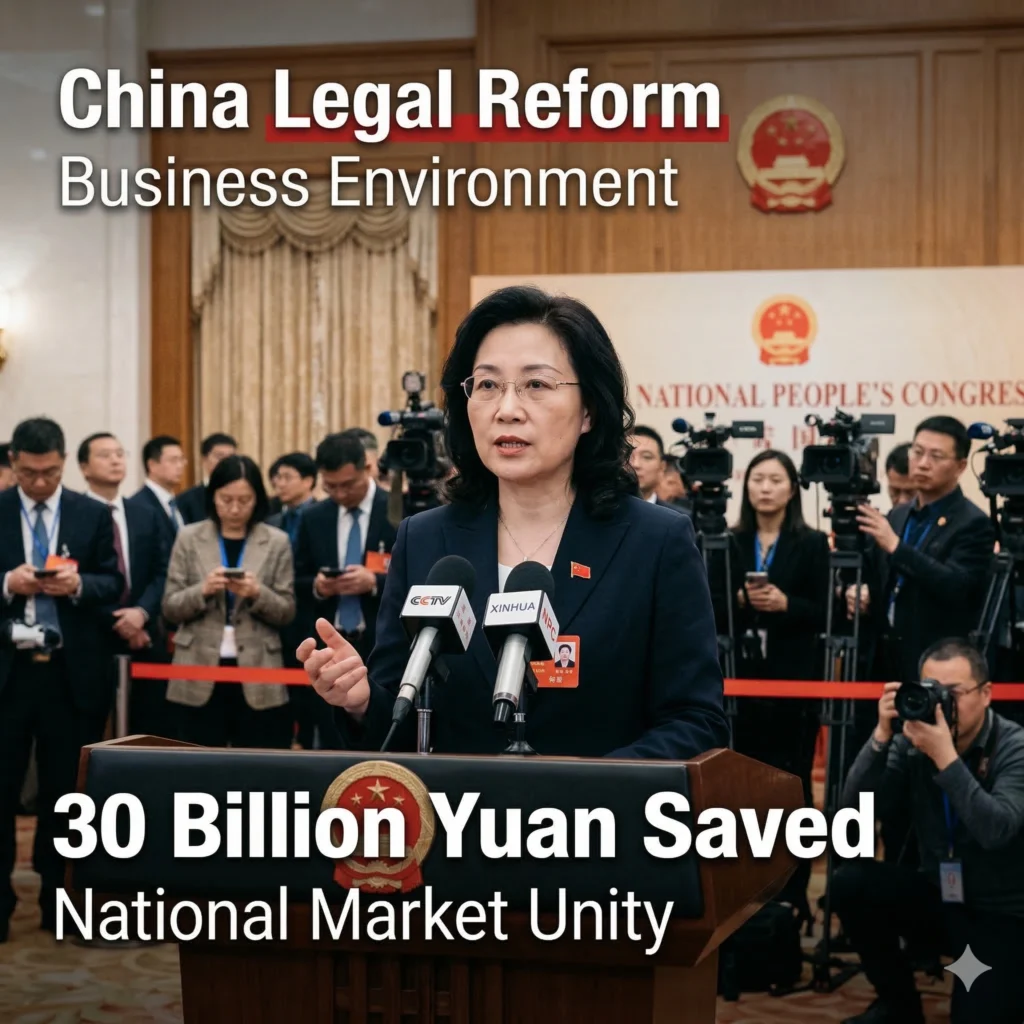
National Business Environment
The creation of a unified market is the primary objective for the Ministry of Justice as it looks toward the upcoming fiscal year. To achieve a truly integrated national business environment, the government must dismantle the invisible barriers that prevent companies from expanding beyond their home regions. Local protectionism has long been a thorn in the side of economic integration, often leading to inefficient resource allocation. By standardizing legal frameworks, China aims to foster an atmosphere where competition is based on merit rather than regional favoritism or political connections.
Furthermore, the legal focus will extend to removing improper market entry barriers that have historically disadvantaged private and foreign enterprises. Strengthening the national business environment requires a level playing field where all market participants can thrive without fear of discriminatory regulatory practices. Minister He Rong noted that the new legislative measures are designed to address the most prominent issues currently facing the business community. This proactive approach signals a shift toward a more service-oriented government model that prioritizes the legitimate interests of property owners and corporate stakeholders.
Eradicating Harmful Market Involution Through Legal Reform
One of the most pressing challenges addressed by the Ministry of Justice is the phenomenon known as harmful market involution. This term refers to destructive and excessive internal competition that drains corporate resources without producing genuine innovation or value. To protect the national business environment, the government plans to implement legal measures that curb these predatory practices and encourage healthy growth. These reforms will target price wars and other anti-competitive behaviors that undermine the long-term sustainability of various industrial sectors.
By addressing market involution, the Ministry aims to redirect corporate energy toward technological advancement and quality improvement. A stable national business environment depends on companies competing in ways that benefit the overall economy rather than just cannibalizing each other’s market share. The proposed legal changes will provide clearer definitions of fair competition and harsher penalties for those who engage in manipulative market tactics. This strategy is essential for maintaining the high-quality growth targets set by the 14th National People’s Congress.
Judicial Oversight and Enterprise Asset Recovery
The success of the recent rectification campaign highlights the importance of judicial oversight in maintaining a healthy national business environment. By reviewing tens of thousands of law enforcement cases, the Ministry of Justice was able to identify and correct systemic irregularities that were harming local businesses. This process not only recovered billions of yuan but also restored faith in the administrative legal system. Investors are more likely to commit capital when they know that the national business environment is protected by a vigilant and fair judiciary.
Standardizing administrative law enforcement is another key priority for the upcoming year to prevent future irregularities from occurring. The government is working to ensure that every regulatory action is backed by clear legal authority and subject to transparent review processes. A predictable national business environment allows companies to plan for the long term without the constant threat of arbitrary fines or sudden policy shifts. These efforts reflect a broader strategy to institutionalize the rule of law across all levels of government administration.
Protecting Property Rights and Market Entities
At the heart of the new legislative focus is the unwavering protection of property rights for all market participants. A robust national business environment cannot exist without a legal system that guarantees the safety of corporate assets and intellectual property. Minister He Rong emphasized that the ministry is drafting new regulations to further safeguard the legitimate interests of various market entities. This includes enhancing the legal recourse available to businesses that face unfair treatment or administrative overreach.
The focus on property rights is particularly important for attracting foreign direct investment into the national business environment. International firms often cite legal transparency and asset protection as their top concerns when deciding whether to enter or expand in the Chinese market. By aligning domestic laws with international standards, China is positioning itself as a more attractive and reliable destination for global capital. These legal protections are viewed as a cornerstone of the country’s strategy to foster a fairer and more competitive playing field.
Streamlining Regulatory Compliance for Small Businesses
Small and medium-sized enterprises (SMEs) are the backbone of the economy and stand to benefit the most from an improved national business environment. The Ministry of Justice plans to streamline regulatory compliance to reduce the administrative burden on these smaller players. Excessive paperwork and complex licensing requirements often stifle innovation and prevent new startups from gaining a foothold. By simplifying these processes, the government aims to invigorate the national business environment from the ground up.
In addition to reducing red tape, the new initiatives will provide SMEs with better access to legal resources and dispute resolution mechanisms. A fair national business environment ensures that even the smallest companies have the tools they need to defend their rights against larger competitors or overzealous regulators. Minister He Rong stated that the legal system must adapt to the evolving needs of the business community, and supporting SMEs is a vital part of that evolution. These changes are expected to spark a new wave of entrepreneurial activity across the nation.
High Quality Growth and the Rule of Law
The government’s commitment to the rule of law is intrinsically linked to its goals for high-quality economic growth. A transparent national business environment provides the stability necessary for long-term investments in research and development. When the legal framework is clear and consistently applied, businesses can focus on innovation rather than navigating regulatory grey areas. This shift toward quality over quantity is essential for the continued modernization of the national business environment.
- Legislation will target the removal of regional trade barriers.
- Administrative enforcement will be standardized across all provinces.
- New protections for intellectual property will be implemented shortly.
- The government will increase transparency in all market entry procedures.
Minister He Rong believes that the legal system must stay ahead of economic trends to effectively manage the national business environment. As new industries emerge, the Ministry of Justice will proactively develop the necessary frameworks to ensure they operate within a fair and regulated space. This forward-looking approach is designed to prevent market failures and ensure that the benefits of economic growth are shared broadly. The rule of law serves as the foundation upon which a modern, resilient economy is built.
Future Perspectives on the Chinese Market Landscape
Looking ahead, the reforms announced by the Ministry of Justice will likely redefine the national business environment for years to come. The emphasis on a unified market and the elimination of local protectionism will create a more cohesive economic entity. This integration is crucial for China to maintain its competitive edge in the global market. A strong national business environment will not only support domestic growth but also enhance China’s role as a leader in international trade and finance.
- Expect more frequent judicial reviews of administrative cases.
- Anticipate stricter penalties for improper market competition.
- Watch for new digital tools to simplify business registration.
The ongoing efforts to improve the national business environment demonstrate a clear understanding of the challenges facing the modern economy. By prioritizing fairness, transparency, and the rule of law, the Chinese government is taking the necessary steps to secure a prosperous future. These legislative changes are not merely administrative updates; they are fundamental shifts in how the country manages its economic life. As these policies take effect, the national business environment will become increasingly conducive to sustainable, high-quality development.
Strengthening Investor Confidence Through Transparency
Transparency is the most effective tool for building trust within the national business environment. The Ministry of Justice is committed to making all legal and regulatory changes publicly accessible and easy to understand. By providing clear guidelines on what is expected from market participants, the government reduces the risk of accidental non-compliance. This level of openness is essential for maintaining a healthy national business environment that attracts both domestic and international investors.
Minister He Rong noted that the ministry will work closely with the business community to identify any remaining pain points. This collaborative approach ensures that the reforms are grounded in the actual experiences of those operating within the national business environment. Regular consultations and feedback loops will allow the government to fine-tune its policies and address emerging issues in real-time. This dynamic legal framework is a key pillar of the strategy to stabilize the economy and foster long-term prosperity.
Advancing the Rule of Law in Local Administrations
One of the significant hurdles in optimizing the national business environment is ensuring that local governments adhere to central directives. The Ministry of Justice is intensifying its efforts to train local officials on the importance of fair administrative law enforcement. By aligning local practices with national standards, the government can eliminate the discrepancies that currently fragment the national business environment. This top-down approach is necessary to ensure that a company in one province receives the same legal protections as a company in another.
- Training programs for local regulators are being expanded significantly.
- New reporting mechanisms for businesses to flag local misconduct.
- Regular audits of regional administrative enforcement actions.
These measures will create a more uniform national business environment where rules are applied consistently across the board. Removing the “local kingpin” mentality is essential for the free flow of capital and labor within the country. As local administrations become more accountable, the overall quality of the national business environment will improve. This commitment to consistency is a powerful signal to the global community that China is serious about its legal reforms.
Addressing the Impact of Global Economic Shifts
The national business environment does not exist in a vacuum and must be resilient enough to withstand global economic shocks. The Ministry of Justice is incorporating flexibility into its legal frameworks to allow for rapid responses to international market changes. Strengthening the national business environment involves creating a system that can adapt without losing its core principles of fairness and the rule of law. This resilience is vital for protecting domestic industries from external volatility.
Minister He Rong emphasized that a stable national business environment is China’s best defense against global uncertainty. By creating a strong internal market, the country can reduce its dependence on volatile foreign trends while still remaining an active participant in global trade. The focus on high-quality growth within the national business environment ensures that the economy remains competitive and innovative. These strategic legal efforts are a testament to the government’s long-term vision for economic stability.
The Role of Digitalization in Legal Reforms
Digital technology is playing an increasingly important role in modernizing the national business environment. The Ministry of Justice is leveraging big data and AI to monitor market activities and detect potential legal violations more efficiently. These technological tools allow for a more precise and less intrusive regulatory approach within the national business environment. By automating routine administrative tasks, the government can free up resources to focus on more complex legal challenges.
- Online platforms for legal dispute resolution are being developed.
- Digital tracking of administrative enforcement cases for transparency.
- Automated compliance checkers for various industrial sectors.
Digitalization also makes it easier for businesses to interact with the legal system, further improving the national business environment. From electronic filings to virtual court hearings, the integration of technology is making justice more accessible and efficient. This modern infrastructure is a key component of a world-class national business environment. As these digital tools become more widespread, the ease of doing business in China is expected to reach new heights.
Conclusion and Long-Term Strategic Goals
The comprehensive reforms aimed at improving the national business environment are a clear indication of China’s commitment to economic modernization. By focusing on the rule of law, property rights, and fair competition, the Ministry of Justice is laying the groundwork for sustainable growth. The national business environment will continue to evolve as the government addresses the prominent issues facing the community today. This proactive stance ensures that the legal system remains a facilitator of progress rather than a barrier to it.
Minister He Rong’s announcements during the National People’s Congress have set a clear path for the future of the national business environment. The recovery of 30 billion yuan and the rectification of thousands of cases are just the beginning of a broader effort to sanitize the market. A transparent and predictable national business environment is the ultimate goal, providing a solid foundation for the “Chinese Dream” of economic prosperity. These efforts will undoubtedly shape the economic landscape for the next decade and beyond.
For more details & sources visit: CGTN
For more China-related updates, visit our China News page.