
MSF Hospital Bombed In South Sudan during a government airstrike in Jonglei state, marking the 10th attack on a medical facility in the past 12 months, according to Doctors Without Borders (Médecins Sans Frontières, MSF). The strike destroyed vital medical supplies intended for hundreds of thousands of people and forced the suspension of critical healthcare services.
The incident occurred on February 3, amid an ongoing government offensive in the region, highlighting the escalating humanitarian crisis in South Sudan.
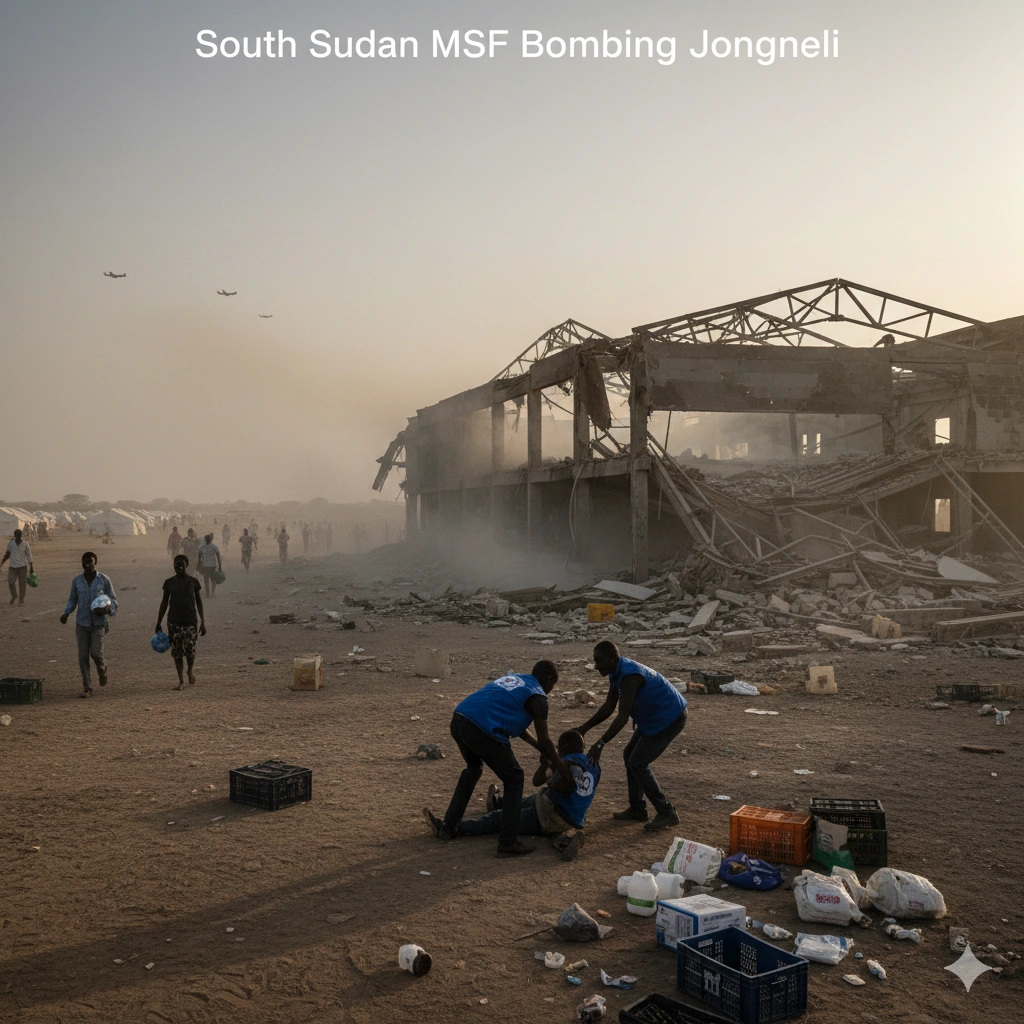
Airstrike Destroys Critical Medical Supplies
Doctors Without Borders reported that its Lankien hospital in Jonglei was hit by a government airstrike, destroying medical supplies meant to support around 250,000 people. The attack comes after MSF faced access restrictions in December, which had already hampered its ability to deliver aid.
On the same day, MSF said its Pieri healthcare center was looted, forcing staff to flee for safety. The dual incidents severely disrupted healthcare delivery in an area already facing conflict-related shortages.
MSF Evacuated Staff Before the Strike
MSF confirmed that staff were evacuated shortly before the airstrike based on threat intelligence indicating potential attacks on the town. Despite the evacuation, one MSF worker was injured, although not seriously.
Operations manager Gul Badshah stated that the government is believed to be the only party with airstrike capability in the region, strongly suggesting state involvement in the attack. He condemned the strike, calling it a devastating blow to civilians who rely on MSF as their only healthcare provider.
Healthcare Services Suspended Across the Region
Following the attack, MSF announced the closure of its facilities in Greater Upper Nile, suspending medical services for vulnerable populations. The organization warned that thousands of civilians now lack access to emergency care, maternal services, and treatment for infectious diseases.
The closure comes amid escalating violence and displacement, further straining an already fragile health system.
Rising Displacement and Humanitarian Crisis
The United Nations reports that around 280,000 people have been displaced in the region, adding to South Sudan’s long-standing humanitarian crisis. Conflict, food insecurity, and limited healthcare access have left millions dependent on international aid organizations like MSF.
The bombing of a hospital underscores the dangers faced by humanitarian workers and civilians alike, and raises serious concerns about violations of international humanitarian law, which protects medical facilities during armed conflict.
Pattern of Attacks on Medical Facilities
The fact that MSF Hospital Bombed In South Sudan is the tenth such attack in a year reflects a troubling pattern. Repeated strikes on healthcare infrastructure have crippled medical services in conflict zones, leaving civilians without life-saving care.
Human rights groups have warned that targeting hospitals and medical workers constitutes a war crime under international law, and have called for independent investigations into such incidents.
MSF Condemns the Attack and Calls for Protection
Doctors Without Borders strongly condemned the bombing, urging all parties to the conflict to respect the neutrality of medical facilities and humanitarian staff. MSF emphasized that its mission is purely humanitarian and that attacks on healthcare facilities put countless lives at risk.
The organization also called for safe humanitarian access to affected areas so that aid workers can resume operations and deliver urgent medical assistance.
Broader Implications for South Sudan’s Conflict
The incident in which the MSF Hospital Bombed In South Sudan highlights the broader instability in the country, where ongoing violence continues to undermine peace efforts and humanitarian operations. Analysts warn that repeated attacks on civilian infrastructure could deepen South Sudan’s humanitarian catastrophe and further complicate international peacekeeping and stabilization efforts.
The international community has repeatedly urged South Sudan’s government and armed groups to protect civilians and uphold international humanitarian law, but enforcement remains weak. The case of the MSF Hospital Bombed In South Sudan underscores persistent concerns over accountability and the safety of humanitarian workers and facilities in conflict zones.
Outlook and International Response
As MSF Hospital Bombed In South Sudan draws global attention, international organizations and governments are expected to increase pressure on South Sudanese authorities to investigate the incident and protect humanitarian operations.
Without immediate action, experts warn that healthcare access in conflict-affected regions will continue to deteriorate, leaving thousands without essential medical care.
For more details & sources visit: Al Jazeera
Read more on Sudan news: 360 News Orbit – Sudan.