
Middle East Peace Talks are now the central focus of global geopolitics as we enter the late stages of March 2026. The world is watching with bated breath as Chinese Foreign Minister Wang Yi signals what he describes as a genuine glimmer of hope for a regional ceasefire. This optimism stems from a series of high-level diplomatic maneuvers involving the United States, Iran, and key regional mediators such as Turkey and Egypt.
While the situation remains precarious due to ongoing military actions on the ground, the rhetoric from Washington and Beijing suggests that the path to Middle East Peace Talks is being paved behind the scenes. Analysts are closely monitoring these developments to see if the combined pressure from global superpowers can finally bring the warring parties to a sustainable agreement. The potential for a breakthrough has never been more apparent than in the current diplomatic climate of 2026.
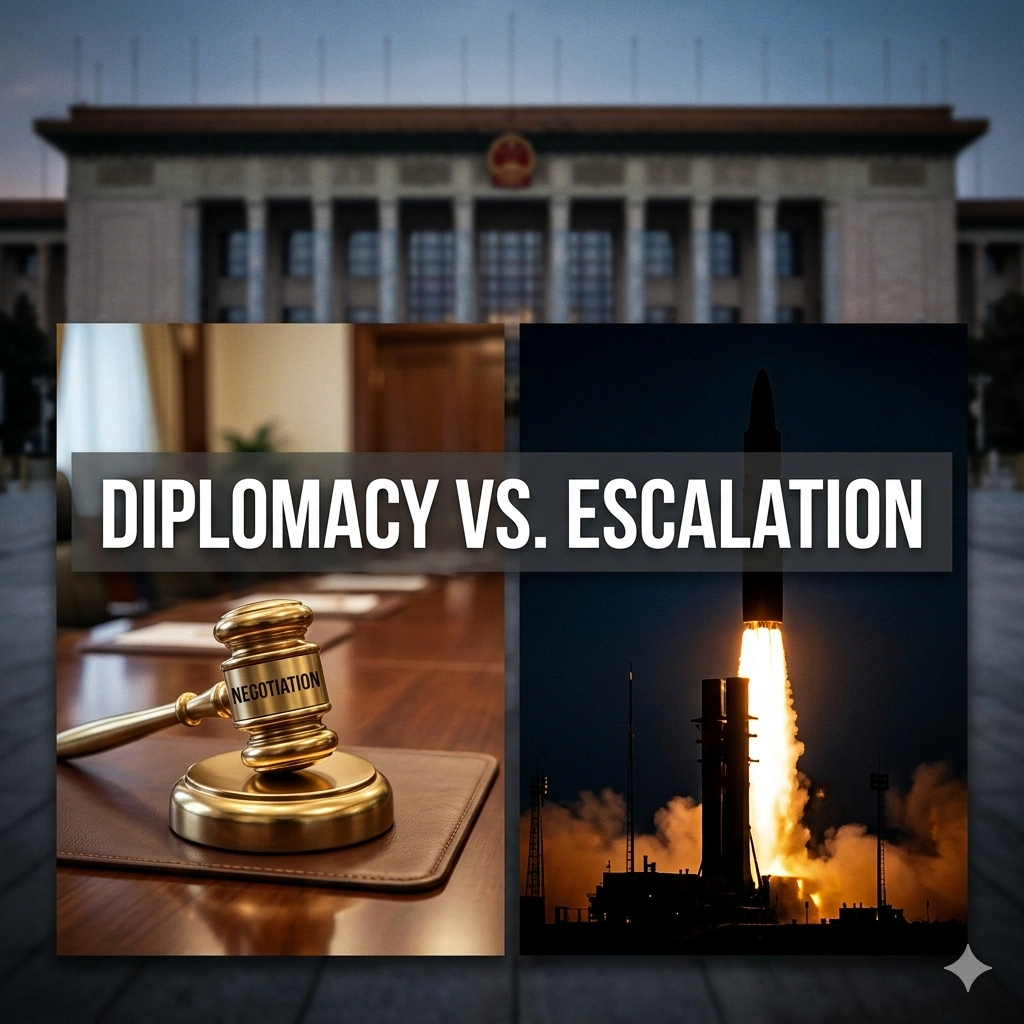
Middle East Peace Talks
The landscape of Middle East Peace Talks shifted significantly this week following a series of strategic phone calls led by Beijing’s top diplomat. Wang Yi, during discussions with his counterparts in Cairo and Ankara, emphasized that both the United States and Iran have begun to signal a willingness to engage in dialogue. This represents a major pivot from the purely militaristic stance seen earlier in the month. The Chinese Foreign Ministry has positioned itself as a primary facilitator, urging all involved parties to seize this window of opportunity to prevent a wider regional spillover.
Despite the optimistic tone from Beijing, the reality of Middle East Peace Talks is complicated by the conflicting narratives coming from the direct participants. U.S. President Donald Trump has been vocal about his administration’s efforts, claiming that productive conversations are already occurring. He has suggested that a deal is not only possible but likely, provided certain conditions regarding nuclear ambitions and regional security are met. This public stance by the American leadership has added a layer of urgency and high-stakes drama to the ongoing mediation efforts led by regional powers.
However, the path to successful Middle East Peace Talks is hindered by firm denials from Tehran. Iranian Foreign Minister Abbas Araghchi has publicly dismissed claims of formal negotiations, labeling such talk as a psychological tactic by the West. From the Iranian perspective, engaging in talks while under the threat of intensified military strikes is viewed as an admission of defeat. This fundamental disagreement on the status of current discussions highlights the immense challenge facing mediators who are trying to find common ground in a theater of war that has already claimed thousands of lives.
The involvement of Turkey as a mediator provides another critical dimension to the prospects for Middle East Peace Talks. Foreign Minister Hakan Fidan has been engaged in what he describes as intense diplomatic efforts to bridge the gap between Washington and Tehran. Turkey’s unique position as a NATO member with significant regional influence allows it to speak to both sides with a level of authority that few other nations possess. By working alongside Egypt and Pakistan, Turkey is attempting to create a multilateral framework that can support a lasting ceasefire and a transition to formal diplomacy.
Trump Signals Breakthrough in Middle East Diplomacy
President Donald Trump has once again taken to the global stage to assert that Middle East Peace Talks are nearing a critical juncture. In recent statements from Florida, the President indicated that his administration has established contact with high-ranking Iranian officials, though he stopped short of naming them. Trump’s strategy appears to involve a mixture of intense military pressure and the promise of economic incentives if Iran agrees to a comprehensive peace plan. This “carrot and stick” approach is a hallmark of his foreign policy, designed to force opponents to the negotiating table through sheer overwhelming leverage.
The President’s claims regarding Middle East Peace Talks have been met with a mixture of skepticism and hope by the international community. While some see his rhetoric as a way to manipulate global oil markets and domestic public opinion, others believe that the back-channel communications he describes are indeed taking place. The appointment of specialized envoys and the involvement of his close advisors suggest that the White House is treating the possibility of a deal with a high degree of seriousness. For Trump, securing a peace agreement in the Middle East would be a crowning achievement of his current term.
One of the key elements Trump has emphasized in the context of Middle East Peace Talks is the requirement for Iran to completely abandon its nuclear program. He has made it clear that any deal must include strict verification measures and the transfer of enriched uranium out of Iranian control. This hardline stance is aimed at reassuring regional allies, particularly Israel, that any diplomatic settlement will not come at the expense of their national security. The President’s ability to balance these demands with the needs of the Iranian leadership will be the ultimate test of his negotiating prowess.
As the five-day deadline for potential strikes on Iranian energy infrastructure looms, the pressure surrounding Middle East Peace Talks has reached a boiling point. The world is waiting to see if the President will follow through on his threats or if the reported diplomatic progress will be enough to justify a further extension of the ceasefire. The next few days will be decisive in determining whether the “glimmer of hope” identified by China can be transformed into a concrete and enforceable peace treaty that stabilizes the entire region for years to come.
China Role in Facilitating Middle East Peace Talks
China’s emergence as a central player in Middle East Peace Talks marks a significant shift in the global balance of power. Foreign Minister Wang Yi’s recent comments reflect a broader Chinese strategy to position itself as a “world factory” and a “world market” that thrives on global stability. By actively promoting dialogue, Beijing is protecting its significant energy interests in the Persian Gulf and its investments in the Belt and Road Initiative. The Chinese government believes that the root causes of the conflict must be addressed through negotiation rather than the unilateral use of force.
In the context of Middle East Peace Talks, China has been working closely with regional partners to build a consensus for peace. Wang Yi’s calls with Egyptian and Turkish leaders demonstrate a coordinated effort to create a united front that can influence both the U.S. and Iran. China’s message is clear: a drawn-out conflict serves no one’s interest and poses a grave threat to international trade and security. By providing a platform for neutral discussion, Beijing hopes to offer an alternative to the confrontational approach that has characterized the region for decades.
The effectiveness of China’s involvement in Middle East Peace Talks will depend on its ability to maintain its neutral stance while exerting influence. Unlike the United States, China does not have a history of direct military intervention in the region, which gives it a unique form of soft power. However, the complexity of the internal politics in Tehran and the volatile nature of American foreign policy make this a difficult path to navigate. Beijing’s success will be measured by whether it can turn its diplomatic rhetoric into a functional peace process that all parties can trust and adhere to.
Furthermore, China’s push for Middle East Peace Talks is intertwined with its broader geopolitical objectives. By leading the charge for peace, Beijing is demonstrating that it can provide global leadership on issues that have long baffled Western powers. This effort is not just about the Middle East; it is about proving that a multi-polar world can produce effective solutions to the most pressing crises of our time. As the 2026 conflict continues to impact global markets, China’s role as a mediator will only become more vital to the restoration of global economic order.
Military Escalation Challenges Middle East Peace Talks
The fragile hope for Middle East Peace Talks was severely tested this Thursday when an Iranian ballistic missile struck the Israeli city of Kfar Qasim. The attack, which involved the use of cluster submunitions, resulted in several civilian injuries and widespread panic. This sudden surge in violence serves as a stark reminder that the situation on the ground often moves in a different direction than the diplomatic efforts in capital cities. For those advocating for peace, such incidents provide ammunition for skeptics who believe that neither side is truly ready to stop the fighting.
The timing of this attack is particularly damaging to the momentum of Middle East Peace Talks. Just as Wang Yi and Donald Trump were signaling progress, the sound of sirens in central Israel and explosions in Tehran reminded the world of the high human cost of the conflict. The use of cluster munitions, which leave behind unexploded bomblets that pose a long-term threat to civilians, has drawn international condemnation. This escalation makes it significantly harder for political leaders to justify making concessions to an adversary that continues to launch lethal strikes against civilian targets.
Despite these setbacks, the push for Middle East Peace Talks continues because the alternative is perceived as much worse. Military analysts warn that without a diplomatic breakthrough, the conflict could evolve into a protracted war of attrition that devastates the regional infrastructure and destabilizes global energy markets. The closure of the Strait of Hormuz has already sent oil prices skyrocketing, creating an “energy emergency” in several nations. This economic pressure acts as a powerful incentive for even the most hawkish leaders to at least consider the possibility of a negotiated settlement.
Emergency teams in Kfar Qasim are currently working to secure the area and treat the wounded, while military commanders on both sides are assessing their next moves. The challenge for diplomats is to ensure that this latest round of violence does not completely derail the Middle East Peace Talks. They must find a way to use the threat of further escalation as a reason to accelerate the negotiations rather than as an excuse to abandon them. The resilience of the diplomatic process will be tested in the coming hours as both Washington and Tehran respond to the events on the battlefield.
Regional Mediators Drive Middle East Peace Talks
The role of regional powers like Turkey, Egypt, and Pakistan in driving Middle East Peace Talks cannot be overstated. These nations are on the front lines of the conflict’s spillover effects, from refugee crises to economic disruptions. Their involvement in mediation is born out of a desperate need for regional stability. By relaying messages and hosting preliminary discussions, they are providing the necessary infrastructure for the United States and Iran to communicate without having to engage in direct, public negotiations that might be politically sensitive at home.
Turkey’s contribution to Middle East Peace Talks has been particularly visible through the actions of Foreign Minister Hakan Fidan. Fidan has been engaging in “shuttle diplomacy,” moving between regional capitals to find areas of agreement. Turkey’s goal is to establish a framework that addresses the core concerns of all parties, including maritime security in the Strait of Hormuz and the territorial integrity of sovereign states. The Turkish government’s ability to maintain a working relationship with both the Trump administration and the leadership in Tehran makes it an indispensable player in this process.
Egypt’s participation in Middle East Peace Talks is equally critical, especially given its historical role as a mediator in regional conflicts. Cairo is deeply concerned about the potential for the war to disrupt the Suez Canal and other vital trade routes. By working with China and other international partners, Egypt is helping to mobilize a global consensus for a ceasefire. The Egyptian leadership has been hosting technical meetings where diplomats can hammer out the details of a potential agreement in a secure and neutral environment, away from the glare of the international media.
The collective efforts of these regional mediators have created a “multi-layered” approach to Middle East Peace Talks. While the superpowers focus on the high-level political and nuclear issues, the regional powers are addressing the immediate security and humanitarian concerns on the ground. This division of labor is essential for a conflict as complex as the one currently unfolding. If a deal is eventually reached, it will be thanks to the persistent and often unheralded work of these middle-tier powers who refused to give up on the prospect of peace even when the situation seemed hopeless.
Humanitarian Impact and Middle East Peace Talks
The human toll of the ongoing conflict has become a primary driver for the acceleration of Middle East Peace Talks. With thousands of lives lost and millions displaced, the international community is facing a humanitarian crisis of historic proportions. The destruction of power plants, water desalination facilities, and hospitals has left entire populations in a state of extreme vulnerability. In every diplomatic meeting, the need to restore basic services and provide aid to civilians is being prioritized as a foundational step toward any lasting political settlement.
- Over 1,500 people have been killed in Iran since the current phase of the war began in late February 2026.
- Lebanon has reported nearly 1,100 deaths, including many children and first responders, as the conflict spreads across borders.
- In Israel, the civilian casualty count continues to rise as long-range missiles target major population centers like Tel Aviv and Kfar Qasim.
- The displacement of hundreds of thousands of people has created a massive strain on the resources of neighboring countries like Jordan and Turkey.
Addressing these humanitarian issues within the framework of Middle East Peace Talks is not just a moral imperative but a strategic necessity. A ceasefire that does not include provisions for aid and reconstruction is unlikely to hold, as the desperate conditions on the ground will continue to fuel resentment and violence. Diplomats are working on “humanitarian corridors” that would allow for the safe passage of food and medicine even while the larger political issues are being debated. These small-scale agreements can serve as “confidence-building measures” that pave the way for more significant breakthroughs.
The “glimmer of hope” that Wang Yi speaks of is ultimately for the millions of people whose lives have been upended by the war. For them, Middle East Peace Talks represent more than just a diplomatic exercise; they represent the chance to return home and rebuild their lives. The pressure from international human rights organizations and the global public is forcing leaders to stay at the table, even when the political costs of doing so are high. The shared goal of ending the suffering of innocent civilians remains the most powerful unifying factor in the entire peace process.
Global Economic Stability and Middle East Peace Talks
The global economy is currently being held hostage by the volatility in the Persian Gulf, making Middle East Peace Talks a matter of international financial survival. The closure of the Strait of Hormuz has disrupted nearly 20% of the world’s oil and gas supply, leading to an “energy emergency” in several major economies. Stock markets around the world have seen historic fluctuations as investors react to every rumor of a breakthrough or an escalation. For world leaders, the economic cost of the war has become as significant as the political and military costs.
Economic incentives are being used as a central tool in the Middle East Peace Talks. The United States has hinted that it could ease sanctions and allow for the resumption of oil exports if Iran agrees to a peace deal. Similarly, China has offered to invest billions in the reconstruction of regional infrastructure as part of a post-war development plan. These promises of economic renewal are designed to provide the Iranian leadership with a way to sell a peace deal to their domestic audience, who have been suffering under the weight of wartime shortages and inflation.
However, the use of economic leverage in Middle East Peace Talks is a double-edged sword. Some Iranian officials have accused the West of using the prospect of a deal to manipulate markets and weaken their resolve. They argue that the “fake news” regarding negotiations is a form of economic warfare designed to cause panic and devalue their currency. To overcome this mistrust, mediators must ensure that any economic components of a peace deal are transparent, verifiable, and provide immediate benefits to the people of the region.
The success of Middle East Peace Talks would lead to an immediate stabilization of global energy prices and a surge in market confidence. This would be a major victory for the global community, which is still recovering from the economic shocks of the previous years. As the March 26, 2026 deadline approaches, the financial world is watching the diplomatic developments with intense scrutiny. The ability of Wang Yi and Donald Trump to turn their signals of hope into a functional economic and security agreement will determine the financial trajectory of the entire planet for the remainder of the decade.
The Future Path of Middle East Peace Talks
As we look toward the future of Middle East Peace Talks, it is clear that the road ahead is filled with both peril and possibility. The “glimmer of hope” identified by the Chinese Foreign Ministry is a fragile light that could be extinguished by a single miscalculation on the battlefield. However, the fact that such a light exists at all, after weeks of intense warfare, is a testament to the power of diplomacy. The coming weeks will require extraordinary patience and courage from all parties involved as they attempt to turn a temporary ceasefire into a permanent peace.
The next phase of Middle East Peace Talks will likely involve more direct communication between the primary antagonists. While mediation by third parties has been successful in opening the door, a final agreement will require the United States and Iran to sit down and address their differences face-to-face. This will be a difficult step, given the decades of animosity and the current blood spilled on both sides. Yet, history shows that even the most bitter enemies can find a way to peace when the costs of continued war become unbearable.
- The implementation of a formal ceasefire agreement will require an international monitoring force to ensure compliance on both sides.
- A long-term security architecture for the region must be established to prevent future conflicts and protect global trade.
- The reconstruction of destroyed infrastructure will require a coordinated international effort led by the world’s largest economies.
- The success of the peace process will depend on the continued involvement of regional powers like Turkey, Egypt, and Pakistan.
The year 2026 has already been one of the most challenging in modern history, but it also has the potential to be the year that the Middle East finally began to move toward a more stable and peaceful future. The Middle East Peace Talks are the only viable way out of the current quagmire, and the international community must remain committed to the process. Whether it is through the bold assertions of Donald Trump or the steady diplomacy of Wang Yi, the search for peace must continue until the “glimmer of hope” becomes a bright and lasting reality for all the people of the region.
Verification of Peace Protocols in Middle East Peace Talks
A critical component of any successful conclusion to Middle East Peace Talks will be the establishment of robust verification protocols. Trust is currently at an all-time low between the conflicting parties, making it impossible to rely on verbal agreements or informal understandings. Any peace treaty must include detailed mechanisms for monitoring military movements, verifying the cessation of hostilities, and ensuring that weapons of mass destruction are not being developed or deployed. Without these safeguards, any ceasefire would be nothing more than a temporary pause before the next round of violence.
International organizations such as the United Nations and the International Atomic Energy Agency (IAEA) will likely play a central role in these verification efforts. In the context of Middle East Peace Talks, these agencies could be tasked with inspecting facilities and providing neutral reports on the status of compliance. The challenge will be to ensure that these organizations have the access and authority they need to be effective, which has been a point of contention in previous negotiations. However, the presence of a neutral international body could provide the necessary assurance that both sides are acting in good faith.
The use of advanced technology will also be a key feature of the verification process in Middle East Peace Talks. Satellite imagery, drone surveillance, and remote sensing equipment can provide real-time data on military activities without the need for a large-scale presence of foreign troops. This “high-tech” approach to monitoring could help overcome some of the sovereignty concerns that have historically hindered peace efforts in the region. By leveraging the latest innovations, diplomats can create a verification system that is both efficient and difficult to circumvent.
Ultimately, the success of these protocols will depend on the political will of the leaders involved in Middle East Peace Talks. They must be willing to accept a level of transparency that may be uncomfortable, in exchange for the long-term security that a peace deal provides. As the negotiations continue, the details of these verification measures will be among the most difficult to resolve. However, they are the essential building blocks of a peace that is not just a piece of paper, but a lived reality for the millions of people who call the Middle East home.
For more details & sources visit: The Guardian
Read more about China news on 360 News Orbit – China.