
Mexico Kills El Mencho marks a monumental shift in the global fight against organized crime and international drug trafficking networks. The elimination of Nemesio Oseguera Cervantes represents the most significant blow to the Jalisco New Generation Cartel since its inception over a decade ago. Mexican special forces executed a high-precision tactical raid, which resulted in the death of the world’s most wanted kingpin. This operation was the culmination of years of intelligence gathering by both domestic and international agencies seeking to dismantle the CJNG’s sprawling empire.
While the government celebrates this tactical victory, the immediate aftermath has been characterized by a terrifying surge in nationwide violence and strategic highway blockades. Citizens across multiple states now face a volatile security landscape as splinter cells react to the leadership vacuum. The fall of this notorious figure raises urgent questions about the future of fentanyl distribution and the stability of the Mexican state.
Strategic Impact of the Military Raid
The successful operation to neutralize the cartel leader was a display of advanced military coordination and clandestine intelligence sharing. For years, the elusive figurehead had managed to evade capture by moving between fortified mountainous hideouts and urban safe houses. Security analysts suggest that the precision of the strike indicates a high level of penetration within the cartel’s inner security circle. This breach of loyalty or security suggests that the organization may have been experiencing internal friction even before the raid.
The timing of the operation is particularly significant as Mexico prepares for major international events and seeks to bolster its economic standing. By removing the primary architect of the CJNG’s expansion, the government has sent a clear message to other criminal syndicates. However, the vacuum left by such a dominant personality often leads to unpredictable consequences in the underworld. We are currently seeing the initial “shock and awe” phase of the cartel’s retaliatory strategy across the central and western regions.
Mexico Kills El Mencho
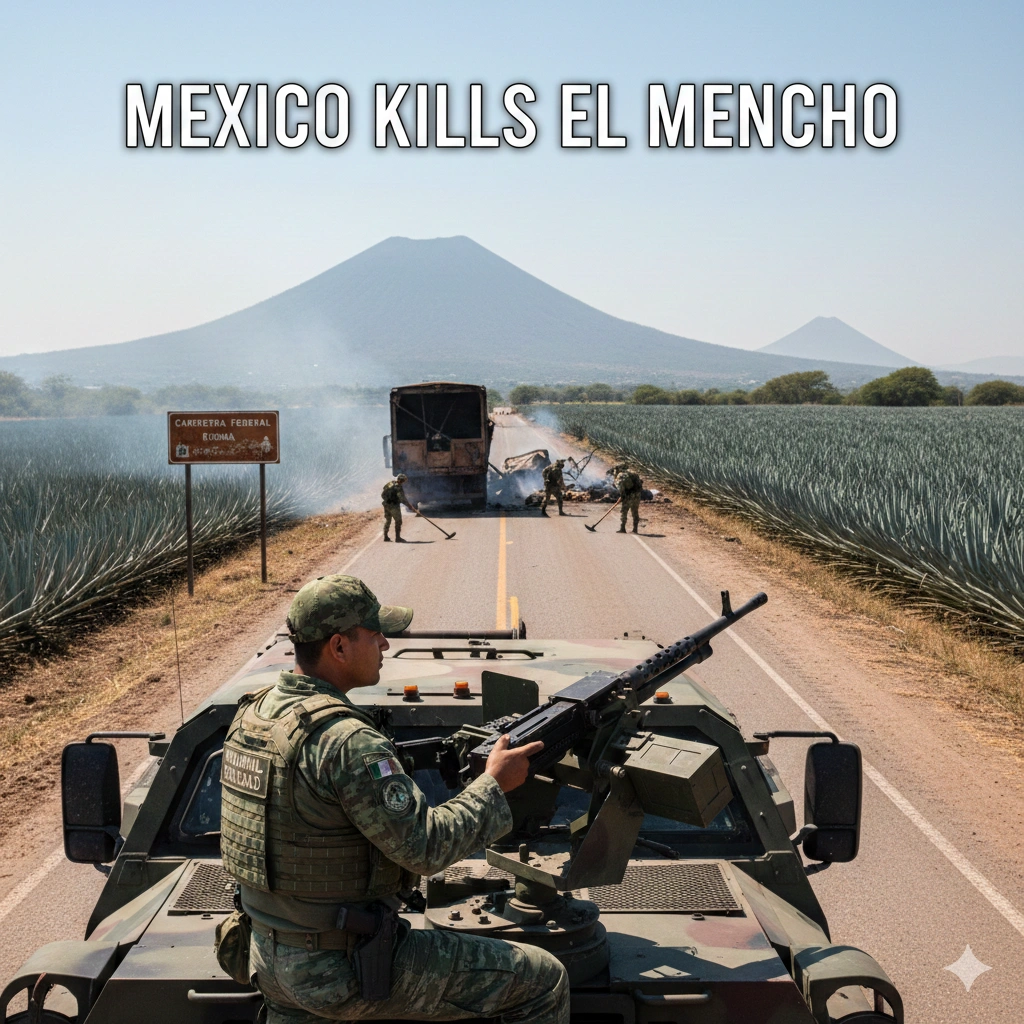
Mexico Kills El Mencho has triggered a wave of coordinated narco-blockades that have paralyzed major transportation arteries in the state of Jalisco. Armed militants hijacked commercial semi-trucks and buses, setting them ablaze to prevent the movement of federal reinforcements. These tactics are designed to create chaos and force the military to divert resources away from securing the region. Local residents in Guadalajara and surrounding municipalities have been advised to stay indoors as the situation remains extremely fluid and dangerous.
The sheer scale of the retaliation demonstrates that while the head of the snake has been removed, the body remains highly functional. Command and control structures within the CJNG appear to be following a pre-established “contingency plan” for such a high-profile loss. This level of organization suggests that the group anticipated the eventual death or capture of their leader. Law enforcement agencies are now working overtime to identify the mid-level commanders who are currently directing these violent outbursts.
Evolution of the Jalisco New Generation Cartel
To understand the gravity of the current situation, one must look at how the CJNG rose to become a paramilitary powerhouse. Under the guidance of the fallen leader, the group transitioned from a small splinter cell into a multi-billion dollar criminal enterprise. They specialized in the production of synthetic drugs, specifically fentanyl and methamphetamine, which have devastated communities globally. Their use of high-grade weaponry and drone technology set a new and terrifying standard for cartel warfare in the modern era.
The organization’s growth was fueled by a combination of extreme brutality and sophisticated financial laundering techniques. They effectively challenged the older Sinaloa Cartel for dominance, leading to a bloody stalemate that has defined Mexican security for years. With Mexico Kills El Mencho becoming a reality, the power balance in the narcotics trade is set for a violent recalibration. Other smaller gangs may now see an opportunity to reclaim lost territory, further complicating the security mission for the National Guard.
Escalation of Violence in Michoacán and Colima
The neighboring states of Michoacán and Colima have reported a massive spike in gun battles following the news that Mexico Kills El Mencho. These regions serve as critical corridors for the movement of chemical precursors arriving at Pacific ports. Control over these gateways is essential for any group wishing to maintain the production of illicit synthetic substances. Consequently, these areas have become primary battlegrounds for rival factions looking to exploit the current leadership crisis within the CJNG.
- Gunmen have targeted local police stations in a show of force.
- Rural roads have been littered with “caltrops” to puncture the tires of military vehicles.
- Communication towers in certain districts were sabotaged to hinder government coordination.
- Local businesses have been forced to close under threats of extortion and arson.
The humanitarian impact on these communities is profound, as families are caught in the crossfire of a war they did not choose. Federal authorities have deployed an additional 5,000 troops to these specific zones to prevent a total breakdown of local governance. Despite these efforts, the psychological toll on the population continues to mount as the sound of gunfire becomes a frequent occurrence. The struggle for the “plazas” or drug corridors is likely to intensify in the coming weeks.
The Role of Fentanyl in Global Security
The death of the cartel head is inextricably linked to the ongoing global opioid crisis that has claimed hundreds of thousands of lives. The CJNG was a primary supplier of the precursor chemicals and the finished fentanyl products entering the United States and Europe. Because Mexico Kills El Mencho, international drug enforcement agencies are closely monitoring shifts in the supply chain. There is a concern that smaller, more aggressive cells might ramp up production to fund their internal power struggles.
Disrupting the financial flow of these organizations is just as critical as removing their physical leadership. The wealth accumulated by the Jalisco cartel allows them to buy high-tech weaponry that rivals the equipment used by many national militaries. Taking down the top leader is a psychological victory, but the financial infrastructure remains largely intact. Global cooperation is required to freeze the assets that continue to fuel the violence seen on the streets of Mexico today.
Future of the Mexican Security Strategy
President Claudia Sheinbaum has emphasized that the strategy moving forward focuses on “intelligence over confrontation,” yet the current violence demands a firm response. The success of the recent raid proves that Mexican intelligence units have achieved a high level of technical proficiency. However, the long-term goal remains the restoration of peace and the rule of law in territories long held by criminal groups. This requires not just military force, but the rebuilding of social fabrics and local economies.
The government must now prepare for a protracted period of instability as the CJNG potentially fragments into smaller “cartelitos.” History has shown that when a monolithic organization breaks apart, the resulting competition for territory can be even bloodier than the original conflict. Officials are currently reviewing their deployment strategies to ensure that major urban centers remain protected during this transition. The focus is shifting toward preventing a “Hydra effect” where multiple new leaders emerge from the shadow of the old one.
International Reactions to the Takedown
The international community has reacted with a mixture of praise and caution regarding the news that Mexico Kills El Mencho. While the U.S. State Department hailed the move as a victory for bilateral security cooperation, there are fears of a “balloon effect.” This phenomenon occurs when pressure in one area simply pushes criminal activity into another region or into the hands of a different group. Diplomatic channels are currently buzzing with discussions on how to provide support without infringing on Mexican sovereignty.
- Interpol has issued warnings about potential shifts in European drug trafficking routes.
- The DEA has increased surveillance along the southern border to intercept retaliatory shipments.
- Human rights organizations are calling for the protection of civilians during military surges.
The global nature of the CJNG’s operations means that the fallout of this death will be felt far beyond the borders of Mexico. Financial centers in Asia and Europe that were used for money laundering are now under increased scrutiny. This event serves as a catalyst for a broader discussion on how to tackle the root causes of the drug trade. Without addressing demand and the underlying economic drivers, the cycle of violence is likely to persist in different forms.
Impact on the 2026 World Cup Preparations
With Guadalajara serving as a host city for the 2026 World Cup, the timing of this unrest is particularly sensitive for the tourism industry. The government has guaranteed that the security of international visitors will be the highest priority during the tournament. Extensive security cordons and “safe zones” are being established to ensure that the sporting event remains untouched by the cartel’s activities. The international spotlight on Mexico during this period adds an extra layer of pressure on the administration to restore order quickly.
Mexico Kills El Mencho has led to an immediate increase in security spending for the tournament’s infrastructure and surrounding areas. Fans from around the world are expected to arrive in just a few months, making the current instability a major PR challenge. Authorities are working with FIFA security consultants to refine their emergency response protocols for the host cities. The goal is to project an image of a stable and capable nation that can handle both high-level security threats and massive public events.
Fragmentation and Internal Power Struggles
The most likely scenario following the death of such a dominant figure is a period of internal cleansing within the cartel. Sub-commanders who have long harbored ambitions for the top spot will now begin to eliminate their rivals to consolidate power. This “civil war” within the CJNG could be more damaging to the organization than the government’s military actions. Intelligence reports suggest that there are at least three major factions within the group currently vying for the throne.
We have seen similar patterns in the past with the fall of the Zetas and the Beltran-Leyva organizations. In those cases, the fragmentation led to a proliferation of smaller, more violent gangs that focused on kidnapping and extortion as well as drug trafficking. This diversification of crime makes it much harder for traditional law enforcement to track and suppress their activities. The challenge for the Mexican state is to prevent these splinter groups from establishing deep roots in local communities.
Intelligence Gathering and the Role of Drones
Modern warfare against cartels has moved into the digital and aerial realms, as evidenced by the raid that ended with Mexico Kills El Mencho. Surveillance drones and electronic intercepts played a crucial role in pinpointing the leader’s location within a heavily wooded area. The use of these technologies allows for “surgical strikes” that minimize collateral damage and increase the chances of a successful mission. This shift in tactics marks the beginning of a new era in the Mexican drug war.
The cartels themselves have also adopted drone technology, often using them to drop small explosive devices on rival groups or police. This technological arms race has turned parts of the country into testing grounds for new forms of urban and rural combat. The government’s ability to stay one step ahead in the tech race will be a deciding factor in the conflicts to come. Future operations will likely rely even more heavily on artificial intelligence and signal processing to map out criminal networks.
Economic Consequences of the Unrest
The economic impact of the highway blockades and general instability is already being felt by the Mexican trucking industry. Millions of dollars in trade goods are currently delayed as drivers fear for their safety on the “autopistas” of Jalisco and Michoacán. This disruption to the supply chain can lead to increased prices for consumers and a slowdown in the national GDP. The cost of insuring cargo in these high-risk zones has also skyrocketed since the news that Mexico Kills El Mencho.
- Supply chains for the automotive industry are facing logistical bottlenecks.
- Agricultural exports from Michoacán, such as avocados, are seeing shipment delays.
- Local tourism in “Pueblos Mágicos” has experienced a sharp decline in bookings.
Small business owners in the affected regions are particularly vulnerable, as they often lack the resources to weather a prolonged period of violence. The government is considering a series of economic relief packages for businesses that have suffered losses due to the cartels’ retaliatory strikes. Long-term economic stability is tied directly to the perception of safety, making the restoration of peace an economic imperative. Without a secure environment, the foreign investment that Mexico has worked so hard to attract could begin to look elsewhere.
The Humanitarian Crisis in Rural Mexico
While the news cycle focuses on the death of the kingpin, the rural population continues to endure a silent humanitarian crisis. Thousands of people have been internally displaced as they flee the violence associated with Mexico Kills El Mencho and the subsequent power struggles. These “ghost towns” are a grim reminder of the human cost of the drug trade and the failure of past security policies. Providing aid and shelter to these displaced families is a logistical challenge that requires significant state resources.
The psychological trauma inflicted on children growing up in these conflict zones cannot be overstated. Schools in many parts of Jalisco and Michoacán have been closed indefinitely, depriving an entire generation of their right to a stable education. Social workers and NGOs are calling for a comprehensive mental health response to address the PTSD prevalent in these communities. Ending the violence is only the first step; the long-term task is to heal the communities that have been broken by years of narco-rule.
Public Perception and Media Narrative
The way the media covers the news that Mexico Kills El Mencho has a significant impact on public morale and the cartel’s own propaganda. The CJNG has long used social media to spread fear and project an image of invincibility. By successfully neutralizing the top leader, the government has shattered that myth of untouchability. However, the graphic images of burning vehicles and street battles can also play into the cartel’s hands by making the state appear overwhelmed.
Ethical journalism is required to report the facts without glamorizing the lifestyle of the “narcos” or inciting further panic. The public needs clear information on which areas are safe and what the government’s plan is for the coming months. There is also a push for more transparency regarding the details of the military operation to build trust with a skeptical citizenry. Accurate reporting is a vital tool in the fight against the misinformation campaigns often launched by criminal organizations.
Strengthening the Rule of Law
Ultimately, the death of a single man, no matter how powerful, is not enough to end the deep-rooted issues of organized crime. The long-term solution lies in strengthening the judicial system and ending the culture of impunity that allows cartels to thrive. When Mexico Kills El Mencho, it removes a symptom, but the underlying disease of corruption and poverty must also be addressed. Investing in local police forces and ensuring they are well-paid and resistant to bribes is a crucial component of this strategy.
Judicial reform is necessary to ensure that those arrested in connection with the cartel’s activities are prosecuted and sentenced appropriately. Often, high-level criminals are able to use their wealth to influence the court system or even escape from “high-security” prisons. Closing these loopholes is essential for the government to maintain its credibility and ensure that the sacrifices of the military are not in vain. The fight for the soul of the country is happening in the courtrooms as much as it is on the battlefields.
Conclusion and the Road Ahead
The event where Mexico Kills El Mencho will be remembered as a turning point in the history of the Mexican drug war. It represents a significant victory for the state and a moment of profound uncertainty for the Jalisco New Generation Cartel. As the nation navigates the current wave of violence, the focus must remain on protecting the innocent and dismantling the structures that allow these groups to exist. The road to peace is long and fraught with challenges, but the removal of a major obstacle is a step in the right direction.
The international community will continue to watch Mexico closely as it deals with the fallout of this operation. Success will be measured not just by the death of kingpins, but by the safety of the streets and the prosperity of the people. The resilience of the Mexican people has been tested many times, and this moment is no different. With a clear strategy and a commitment to justice, there is hope that the cycle of violence can finally be broken for good.
For more details & sources visit: Al Jazeera
Read more on Mexico news: 360 News Orbit – Mexico