
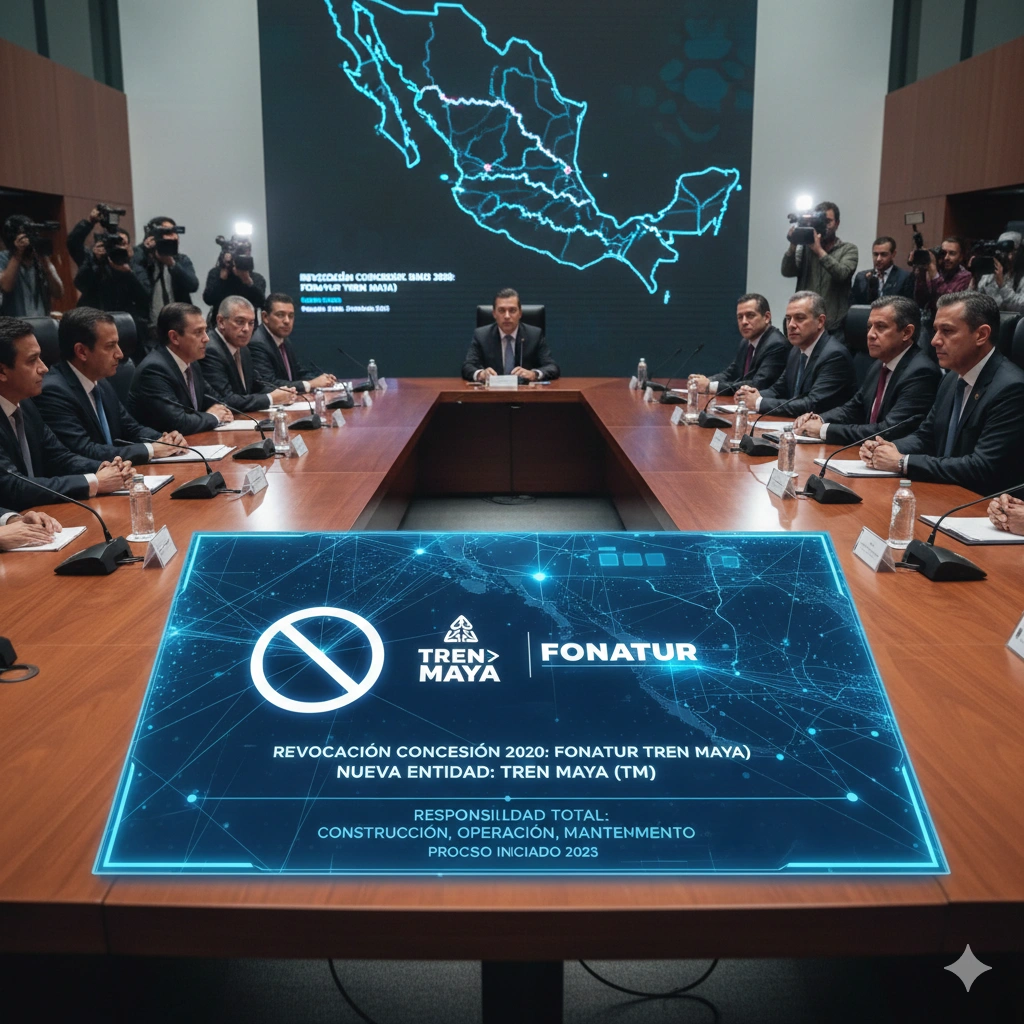
Maya Train Project Transition marks a definitive shift in Mexico’s infrastructure landscape as the federal government officially consolidates control. This administrative overhaul effectively removes Fonatur from the equation, placing the full weight of construction, operation, and maintenance on the specialized entity Tren Maya SA de CV. This move, formalized through a decree in the Official Gazette, represents a calculated effort to streamline the 1,554-kilometer railway spanning the Yucatán Peninsula. By centralizing authority, the Mexican government aims to eliminate bureaucratic redundancies that previously slowed progress. The transition is not merely a name change but a fundamental restructuring of how one of Latin America’s most ambitious rail projects is managed and funded for the long term.
The Genesis of the Maya Train Project Transition
The roots of this administrative shift trace back to early 2023 when the Mexican government began evaluating the efficiency of Fonatur Tren Maya. While Fonatur was originally the primary promoter of the project, the scale of the 1,554-kilometer circuit required a more specialized military-backed management structure. This led to a gradual handover process that has now reached its legal conclusion. The transport ministry’s decision to revoke the 2020 concession highlights a strategic pivot toward direct state-led operational control.
Government officials argue that the Maya Train Project Transition was necessary because the original concessionaire lacked the technical and financial capacity to manage the project’s maturing needs. As the railway moves from a purely construction-heavy phase into a complex operational phase involving freight and high-speed passenger services, a more robust entity was required. This new management structure is designed to handle the intricate logistics of the five-state rail network efficiently.
The legal framework supporting this change is grounded in Article 20 of the Railway Service Regulatory Law. By invoking these statutes, the Rail Transport Regulatory Agency confirmed that the original purpose of the Fonatur concession had effectively disappeared. This legal termination ensures that there are no overlapping jurisdictions, allowing Tren Maya SA de CV to act as the sole authority. It simplifies the chain of command, which is vital for a project of this magnitude and international visibility.
Maya Train Project Transition
The Maya Train Project Transition serves as the final nail in the coffin for the multi-agency management approach that characterized the project’s early years. This transition ensures that all budgetary allocations, which were previously split or diverted through Fonatur, now flow directly to the operational entity. With the finance ministry allocating zero budget to Fonatur for 2025, the fiscal reality of this move is undeniable.
This centralization is expected to improve the speed of decision-making regarding the remaining sections of the track. Historically, having multiple entities involved led to delays in environmental mitigation and land acquisition disputes. Now, with a single entity at the helm, the government expects a more unified front when dealing with local communities and international contractors.
From an operational standpoint, the Maya Train Project Transition allows for a more cohesive branding and service delivery strategy. Passengers and freight clients will now interact with a single corporate identity, reducing confusion and improving the reliability of the rail service. This reflects a broader global trend where massive infrastructure projects are increasingly brought under the control of specialized, single-purpose state corporations.
Economic Implications of the New Management Model
The economic landscape of Southeast Mexico is set to transform as the project moves under its new leadership. By streamlining the management, the government hopes to maximize the return on investment for the billions of pesos already spent. The goal is to ensure that the railway becomes a self-sustaining engine of economic growth for the Yucatán Peninsula and beyond.
- Increased efficiency in ticket pricing and freight tariffs.
- Direct reinvestment of profits into local infrastructure maintenance.
- Enhanced coordination with the tourism sector to boost regional visits.
- Simplified procurement processes for ongoing maintenance contracts.
Investors and local businesses are watching these changes closely to see how the new management will handle commercial concessions along the route. The shift suggests a more disciplined approach to revenue generation, moving away from the tourism-centric focus of Fonatur toward a dual-purpose freight and passenger model. This balance is critical for the long-term viability of the 1,554-kilometer line.
Furthermore, the dissolution of Fonatur’s involvement signals a shift in how social programs tied to the train will be managed. Previously, Fonatur handled many of the “Social Plan” initiatives. Now, these will likely be integrated more directly into the rail project’s operational budget, ensuring that community benefits are tied directly to the railway’s success and operational continuity.
Technical Oversight and Safety Standards
With the Maya Train Project Transition complete, the technical oversight of the rail line falls under a more rigorous military-influenced management style. This is expected to bring a higher level of discipline to safety protocols and maintenance schedules. Ensuring the safety of passengers across the diverse terrain of the jungle and coastal areas is a top priority for the new administration.
The Rail Transport Regulatory Agency will continue to play a watchdog role, but the internal standards set by Tren Maya SA de CV are expected to be more stringent. This includes the implementation of advanced signaling systems and real-time monitoring of track conditions. Such technical sophistication is necessary to prevent accidents and ensure the longevity of the infrastructure in the harsh tropical climate.
Environmental monitoring also enters a new phase under this consolidated management. While the project has faced criticism from environmental groups, the new entity is tasked with fulfilling all outstanding mitigation commitments. By having a single point of accountability, the government hopes to address these concerns more effectively and transparently than under the previous multi-agency system.
Future Outlook for the Yucatán Rail Network
The long-term vision for the Maya Train Project Transition is to create a seamless transportation corridor that rivals the best in the world. As the new entity takes full control, the focus shifts toward international marketing and establishing the Yucatán Peninsula as a premier destination for global logistics. The integration of the train with major airports and seaports is a key component of this strategy.
Future expansions and branch lines are already being discussed as part of the 2030 regional development plan. With the administrative hurdles of the past now cleared, the path is open for a more aggressive expansion of the network. This could include deeper links into Central America, potentially turning the Maya Train into a vital link in the transcontinental trade route.
The success of this transition will be measured by the railway’s ability to operate without ongoing federal subsidies. While the initial years will require support, the ultimate goal is a profitable enterprise that contributes to the national treasury. This fiscal responsibility is a core pillar of the new management’s mandate, ensuring that the project remains a benefit rather than a burden.
Impact on Local Communities and Indigenous Groups
The Maya Train Project Transition directly affects how the federal government interacts with indigenous communities throughout the five states involved. Under the previous Fonatur-led model, community engagement was often seen as secondary to land acquisition. The new management structure aims to integrate these communities more deeply into the project’s economic ecosystem.
- Prioritization of local hiring for station operations and maintenance.
- Creation of dedicated spaces for local artisans within train stations.
- Development of community-based tourism circuits linked to the rail stops.
By focusing on these inclusive strategies, the government hopes to mitigate the social friction that has occasionally sparked protests. The transition allows for a more standardized approach to community relations, ensuring that benefits are distributed fairly across the entire 1,554-kilometer route. This is essential for maintaining the “social license” needed to operate the train long-term.
Moreover, the new entity has pledged to uphold the cultural integrity of the sites the train passes. This involves close cooperation with the National Institute of Anthropology and History (INAH). The Maya Train Project Transition facilitates this by creating a direct line of communication between the railway operators and cultural preservationists, ensuring that archaeological discoveries are protected and showcased.
Operational Challenges and the Path Forward
Despite the administrative clarity provided by the Maya Train Project Transition, significant operational challenges remain on the horizon. Managing a railway that traverses sensitive ecosystems, varying topography, and diverse political climates is no small feat. The new management must prove it can handle these complexities while maintaining a high standard of service.
One of the primary challenges is the integration of the freight component with the passenger service. Freight logistics require different scheduling and infrastructure needs compared to high-speed passenger travel. Balancing these two priorities on a single-track system in many areas will require world-class dispatching and management software, a task that the new entity is currently tackling.
There is also the matter of international competition. As Mexico seeks to position the Yucatán Peninsula as a logistics hub, it must compete with established routes. The Maya Train Project Transition is designed to give Mexico a competitive edge by offering a modern, efficient, and state-backed alternative. Success here will depend on the reliability of the service and the transparency of the new management’s operations.
Regulatory Compliance and Transparency
The Maya Train Project Transition has brought the project under increased scrutiny regarding transparency and the use of public funds. With the dissolution of the Fonatur concession, the government has emphasized that the new management will adhere to strict auditing standards. This is crucial for maintaining public trust and ensuring the project’s longevity across different political administrations.
The use of the Official Gazette to publish the revocation decree is a testament to the formal and transparent nature of this shift. It provides a clear legal record that can be cited in future oversight reviews. Transparency is not just a legal requirement but a strategic necessity to attract international partners and ensure the railway’s integration into global travel networks.
Regular reports on the project’s progress and financial health are expected to be released by Tren Maya SA de CV. These reports will provide stakeholders with the data needed to assess the impact of the Maya Train Project Transition. By fostering an environment of accountability, the new management aims to silence critics and demonstrate the project’s value to the nation.
Strengthening Regional Integration through Rail
The completion of the Maya Train Project Transition signifies a new era of regional integration for Southeast Mexico. For decades, the states of Quintana Roo, Yucatán, Campeche, Tabasco, and Chiapas operated somewhat independently in terms of tourism and trade. The railway, now under unified management, acts as a physical and economic thread that binds these regions together.
This integration is expected to lead to more collaborative regional policies. For example, joint marketing campaigns can now promote the entire “Maya World” rather than individual states. The Maya Train Project Transition provides the administrative platform needed to coordinate these complex, multi-state initiatives effectively, leading to a more cohesive regional identity.
On a broader scale, the project strengthens Mexico’s ties with its southern neighbors. By improving infrastructure near the border with Guatemala and Belize, the Maya Train opens up new possibilities for cross-border trade and tourism. This regional outlook is a key part of the government’s strategy to revitalize the south, and the new management is at the forefront of this mission.
Environmental Stewardship and Sustainability
Under the new consolidated leadership, the Maya Train Project Transition places a renewed emphasis on environmental sustainability. The railway is being promoted as a “green” alternative to road transport, with significant portions of the line planned for electrification. This shift is vital for protecting the delicate jungle ecosystems that the train traverses.
The new management has been tasked with overseeing the “Sembrando Vida” program’s integration near the tracks, ensuring that reforestation efforts are successful. This holistic approach to environmental management is more achievable under a single entity than the previous fragmented system. It allows for better tracking of environmental impacts and faster implementation of corrective measures.
- Implementation of wildlife crossings to protect local fauna.
- Use of sustainable building materials in station construction.
- Water conservation measures at all operational hubs.
These initiatives are central to the Maya Train Project Transition strategy. By prioritizing sustainability, the government aims to create a project that serves as a global model for responsible infrastructure development in ecologically sensitive areas. The success of these efforts will be a major factor in the project’s ultimate legacy.
Conclusion and Final Assessment
The Maya Train Project Transition is a bold and necessary step toward securing the future of Mexico’s most important infrastructure project. By revoking the Fonatur concession and empowering Tren Maya SA de CV, the government has cleared the path for a more efficient, transparent, and sustainable railway. The challenges ahead are significant, but the new management structure provides the tools needed to overcome them.
As the 1,554-kilometer circuit nears full operational capacity, the eyes of the world will be on the Yucatán Peninsula. The Maya Train Project Transition ensures that Mexico is ready to showcase its progress and deliver a world-class transportation experience. This project is more than just a train; it is a symbol of Mexico’s ambition and its commitment to regional development and social equity.
Ultimately, the Maya Train Project Transition will be judged by its results. If the new management can deliver on its promises of economic growth, environmental protection, and social inclusion, the Maya Train will go down in history as a transformative achievement. For now, the administrative pieces are in place, and the journey toward a more connected Mexico continues with renewed focus and energy.
For more details & sources visit: BNamericas
Read more on Mexico news: 360 News Orbit – Mexico