
Prime Minister Anwar Ibrahim has issued a firm Malaysia anti-corruption ultimatum to Malaysia’s senior enforcement officials, highlighting his administration’s determination to tackle graft, smuggling, and systemic corruption. The announcement comes amid growing public scrutiny of his reform agenda, especially following high-profile military and financial scandals.
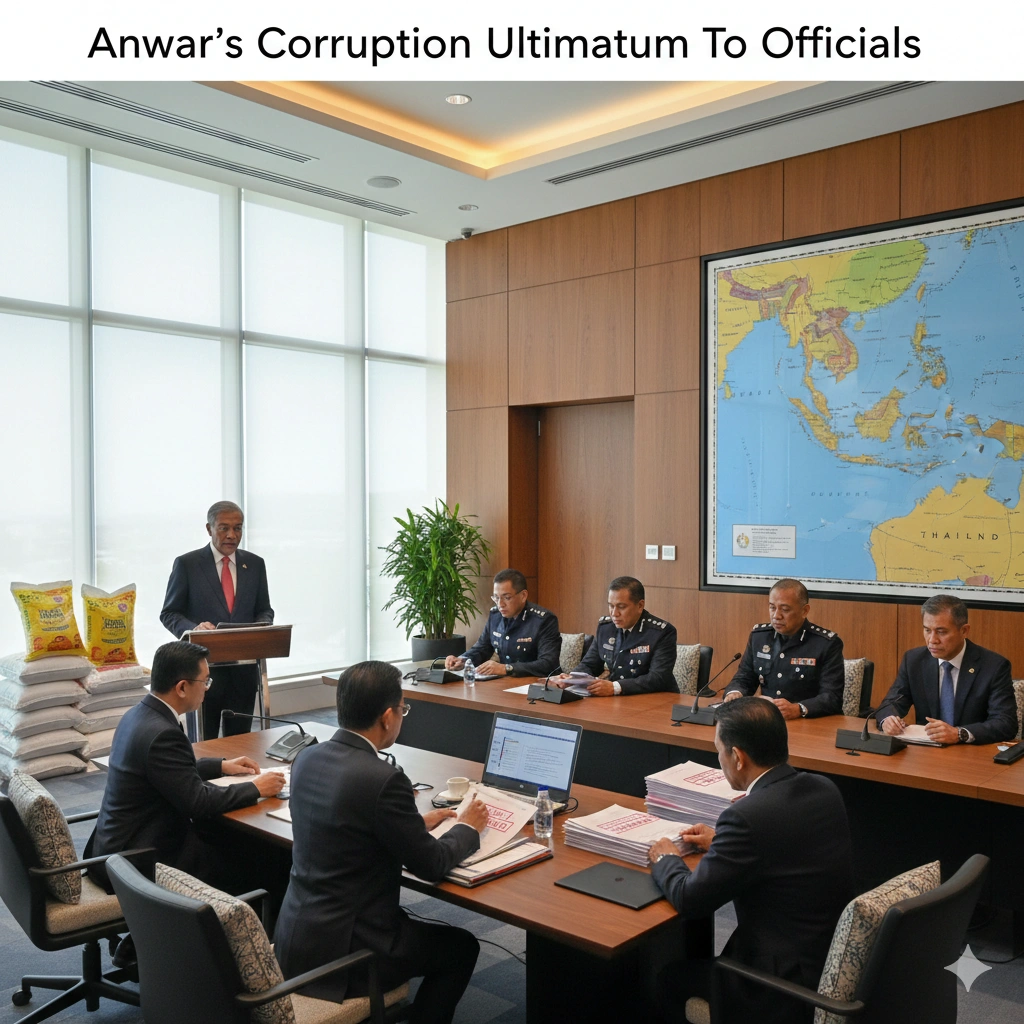
Anwar Demands Progress Reports Within Seven Days
In a strict address to the Malaysian Anti-Corruption Commission (MACC) chief, police inspector general, and the home minister, Anwar demanded detailed progress reports on anti-corruption initiatives within seven days. He warned that officials unable to demonstrate tangible results in combating corruption and smuggling might face replacement.
The Prime Minister emphasized accountability, tying anti-corruption measures directly to Malaysia’s economic stability and investor confidence. Weak enforcement, he noted, undermines public trust and perpetuates the entrenched patronage networks that have historically plagued the country.
Military Scandals and Bribery Investigations
Anwar’s ultimatum comes as Malaysia continues to grapple with high-profile military scandals. Recent investigations target former army chief Muhammad Hafizuddeain Jantan, his wife, and several other defense officials over allegations of bribery and money laundering involving millions of ringgit.
These cases, coupled with Malaysia’s 57th position in the 2024 Corruption Perceptions Index, underscore the depth of corruption challenges in the nation. The government has set ambitious goals, aiming to rank within the top 25 countries by 2033, reflecting Anwar’s commitment to systemic reform.
Tackling Border Smuggling and Migrant Worker Fraud
Malaysia faces persistent issues with border smuggling, particularly near the Thailand border. Authorities recently disrupted attempts to smuggle subsidized goods, highlighting vulnerabilities in customs and law enforcement operations.
In addition, corruption allegations have surfaced in the recruitment of migrant workers, exposing gaps in oversight platforms such as Bestinet. Anwar linked these failures to broader economic and social risks, stressing that corruption at these levels discourages investment and erodes the rule of law.
Malaysia Anti-Corruption and Economic Growth
The Prime Minister’s directive underscores the economic stakes of corruption control. By enforcing stricter accountability measures, Anwar aims to bolster investor confidence, promote fair competition, and prevent the misuse of public funds.
“Corruption is not just a moral failure; it’s an economic threat,” Anwar said, urging officials to demonstrate both urgency and effectiveness in tackling graft.
Strengthening Institutional Frameworks Against Corruption
Beyond immediate action, Anwar’s administration is focusing on strengthening Malaysia’s institutional frameworks to prevent future corruption. This includes reforms in auditing procedures, procurement oversight, and stricter enforcement of existing laws. By targeting systemic weaknesses, the government hopes to create a culture of accountability that extends beyond individual cases.
Experts suggest that improving institutional checks is crucial for the country’s long-term economic health. Transparent and well-monitored systems not only deter corrupt practices but also improve public trust, ensuring that citizens and investors see tangible progress in Malaysia’s anti-corruption initiatives.
Engaging the Public and Civil Society in Anti-Corruption Efforts
Another key component of Malaysia anti-corruption strategy is increased public engagement and civil society participation. Encouraging whistleblowing, citizen reporting, and NGO oversight are part of a broader plan to make corruption harder to conceal and easier to address.
Public awareness campaigns aim to educate citizens on reporting channels and the consequences of corruption. By fostering collaboration between government authorities and civil society, Malaysia can strengthen its Malaysia anti-corruption culture and ensure that reforms are sustainable over the long term.
Looking Ahead: Reform and Accountability
Malaysia’s current reform push is part of a broader strategy to enhance government transparency and accountability. The administration has already faced challenges from past scandals such as 1MDB, but Anwar is signaling that failure to act decisively will have consequences.
The coming weeks are expected to reveal whether Malaysia’s senior officials can meet the seven-day deadline, potentially reshaping the country’s anti-corruption landscape and signaling a new era of reform-oriented governance.
For more details & sources visit: South China Morning Post