
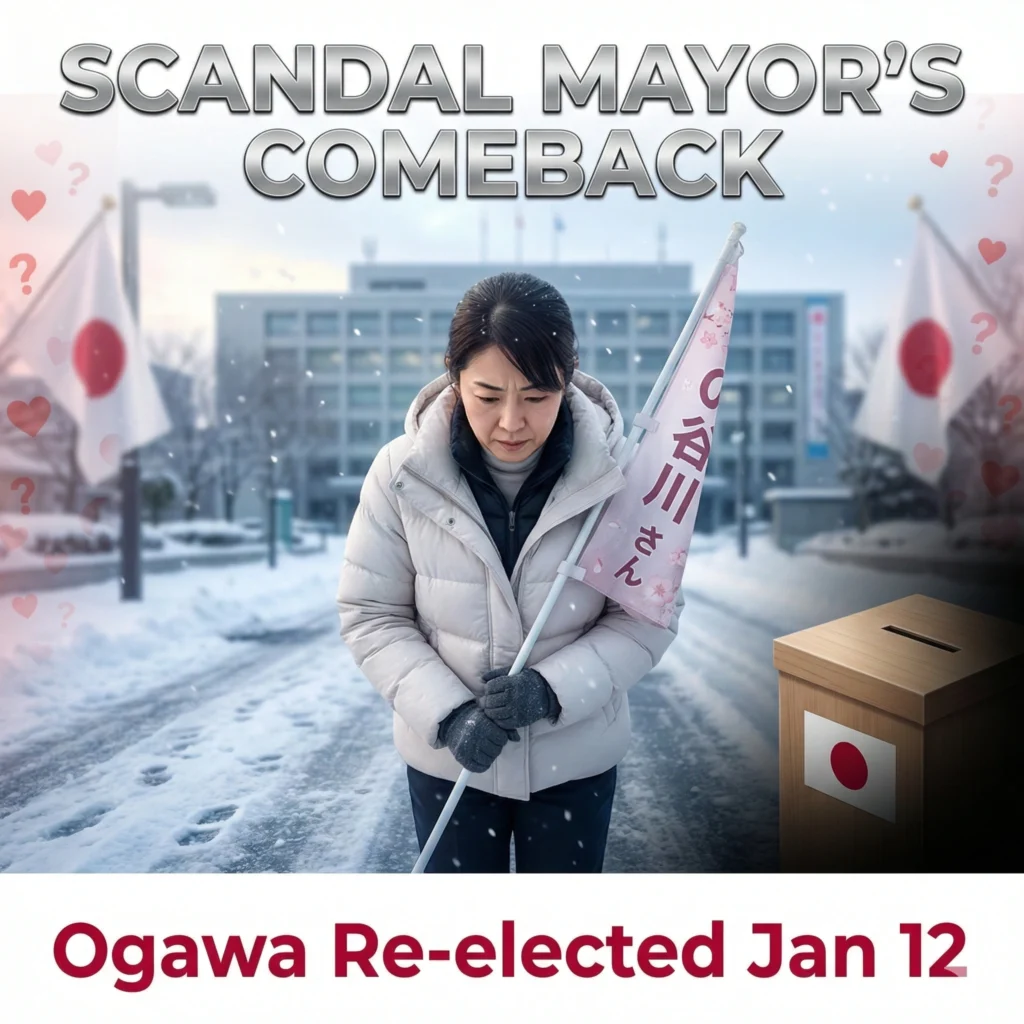
The Maebashi mayor election delivered a dramatic political comeback on January 12, 2026, as Akira Ogawa, 43, secured re-election despite months of controversy surrounding a personal scandal. Her victory surprised critics and political insiders alike, marking one of the most closely watched local elections in Gunma Prefecture, Japan.
Ogawa defeated lawyer Akira Maruyama, 40, who was backed by Gunma Governor Ichita Yamamoto, proving that voter sentiment leaned more heavily toward policy achievements and accountability than political endorsements.
Scandal Background That Shook Maebashi Politics
The race followed a turbulent period in Ogawa’s political career. In September 2025, media reports revealed that Ogawa had made repeated visits to a love hotel with a married male city employee. While critics labeled the situation a scandal, Ogawa denied any romantic relationship, stating the meetings were strictly related to policy discussions.
Amid public backlash, Ogawa resigned on November 27, accepting responsibility for causing concern among residents. Her resignation initially appeared to end her political future, but it instead set the stage for an unexpected redemption campaign.
Independent Campaign and Public Apology Strategy
Ogawa announced her independent candidacy on December 17, launching a campaign unlike any seen before in the Maebashi mayor election.
Key features of her campaign included:
- Nearly 20 Instagram posts showing deep bows and formal apologies
- Daily street speeches in freezing winter conditions
- Emphasis on humility, responsibility, and public service
Supporters often responded warmly, offering gestures such as hot tea during campaign stops. The visual consistency of her apologies became a defining element of her outreach strategy and resonated with many undecided voters.
Policy Record That Won Voters Back
Despite controversy, Ogawa’s policy achievements, especially in child welfare and child-rearing support, played a decisive role in the election outcome.
Voters cited:
- Expansion of childcare services
- Family support programs
- Accessibility improvements for parents
These initiatives helped reinforce Ogawa’s image as a mayor focused on daily life issues rather than political maneuvering. Her ability to separate personal controversy from professional performance proved critical.
Final Campaign Pledge and Election Day Results
On the final day of campaigning, January 11, Ogawa addressed supporters with a pledge of lifelong remorse, promising to work tirelessly to restore trust and prioritize citizen-centered governance.
She stated her goal was to ensure “a city filled with future smiles,” a message that contrasted sharply with her opponent’s more traditional political platform.
Early voting turnout in the Maebashi mayor election exceeded previous records, signaling strong public engagement and interest in the outcome.
Defeat of Governor-Backed Challenger
Ogawa’s opponent, Akira Maruyama, entered the race with significant institutional backing, including support from the prefectural governor. Despite this advantage, Maruyama struggled to match Ogawa’s grassroots momentum and emotional connection with voters.
Analysts noted that the election demonstrated:
- Limits of top-down political endorsements
- Rising importance of social media campaigning
- Voter willingness to offer second chances
What the Maebashi Mayor Election Signals for Japan
The result of the Maebashi mayor election reflects a broader trend in Japanese local politics, where personal accountability, transparency, and policy delivery increasingly outweigh party support alone.
Ogawa’s victory highlights how:
- Public apologies can influence voter perception
- Social media can humanize political figures
- Scandals do not always define political legacies
Her re-election is now being viewed nationally as a case study in political recovery.
Conclusion
The Maebashi mayor election concluded with one of Japan’s most striking political comebacks. Despite a scandal that forced her resignation, Akira Ogawa reclaimed voter trust through persistent apologies, visible accountability, and a strong record on child welfare.
Her victory underscores the evolving nature of local elections in Japan, where sincerity, direct voter engagement, and tangible policy outcomes can outweigh controversy and political pressure.
For more details & sources visit: Yahoo Japan News / Nikkan Sports
For the latest updates from Japan, visit our Japan news page.