
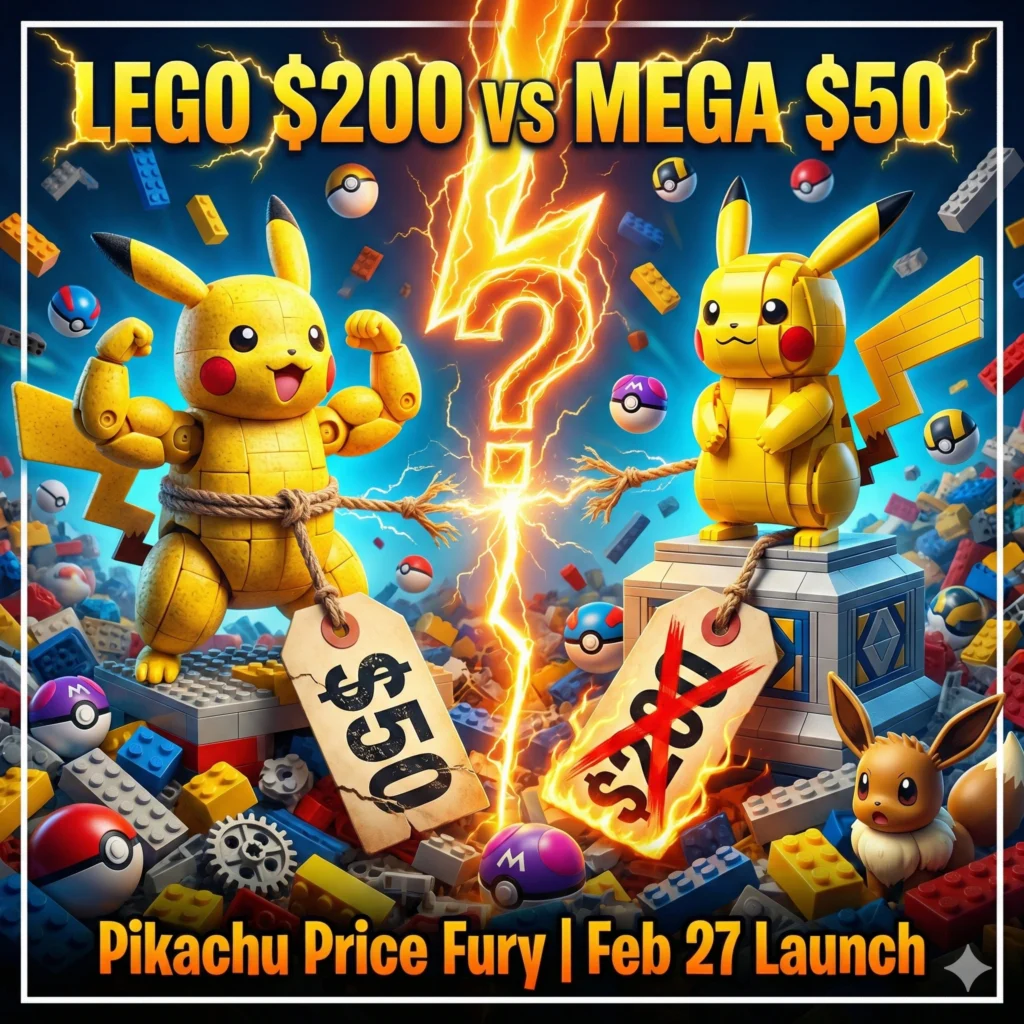
The LEGO $200 Pikachu has sparked a heated debate across the Pokémon fan community, with collectors and casual buyers questioning whether the iconic yellow mascot is truly worth its premium price. As LEGO prepares to launch its highly anticipated Pokémon collaboration ahead of Pokémon Day on February 27, fans are drawing sharp comparisons with Mega Bloks’ $50 Jumbo Pikachu, calling the price difference excessive and hard to justify.
The controversy highlights a growing tension in licensed toy markets, where brand reputation, display aesthetics, and play value often clash with affordability. While LEGO is known for premium design and polish, many fans argue that Mega Bloks delivered a more engaging Pikachu experience at a fraction of the cost.
Why the LEGO $200 Pikachu Is Facing Backlash
At the center of the backlash is LEGO’s newly revealed 2,050-piece Pikachu set, priced at $200. The 13-inch-tall build features a lightning-bolt display base, subtle Pokédex #25 references, and a refined, nearly studless exterior that prioritizes realism and shelf appeal.
However, critics argue that the LEGO $200 Pikachu focuses too heavily on aesthetics while sacrificing interactivity. Unlike its competitor, LEGO’s version lacks posable limbs, meaning the head, arms, ears, and legs are fixed. For many fans, this turns Pikachu into a static display piece rather than a playful desk companion.
Social media reactions have been blunt. Fans question whether smoother bricks, brand prestige, and a Poké Ball base justify paying nearly four times more than an existing alternative that offers greater flexibility.
Mega Bloks’ $50 Pikachu Still Wins on Play Value
The comparison most frequently cited is Mega Bloks’ 2022 Jumbo Pikachu, an 806-piece set priced at just $50. Despite using fewer pieces, the Mega Bloks version offered full articulation, allowing builders to pose Pikachu in multiple expressive stances.
Fans praise its rounder, cartoon-accurate proportions and playful charm, which many feel better capture Pikachu’s personality. The ability to move the head, arms, ears, and legs has made the Mega Bloks version a favorite for both collectors and younger fans.
In contrast, critics argue that the LEGO $200 Pikachu prioritizes museum-style display over fun, reinforcing the perception that LEGO is charging a premium mainly for branding rather than added value.
Eevee Proves LEGO Pricing Can Still Feel Fair
Not all feedback has been negative. LEGO’s $60 Eevee set has been widely praised and is often cited as proof that LEGO can price Pokémon builds reasonably. Compared to Mega Bloks’ 2020 Eevee set priced at $50, LEGO’s version offers improved detailing, cleaner shaping, and a more refined build experience.
Fans largely agree that the Eevee price represents a fair upgrade, making the Pikachu pricing feel even more out of place. The contrast has amplified criticism, with many questioning why Pikachu received such a steep markup.
Pokémon 30th Anniversary Sets Add to the Hype
The Pikachu controversy arrives alongside LEGO’s broader Pokémon 30th anniversary wave, which includes several high-profile releases:
- A massive 6,838-piece Venusaur–Charizard–Blastoise display set (price yet to be announced)
- A posable Eevee build priced at $60
- Promotional Kanto Gym Badges
- A Mini Pokémon Center display
While excitement around the lineup is high, the LEGO $200 Pikachu has become a lightning rod for concerns about rising costs in licensed brick sets.
Are Fans Paying for Brand Power Instead of Value?
The debate surrounding the LEGO $200 Pikachu reflects a broader issue in the toy industry: how much consumers are willing to pay for brand prestige. LEGO’s cleaner finishes, tighter tolerances, and collector-focused presentation undeniably appeal to adult builders. However, many fans argue that premium pricing should deliver premium functionality, not just visual polish.
With pre-orders already live on LEGO.com, some collectors expect the Pikachu set to sell out despite criticism. Others remain hesitant, hoping for discounts or future revisions that include articulation.
Conclusion
The LEGO $200 Pikachu has ignited one of the most passionate Pokémon merchandise debates in recent years. While LEGO delivers a sleek, display-ready centerpiece, many fans believe Mega Bloks’ $50 Pikachu still offers superior value through playability and personality.
As Pokémon Day approaches and anniversary sets roll out, the controversy serves as a reminder that even iconic brands face scrutiny when pricing feels disconnected from consumer expectations. Whether fans ultimately reward LEGO’s premium approach or stick with budget-friendly alternatives may shape future collaborations in the brick-building world.