
Kuwait radiation precautions are now the primary focus of national security efforts following recent kinetic strikes on Iran’s nuclear infrastructure. The Kuwaiti government has officially activated emergency protocols to protect citizens from potential atmospheric fallout originating from the Bushehr Nuclear Power Plant. While the facility sits approximately 240 kilometers across the Persian Gulf, the risk of a containment breach has forced a massive mobilization of civil defense resources.
Residents are currently being instructed to stay indoors and maintain strict vigilance as the situation develops. This proactive stance aims to mitigate health risks while preventing public panic during this period of heightened regional tension. Authorities emphasize that while the distance provides a safety buffer, preparation remains the most effective tool for ensuring public safety in the face of unpredictable environmental hazards.
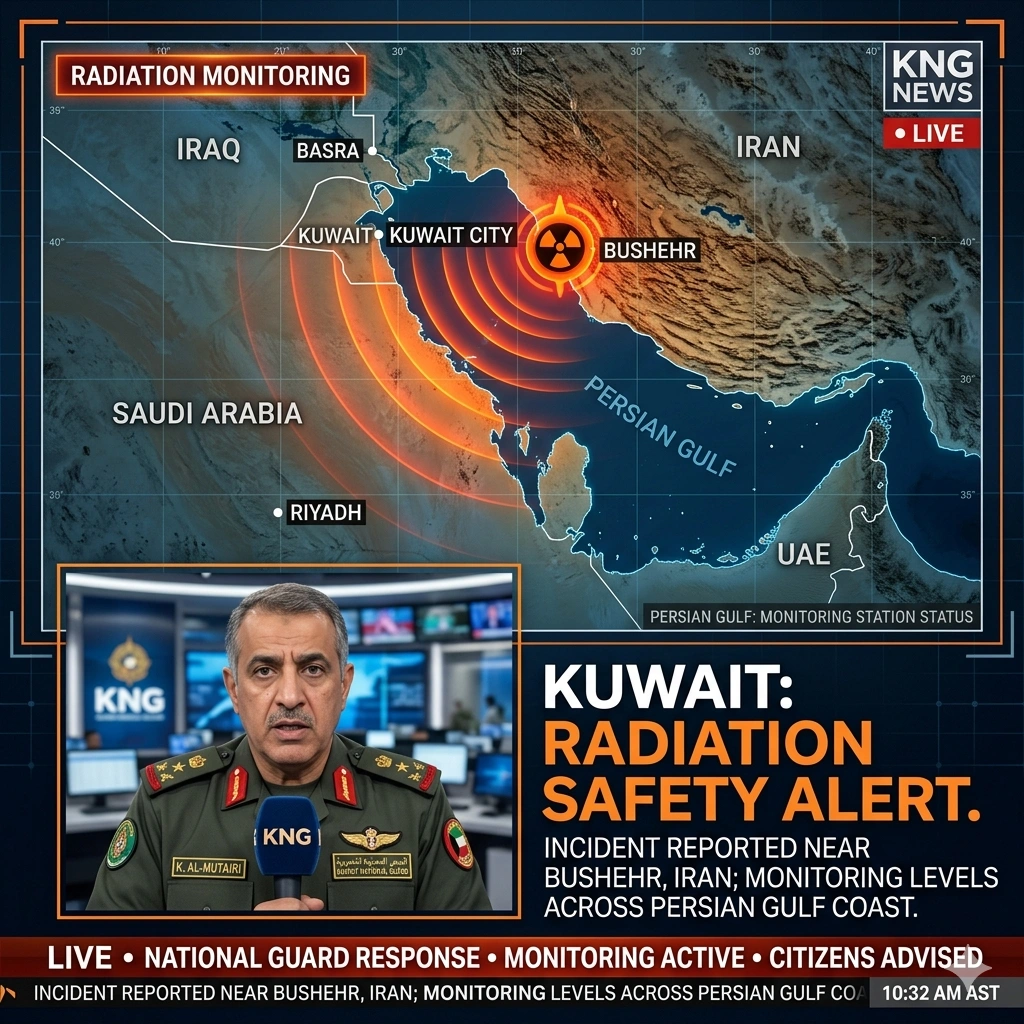
Kuwait radiation precautions and the Bushehr crisis
The implementation of Kuwait radiation precautions comes as a direct response to the escalating conflict involving Iran’s energy sector and international military forces. As missiles target high-value infrastructure across the Gulf, the proximity of the Bushehr plant creates a unique set of challenges for neighboring maritime nations. Kuwaiti officials have spent the last 24 hours briefing the public on the specific technical risks associated with a potential leak. These briefings focus on wind patterns and the dispersal of radioactive isotopes that could travel across the water.
Military analysts suggest that the targeting of nuclear facilities marks a dangerous shift in the ongoing regional war. Because the Persian Gulf is a relatively confined body of water, any environmental disaster at Bushehr would have immediate ecological consequences for Kuwaiti shores. Consequently, the government has deployed specialized sensors along the coastline to monitor radiation levels in real-time. These sensors are integrated into a national early warning system designed to trigger immediate alarms if safe thresholds are exceeded.
Public health experts are working alongside the National Guard to distribute educational materials regarding the biological effects of radiation exposure. They explain that the current Kuwait radiation precautions are precautionary rather than a response to an active leak. By establishing these guidelines now, the state ensures that the population is ready to act without hesitation if the situation worsens. The focus remains on sealing domestic environments and preventing the inhalation of contaminated air particles.
Essential safety guidelines for Kuwaiti residents
The Kuwaiti National Guard recently released a comprehensive video outlining the specific steps required for effective Kuwait radiation precautions at the household level. The primary directive is for all residents to remain indoors until further notice from the Ministry of Interior. Modern air conditioning units should be turned off or set to recirculate mode to prevent drawing in external air. This simple step is considered one of the most effective ways to reduce the risk of internalizing radioactive dust or gas.
Windows and doors must be sealed using heavy-duty tape or damp towels to create an airtight barrier against the outside environment. Families are encouraged to designate a “safe room” within their homes, preferably one with the fewest windows and thickest walls. This internal sanctuary provides an additional layer of shielding against gamma radiation and other harmful emissions. Maintaining a supply of bottled water and non-perishable food is also a core component of these Kuwait radiation precautions.
In addition to physical shielding, the government is emphasizing the importance of communication and information hygiene during this crisis. Residents should only follow verified updates from the official Kuwait News Agency or the National Guard’s social media channels. Misinformation can lead to unnecessary panic, which often results in dangerous behavior like sudden traffic congestion. By following the established Kuwait radiation precautions, the public can help maintain order while the state manages the broader geopolitical threat.
Regional impact of the Bushehr plant strikes
The strategic location of the Bushehr facility makes the current Kuwait radiation precautions a necessity for regional stability and environmental preservation. Located on Iran’s southwestern coast, the plant is closer to several Arab capitals than it is to Tehran, creating a shared sense of vulnerability. If a significant breach occurs, the prevailing winds in the Gulf could carry plumes toward Kuwait and Saudi Arabia. This geographical reality has led to increased diplomatic pressure to avoid targeting nuclear sites.
Environmental scientists have raised alarms about the potential for long-term contamination of the Persian Gulf’s desalination plants. Kuwait relies heavily on processed seawater for its daily needs, meaning any radiation leak could threaten the nation’s water security. The current Kuwait radiation precautions include contingency plans for the temporary shutdown of water intake valves if contamination is detected. These measures are designed to protect the water grid from becoming a vector for radioactive exposure.
The economic implications of these precautions are also being felt across the domestic markets and shipping lanes. As the government prioritizes Kuwait radiation precautions, some non-essential businesses have seen a decrease in foot traffic as people stay home. However, the petroleum sector continues to operate under heightened security protocols to ensure that energy exports remain steady. Balancing public safety with economic continuity is a delicate task that the Kuwaiti leadership is currently navigating with high precision.
Technical monitoring and air quality management
A central pillar of the Kuwait radiation precautions involves the sophisticated monitoring of the nation’s air quality and atmospheric conditions. The Environment Public Authority has increased the frequency of its sampling at dozens of stations located throughout the country. These stations are equipped to detect even minute changes in background radiation, providing an early window for emergency response. The data from these sensors is shared instantly with the cabinet to inform policy decisions.
Meteorological experts are playing a crucial role by providing detailed forecasts of wind speed and direction over the Persian Gulf. Because Kuwait radiation precautions depend on knowing where a potential plume might travel, these weather models are updated every hour. If the wind shifts toward the northern Gulf, the level of alert is automatically upgraded. This data-driven approach allows the government to provide specific instructions to different regions based on their actual risk level.
In the event of a confirmed leak, the Kuwait radiation precautions would involve the distribution of potassium iodide tablets to the population. These tablets help prevent the thyroid gland from absorbing radioactive iodine, which is a common byproduct of nuclear accidents. The Ministry of Health has confirmed that stockpiles are sufficient for the entire population and are ready for distribution. This level of technical and medical readiness demonstrates the seriousness with which Kuwait is treating the Bushehr situation.
Kuwait radiation precautions
Kuwait radiation precautions are the most effective way for the civilian population to assist the government in maintaining national security during this nuclear emergency. By staying informed and following the stay-at-home orders, citizens reduce the burden on emergency services. The government has also provided an image alt text line for digital accessibility: “Infographic showing Kuwait radiation precautions including sealing windows and staying indoors.” These digital resources are essential for reaching the younger, tech-savvy generation of Kuwaitis.
- Ensure all entry points to the home are sealed with tape.
- Monitor official government broadcasts every thirty minutes.
- Keep emergency kits easily accessible in your designated safe room.
- Do not consume tap water until it is cleared by the health ministry.
Beyond the immediate physical steps, the Kuwait radiation precautions also address the mental health challenges of living under a nuclear threat. Psychologists are providing tips on managing anxiety and explaining the situation to children in a way that is honest but not terrifying. The goal is to build a resilient society that can withstand the pressures of regional conflict. As long as the strikes on Bushehr continue, these precautions will remain the cornerstone of daily life in Kuwait.
International response and diplomatic efforts
While the domestic focus remains on Kuwait radiation precautions, the government is also active on the international stage. Kuwaiti diplomats are working with the International Atomic Energy Agency to gain more clarity on the actual status of the Bushehr reactors. Having accurate information from the source of the potential leak is vital for calibrating the national response. Kuwait has called for an immediate cessation of strikes near nuclear facilities to prevent a humanitarian disaster.
The United Nations has been briefed on the Kuwait radiation precautions as part of a broader discussion on regional safety. Many neighboring countries are looking at Kuwait’s response as a model for their own civil defense strategies. The coordination between the military, health, and environmental sectors in Kuwait is being praised for its efficiency. This international cooperation is essential for managing a threat that does not respect national borders or political affiliations.
Other Gulf Cooperation Council members are also aligning their safety protocols with the Kuwait radiation precautions to create a unified front. Joint monitoring programs are being discussed to ensure that no part of the coastline is left unprotected. By sharing data and resources, the GCC can better protect its millions of residents from the fallout of the Iran-Israel conflict. The collective focus remains on de-escalation and the protection of innocent lives across the entire Middle East.
Historical context of nuclear safety in the Gulf
To understand the current Kuwait radiation precautions, one must look at the history of nuclear development in the region. The Bushehr plant has been a point of contention for decades, with neighbors often expressing concern over its safety standards. Kuwait has long advocated for a nuclear-free zone in the Middle East to avoid exactly the kind of situation currently unfolding. The historical memory of past industrial accidents has shaped the current rigorous approach to civil defense.
Previous incidents in other parts of the world have shown that early intervention is the key to minimizing casualties. The Kuwait radiation precautions are built on the lessons learned from global nuclear history, emphasizing rapid communication and clear public instructions. The government’s transparency during this crisis is a marked departure from how some other nations have handled similar threats in the past. This openness builds trust between the state and the people, which is vital during an emergency.
As the conflict persists, the Kuwait radiation precautions may need to be maintained for an extended period. The government is preparing for the possibility that the threat from Bushehr could last weeks or even months. Strategic food reserves and fuel supplies are being managed to ensure that a prolonged stay-at-home order does not lead to shortages. This long-term planning is a testament to the comprehensive nature of Kuwait’s national security strategy.
Long-term health and environmental monitoring
Even if no major leak occurs, the Kuwait radiation precautions include plans for long-term environmental monitoring. The heavy bombardment of industrial sites can release other hazardous materials into the atmosphere that require tracking. Kuwait’s health system is prepared to conduct long-term screenings for any populations that may have been exposed to elevated levels of pollutants. This commitment to public health extends far beyond the immediate crisis.
- Scheduled soil testing in coastal areas for isotopic traces.
- Increased frequency of medical checkups for frontline responders.
- Continuous filtration of the national water supply system.
The environmental impact on the Persian Gulf’s marine life is also a major concern addressed by the Kuwait radiation precautions. The fishing industry, which is a vital part of Kuwait’s culture and economy, could be impacted by radioactive runoff. Experts are already planning how to test seafood for safety once the immediate military threat subsides. Protecting the food chain is just as important as protecting the air we breathe during a nuclear emergency.
Conclusion of the emergency measures
As we look toward the future, the Kuwait radiation precautions will likely remain a part of the national consciousness. The current crisis has highlighted the need for constant readiness in a volatile region. The government’s ability to quickly mobilize and inform the public has likely saved lives and prevented widespread chaos. While everyone hopes for a peaceful resolution to the strikes on Bushehr, Kuwait stands ready to protect its people from any outcome.
The success of the Kuwait radiation precautions depends on the continued cooperation of every resident. By following the guidelines and staying calm, the people of Kuwait are demonstrating their resilience. The National Guard and emergency services will continue to work around the clock to monitor the situation across the Gulf. As the sun sets over Kuwait City, the lights of the emergency operations center remain on, a symbol of the nation’s unwavering commitment to safety.
For more details & sources visit: Türkiye Today
Read more about Kuwait news on 360 News Orbit – Kuwait.