
The global labor market is witnessing a historic shift as Kuwait moves toward a modern, flexible residency framework. In early 2026, the Kuwaiti government officially announced its plans to launch a Kuwait freelance visa system. This initiative is designed to revolutionize how expatriates live and work within the country by removing the traditional requirement for a local sponsor (Kafala).
The announcement was made by the First Deputy Prime Minister and Minister of Interior, Sheikh Fahad Al-Yousef Al-Sabah. By introducing the Kuwait freelance visa, authorities aim to regulate the labor market and curb the illegal trade of residency permits. This move is a strategic part of Kuwait Vision 2035, which focuses on economic diversification and attracting international talent to non-oil sectors.
For the first time, independent professionals and skilled workers can look forward to a legal pathway that offers true autonomy. This development is particularly significant for the large expatriate community, including over one million Indian nationals. The government believes that redirecting residency payments from illegal middlemen to the state will enhance transparency and service quality across the nation.
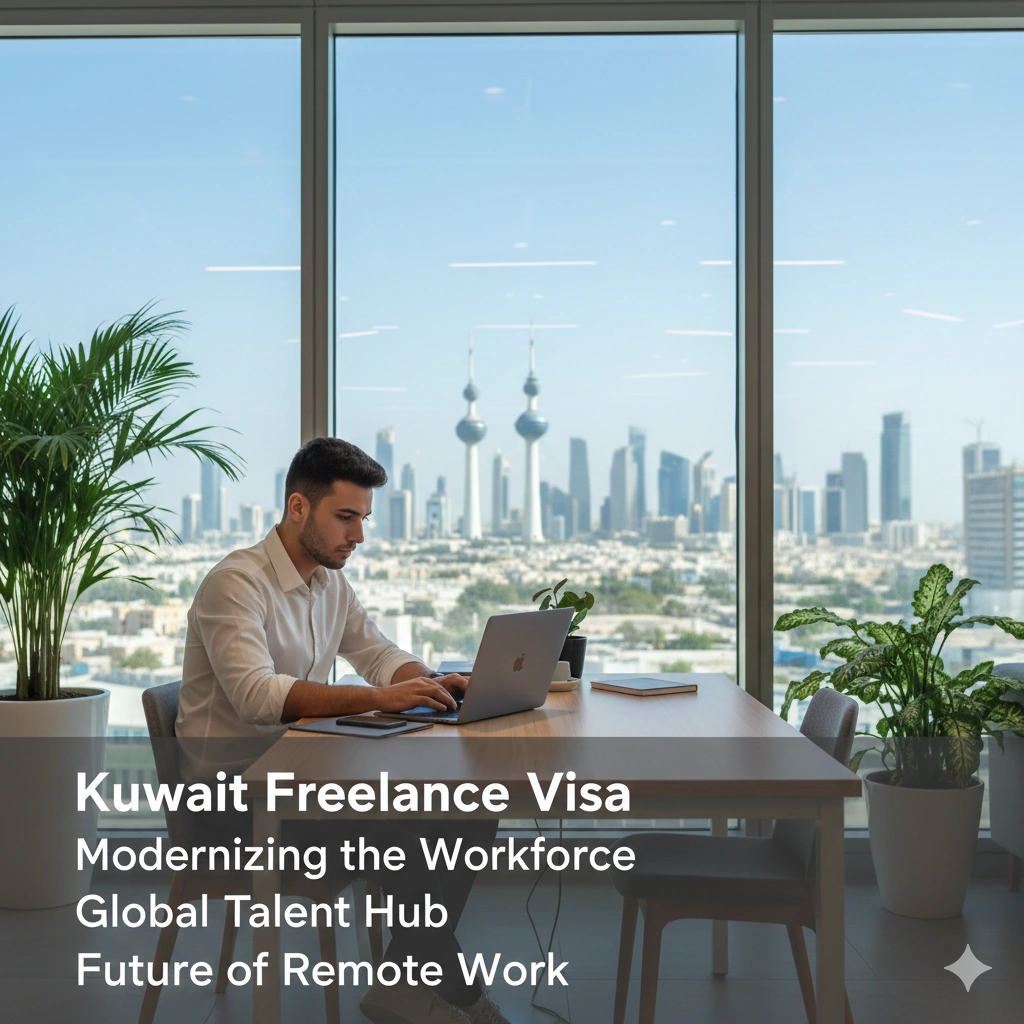
Understanding the new residency reforms in Kuwait
The introduction of a Kuwait freelance visa marks a departure from decades of the sponsorship-based employment model. Under the previous system, every foreign worker was required to be tied to a specific Kuwaiti employer. This often led to market distortions and high daily wages for basic services due to a lack of legal flexibility.
By creating a regulated environment, the government is essentially inviting skilled individuals to contribute to the economy on their own terms. The new permit will allow individuals to manage their own residency and work for multiple clients legally. This is expected to significantly reduce the “marginal labor” issue that has plagued the local job market for years.
Furthermore, the reform is designed to protect worker rights and ensure that professionals meet specific standards. The Ministry of Interior is expected to release full operational guidelines within the next two months. These guidelines will define the exact digital process and the specific professions eligible for the first phase of the rollout.
The Kuwait freelance visa fee structure explained
One of the most critical aspects of the new policy is the financial commitment required from applicants. The government has confirmed that the annual fee for the Kuwait freelance visa will range between KD 750 and KD 1,000. This translates to approximately $2,450 to $3,260 based on current exchange rates.
While these fees are higher than traditional residency costs, the value lies in the freedom from a sponsor. Sheikh Fahad Al-Yousef emphasized that instead of paying “visa traders” illegal sums, workers should pay the state directly. This ensures that the money supports national development rather than the black market for work permits.
Paying the fee directly through the Ministry of Interior’s electronic portal will grant a one-year residency. This permit is renewable annually, provided the holder continues to meet the regulatory requirements. For many consultants and small business owners, this cost is a worthwhile investment for the legal security and professional independence it provides.
Target professions for the initial rollout phase
The authorities have indicated that the Kuwait freelance visa will be implemented in a phased manner. During the first phase, the focus will primarily be on “simple” or basic professions to stabilize the labor supply for essential services. This includes technicians, maintenance workers, and service providers who have historically been subject to residency trading.
In the subsequent phases, the program is expected to expand to include high-skilled categories. This will likely cover IT consultants, digital marketers, designers, and healthcare specialists. By targeting these sectors, Kuwait aims to build a knowledge-based economy that can compete with regional hubs like Dubai and Riyadh.
The diversification of the workforce is essential for the success of Kuwait Vision 2035. Attracting global talent through a Kuwait freelance visa allows the country to fill skill gaps in the private sector. It also encourages innovation by allowing entrepreneurs to test the Kuwaiti market without the heavy overhead of setting up a full-scale corporation immediately.
Application requirements and digital processing
To maintain high standards, the Ministry of Interior has set clear preliminary requirements for the Kuwait freelance visa. Applicants will need to provide verified personal data and professional credentials. This ensures that only qualified individuals can enter the market, thereby raising the overall quality of services in Kuwait.
- A valid passport with at least six months of remaining validity.
- Proof of professional qualifications, such as degrees or certified technical training.
- A verified residential address within the State of Kuwait.
- An approved email account for all official government communications.
Once the documentation is ready, the application will be processed through the “Sahel” app or the Ministry’s online portal. This digital-first approach is part of Kuwait’s broader strategy to modernize government administration. By automating the Kuwait freelance visa approval process, the government reduces bureaucratic red tape and speeds up the timeline for new residents.
Impact on the local economy and labor market
The economic impact of the Kuwait freelance visa is expected to be profound and multi-faceted. By legalizing independent work, the government can effectively track labor trends and collect accurate data on the workforce. This transparency helps in planning infrastructure and public services more effectively for the growing population.
Competition is another key benefit of this reform. When freelancers can offer their services openly, it creates a more balanced market for consumers. Prices for basic maintenance and consultancy are expected to stabilize as the “middleman” costs are eliminated. This makes the local economy more efficient and consumer-friendly.
Furthermore, the Kuwait freelance visa helps in retaining talent that might otherwise leave for more flexible markets in the GCC. By offering a comparable residency option to the UAE’s “Green Visa” or Saudi Arabia’s temporary work permits, Kuwait remains a competitive destination for international experts. This retention is crucial for long-term projects in energy, transport, and technology.
Kuwait Vision 2035 and global positioning
The Kuwait freelance visa is not an isolated policy but a pillar of the “New Kuwait” Vision 2035. The country’s leadership is committed to transforming the nation into a leading financial and commercial hub. Diversifying the economy away from oil dependence requires a workforce that is agile, skilled, and internationally connected.
By welcoming freelancers, Kuwait is signaling its openness to global business and modern work trends. This policy aligns with the United Nations Sustainable Development Goals by promoting decent work and economic growth. It also enhances Kuwait’s global positioning as a forward-thinking nation that values human capital and innovation.
As the program matures, it will likely attract a new wave of “digital nomads” and remote workers. These individuals contribute to the economy not just through their work, but by supporting the local tourism and retail sectors. The Kuwait freelance visa is therefore a tool for both labor reform and broader socio-economic development in the 21st century.
Comparing the Kuwaiti model to regional GCC visas
When looking at the Kuwait freelance visa, it is helpful to compare it with similar initiatives in the region. The United Arab Emirates has the most established system, with various free zones offering specific permits for media and tech professionals. Kuwait’s model, however, is unique in its direct government-to-worker relationship and focus on labor market regulation.
Saudi Arabia has also introduced temporary work visas and premium residency options to support its Giga-projects. Bahrain offers a “Flexi Permit” that served as an early template for de-linking workers from single sponsors. Kuwait is learning from these regional examples to create a Kuwait freelance visa that addresses its specific domestic challenges, such as residency trading.
The primary differentiator for the Kuwaiti permit is the clear emphasis on curbing the “black market.” While other countries focus largely on attracting high-net-worth individuals, Kuwait is using the Kuwait freelance visa to fix structural issues in its existing labor pool. This makes it a pragmatic and necessary step for the country’s social and economic stability.
Preparing for the official launch of the program
As the rollout of the Kuwait freelance visa approaches, prospective applicants should begin preparing their documentation. The Ministry of Interior has urged everyone to use only official channels and avoid any third-party intermediaries. This warning is part of the government’s effort to ensure a clean and transparent start for the new system.
It is also important for businesses in the private sector to adjust their HR policies. Companies can now hire specialized talent on a project basis through the Kuwait freelance visa framework. This provides businesses with greater flexibility and reduces the costs associated with full-time sponsorship for short-term needs.
In conclusion, the Kuwait freelance visa represents a historic milestone for the country. It empowers individuals, strengthens the economy, and modernizes the legal landscape. Whether you are a technician, a consultant, or a digital professional, this new visa category offers a world of possibilities in the heart of the Gulf.
For more details & sources visit: Travel And Tour World
Read more about Kuwait news on 360 News Orbit – Kuwait.