
The Kafala system in Kuwait has long shaped the daily lives of migrant families, influencing access to work, education, and housing. A recent student essay provides a personal, first-hand account of growing up under this sponsorship system, highlighting the social and economic impact of restrictive labor practices on children of foreign workers.
The essay argues that reforms are urgently needed to protect basic labor rights, ensure fair treatment, and restore dignity for migrant families in Kuwait.
Kafala System in Kuwait Limits Family Rights and Security
The student recounts how the Kafala system in Kuwait restricted their family’s autonomy and created a persistent sense of insecurity.
Key challenges described include:
- Dependence on Kuwaiti sponsors for legal residence and employment
- Restrictions on property ownership and housing options
- Fear of deportation or loss of employment if rules were violated
These structural barriers contributed to a childhood marked by anxiety and limited freedom, demonstrating how systemic labour practices extend beyond adults to affect entire families.
Wage Disparities Under Kafala System in Kuwait
The essay highlights pay inequality as a core issue. The author’s mother, an Indian cardiac nurse, reportedly earned less than Kuwaiti colleagues despite holding the same qualifications and performing comparable work.
Such disparities reflect broader trends among migrant workers under the Kafala system in Kuwait, where nationality and sponsorship status often dictate salary, benefits, and access to career progression.
School Segregation and Social Exclusion
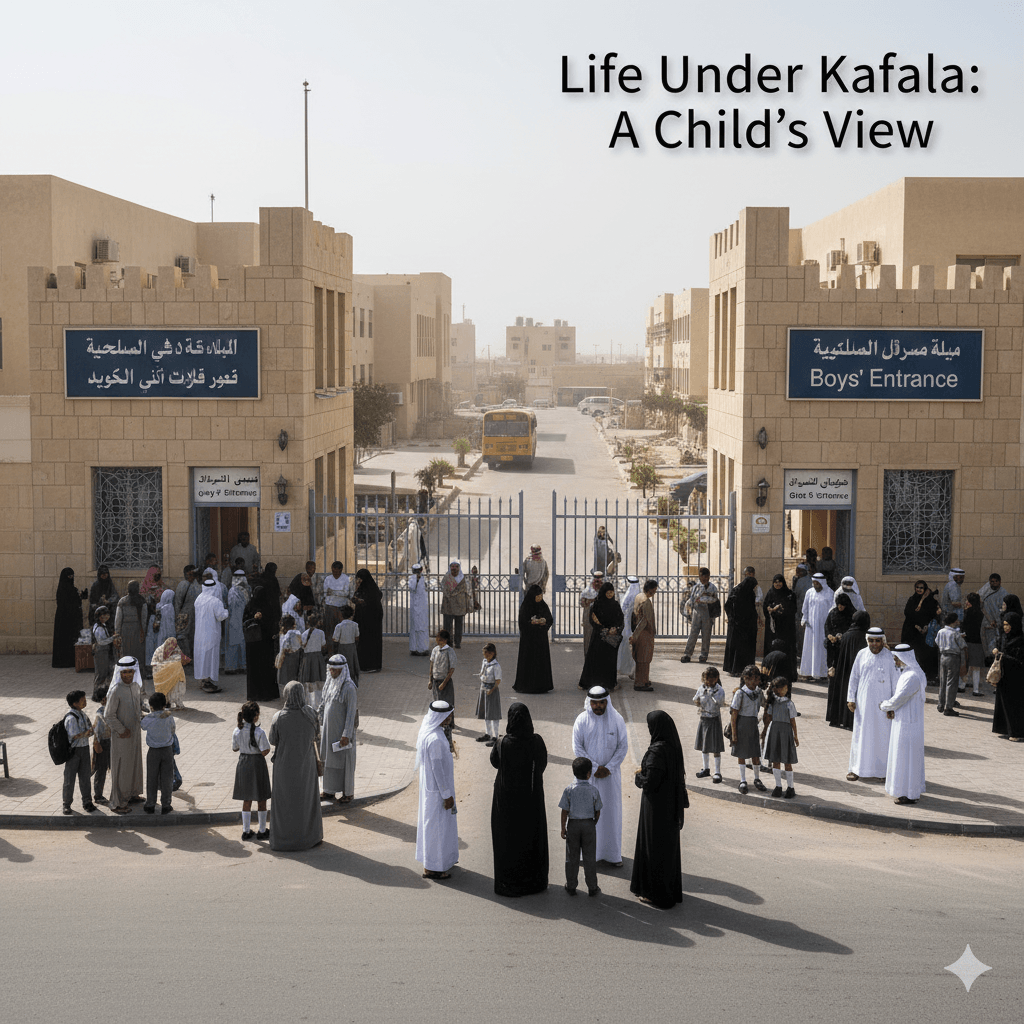
The essay provides vivid accounts of schooling under the Kafala system in Kuwait, emphasizing segregation between Kuwaiti and non-Kuwaiti students.
Examples include:
- Separate classes or schools for migrant children
- Limited participation in extracurricular activities
- Instances of harassment, including an alleged assault on the author’s younger brother on a school bus
These experiences illustrate how institutional policies and social hierarchies extend into education, affecting social development and self-esteem.
Contrasts with Education Abroad
Reflecting on later experiences in the United States, the student contrasts the integrated schooling system with the discriminatory environment in Kuwait.
This comparison underscores how the Kafala system in Kuwait contributes to systemic inequality, highlighting the broader implications for migrant childhoods and their long-term sense of belonging.
Calls for Reform and Global Awareness
The essay concludes with a call to action, urging governments, civil society, and international organizations to:
- Reform or abolish the Kafala system in Kuwait
- Ensure equitable labor rights for all workers, regardless of nationality
- Improve protections for families of migrant workers, including access to housing, education, and healthcare
The author frames these measures as essential for restoring dignity and preventing dehumanizing practices that affect both workers and their children.
Broader Implications of the Kafala System in Kuwait
Experts note that the Kafala system in Kuwait is not unique to the country but is widespread across the Gulf region. Migrant workers often face legal dependence on sponsors, limited mobility, and barriers to integrating socially and economically.
Reforms in one country, such as labor protections, minimum wages, and anti-discrimination measures, can serve as models for regional improvement, demonstrating the importance of global attention.
Conclusion: Childhood Under Kafala System in Kuwait Highlights Need for Change
The Kafala system in Kuwait shapes the lives of migrant families from childhood through adulthood. Personal accounts, like the student essay, provide insight into the social, educational, and economic consequences of the system.
Addressing these issues through policy reform and international advocacy is crucial to protecting migrant workers and ensuring that future generations can grow up in safe, equitable environments.
Source (DoFollow):
Florida Political Review – Behind Closed Doors: Life Under the Kafala System
For more news, visit 360 News Orbit