
Jordan Cellebrite surveillance practices have come under renewed scrutiny after a Citizen Lab report, cited by the Organized Crime and Corruption Reporting Project (OCCRP), alleged that Jordanian authorities used Israeli-made digital forensics tools to extract data from the mobile phones of activists linked to protests over the Gaza war.
The findings have intensified concerns among rights groups about the enforcement of Jordan’s Cybercrimes Law and its implications for civil liberties, journalism, and political expression.
Citizen Lab Links Jordan Cellebrite Surveillance to Protest Arrests
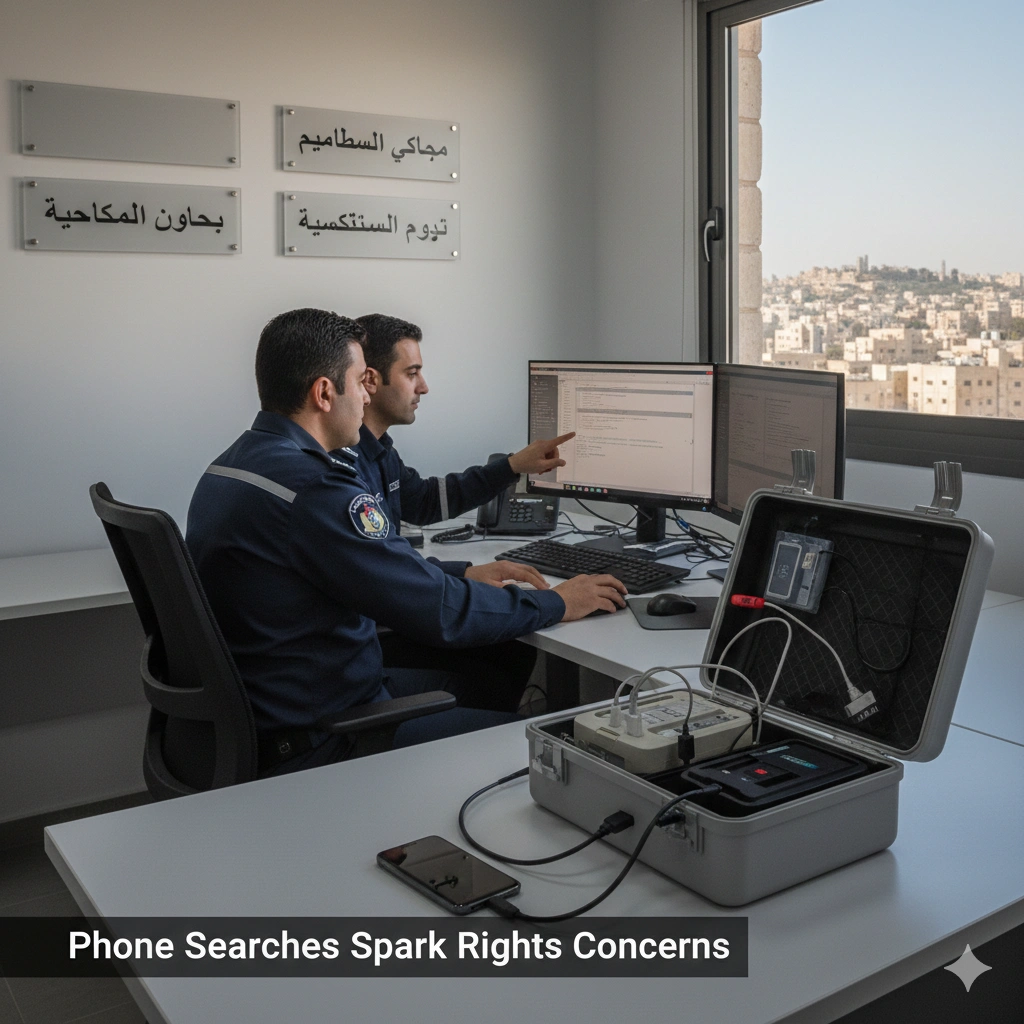
According to the report, Jordan Cellebrite surveillance involved the use of Cellebrite’s Universal Forensic Extraction Device (UFED) by Jordanian law enforcement to access data from phones seized during arrests connected to Gaza-related protests.
Citizen Lab said its forensic analysis identified Cellebrite extraction artifacts on multiple devices belonging to activists and journalists. These individuals had reportedly been detained during demonstrations opposing Israel’s military campaign in Gaza.
Court Records Cited In Jordan Cellebrite Surveillance Claims
OCCRP reported that Jordanian court documents it reviewed also referenced the use of Cellebrite technology, reinforcing Citizen Lab’s technical findings.
The court records reportedly described:
- Broad access to phone contents
- Retrieval of app data and chat histories
- Extraction of images, documents, and files
- Access to stored credentials and passwords
Rights advocates argue that such sweeping access raises serious proportionality and due-process concerns.
Cybercrimes Law Central To Jordan Cellebrite Surveillance Debate
The Jordan Cellebrite surveillance allegations are closely tied to Jordan’s Cybercrimes Law, which was expanded in August 2023.
Human rights organisations, including Amnesty International, have warned that the law has increasingly been used to:
- Prosecute journalists
- Target activists and protest organisers
- Criminalise online speech deemed supportive of Palestinians or critical of government policy
Amnesty previously described the law as being “weaponized” to suppress dissent, a claim echoed in the Citizen Lab and OCCRP reporting.
Gaza War Protests Provide Wider Context
The alleged Jordan Cellebrite surveillance activity took place amid a broader wave of protests in Jordan following the Gaza war, which began after Hamas’s October 7, 2023 attack on Israel.
Demonstrations included:
- Large rallies in central Amman
- Protests near the Israeli embassy
- Occasional clashes between protesters and security forces
OCCRP noted that hundreds of people were reportedly charged for protest-related activity, including social media posts expressing solidarity with Palestinians.
Cellebrite And Jordanian Authorities Respond
Cellebrite, the Israeli digital forensics company at the center of the Jordan Cellebrite surveillance allegations, declined to comment on specific cases when contacted by OCCRP.
However, the company reiterated that:
- Its tools are intended for lawful investigations
- It maintains ethics and compliance oversight mechanisms
- Customers are expected to adhere to rule-of-law and privacy standards
Jordan’s public security cybercrimes unit did not respond to requests for comment regarding the allegations.
Implications For Civil Society And Press Freedom
Legal experts say the Jordan Cellebrite surveillance claims could have far-reaching implications for civil society, particularly if digital forensic tools are used without clear safeguards or judicial oversight.
Concerns raised include:
- Chilling effects on protest participation
- Risks to journalist-source confidentiality
- Expanded state surveillance capabilities
Citizen Lab warned that the combination of powerful forensic technology and broadly worded cybercrime legislation creates conditions ripe for abuse if not carefully regulated.
International Scrutiny Of Digital Surveillance Tools
The Jordan case fits into a wider global debate about the use of commercial spyware and forensic tools by governments.
Researchers note that:
- Cellebrite products are used by law enforcement worldwide
- Oversight frameworks vary significantly by country
- Transparency around use is often limited
Rights groups argue that democratic accountability has not kept pace with the rapid spread of digital surveillance technologies.
Conclusion: Jordan Cellebrite Surveillance Raises Legal And Rights Questions
The Jordan Cellebrite surveillance allegations outlined by Citizen Lab and OCCRP have reopened debate over digital privacy, protest rights, and the scope of state power under Jordan’s Cybercrimes Law.
As pressure mounts for clarity and accountability, the case highlights the broader tension between security enforcement and civil liberties in an era of advanced digital forensics.
Source:
OCCRP – Jordan Used Israeli Tech to Crack Phones of Gaza War Protestors
For more news, visit 360 News Orbit