
Japan cracks down on immigration as the government rolls out sweeping reforms aimed at tightening border controls, increasing deportations, and reshaping how foreign residents integrate into Japanese society. Announced on January 23, 2026, the new measures come amid record immigration levels, with 3.9 million foreign residents currently living in the country.
Japanese officials say the reforms are designed to address public concerns over security, fairness, and social cohesion, while still offering structured support for integration. However, critics argue the tougher stance marks a significant shift in Japan’s traditionally cautious approach to immigration.
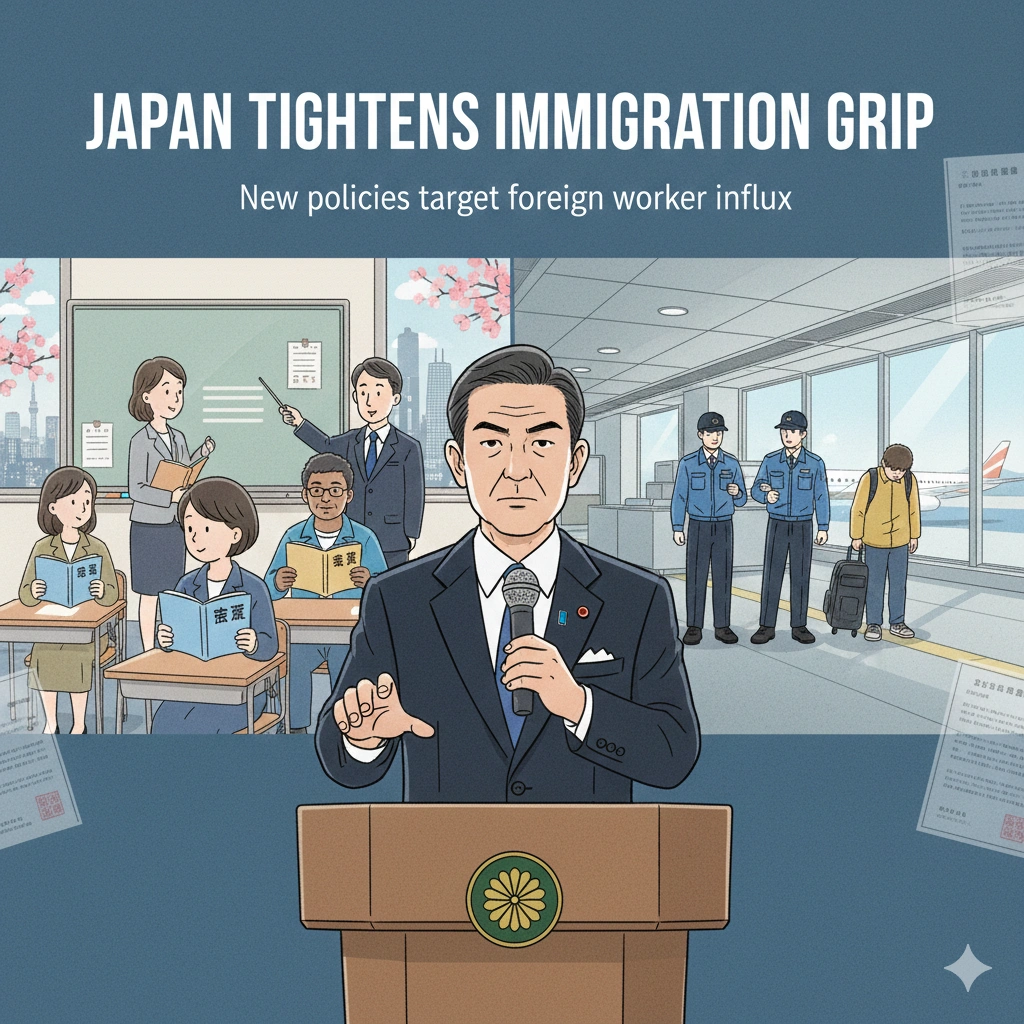
Japan Cracks Down on Immigration with Sweeping Policy Reforms
The new immigration framework was unveiled by Chief Cabinet Secretary Minoru Kihara in a detailed 98-page policy plan. The reforms signal a decisive move toward stricter oversight of foreign nationals, combining tougher enforcement with mandatory integration requirements.
Key goals of the policy include:
- Reducing visa overstays and illegal residency
- Strengthening screening and compliance
- Improving language and cultural integration
- Reassuring citizens amid rising immigration numbers
Officials emphasized that the approach seeks balance, pairing enforcement with support rather than relying solely on punitive measures.
Naturalization Rules Tightened to 10-Year Residency
One of the most significant changes is the revision of naturalization requirements. Under the new rules, foreign nationals must now complete 10 years of continuous residency to qualify for Japanese citizenship, up from the previous five-year requirement.
This change brings naturalization closer in line with permanent residency standards, signaling Japan’s intent to make citizenship a longer-term commitment. Authorities argue the move ensures stronger societal ties and deeper cultural integration before granting citizenship.
Deportations Set to Double by 2027
As Japan cracks down on immigration enforcement, the government plans to double escorted deportations by 2027. In 2024, authorities carried out 249 escorted deportations. That number is expected to rise sharply over the next two years.
The crackdown particularly targets:
- Visa overstayers
- Individuals evading deportation orders
- Repeat immigration offenders
Officials noted that nationals from countries such as Turkey, the Philippines, and Sri Lanka are among those most frequently involved in prolonged deportation cases, though the government stressed enforcement would apply uniformly under the law.
Permanent Residency Revocations and Higher Visa Fees
Starting April 2027, Japan will gain expanded authority to revoke permanent residency from foreign residents who:
- Fail to pay taxes
- Commit criminal offenses
- Repeatedly violate residency conditions
In addition, visa-related fees are expected to rise sharply. Government estimates suggest application costs could increase from ¥3,000 to as much as ¥15,000 for certain visa categories. The higher fees aim to cover administrative costs and discourage fraudulent applications.
Mandatory Language and Integration Training
While enforcement is tightening, Japan is also expanding mandatory integration measures. Under the new rules, visa applicants will be required to complete:
- Japanese language courses
- Social and cultural orientation training
These programs will apply both before arrival and after entry, especially for workers entering under the new labor migration system launching in 2027. Authorities plan to expand access to training in rural areas, where foreign labor shortages are most severe.
New Labor System and Pre-Arrival Programs
The upcoming 2027 labor system will introduce structured pre-arrival programs for foreign workers. These initiatives aim to:
- Reduce workplace misunderstandings
- Improve productivity and communication
- Support long-term settlement in local communities
Officials argue that better preparation before entry will ease integration challenges and reduce friction between residents and local populations.
Foreign Property Ownership Under Review
Beyond visas and residency, Japan is also examining foreign land ownership, particularly near sensitive national security sites. A government decision is expected by summer on potential restrictions affecting:
- Islands near U.S. military bases
- Strategic infrastructure zones
- Groundwater and environmental assets
Authorities are also increasing data collection on foreign-owned condominiums and land, reflecting growing concern over transparency and national security implications.
Public Concerns Drive Policy Shift
The decision as Japan cracks down on immigration is largely driven by public unease. Surveys show rising concern among citizens over:
- Unequal rule enforcement
- Pressure on public services
- National security risks
Officials insist the reforms are not anti-immigrant but are intended to restore trust by ensuring clear rules, fair enforcement, and structured integration.
Conclusion
Japan’s latest reforms mark a turning point in how the country manages immigration. By raising naturalization thresholds, expanding deportations, and tightening residency rules, the government is signaling a firmer stance on compliance. At the same time, mandatory language training and integration programs suggest an effort to build a more sustainable immigration model.
As Japan cracks down on immigration, the success of these policies will depend on whether enforcement and integration can truly move forward together, without undermining the foreign workforce the country increasingly relies on.
For more details & sources visit: The Japan Times
For the latest updates from Japan, visit our Japan news page.