
Iraq sports funding crisis has reached a critical stage, placing the country’s sports federations on the brink of operational collapse and jeopardizing Iraq’s presence in regional and international competitions throughout 2026. A prolonged funding freeze imposed by the Finance Ministry has left federations without reliable financial support, forcing cancellations, accumulating debt, and growing fears of a complete shutdown of organized sporting activity.
Federation officials warn that unless allocations are urgently released, Iraq risks losing years of progress in rebuilding its sports sector and restoring its standing on the international stage.
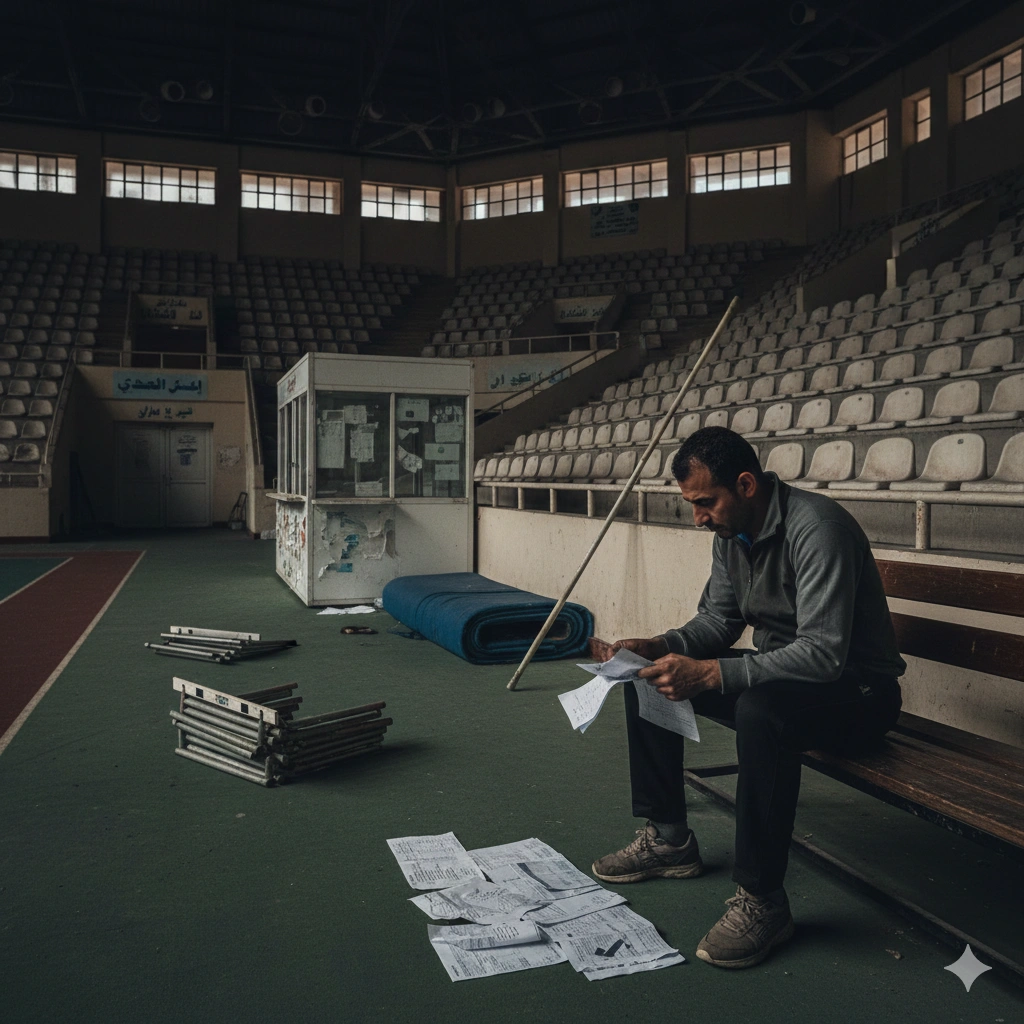
Budget Freeze Leaves Federations Barely Functioning
According to officials speaking to Shafaq News, Iraq’s sports federations have endured more than 17 months of frozen or partially released budgets, during which only two months of payments were disbursed. The lack of sustained funding has crippled day-to-day operations and long-term planning.
Domestic championships have been cancelled, national team training camps suspended, and participation in international tournaments drastically reduced. Many federations are now operating in survival mode, relying on ad hoc support rather than structured government funding.
Olympic Committee Support Not Enough
Several federation heads stressed that limited assistance from the Iraqi Olympic Committee has helped keep some activities alive but is far from sufficient to cover rising costs.
Mahmoud Abbas Al-Lami, head of the Taekwondo Federation, said the sector is surviving largely on minimal Olympic Committee backing. He warned that without properly funded training camps, Iraqi athletes will be unable to compete effectively—or at all—in Arab, Asian, and global championships scheduled for 2026.
The absence of preparation, he noted, could undo years of athlete development and international engagement.
Mounting Debts and Personal Sacrifices
The financial strain has pushed some federation officials to extreme measures. Mehdi Hassan Ismail, deputy head of the Wrestling Federation, revealed that unpaid membership fees to Asian sports bodies are piling up, placing Iraq’s membership status at risk.
He said he may be forced to personally cover travel, registration, and participation costs just to ensure Iraq remains represented in international forums—an unsustainable situation that underscores the depth of the crisis.
Similarly, Zaidoun Jawad, Executive Director of the Athletics Federation, disclosed that no dedicated budget allocations have been set for 2026. A one-off $150,000 grant from the Olympic Committee in mid-2025 allowed only minimal international participation, while debts to airports, hotels, and suppliers continued to grow.
Jawad said the financial pressure became so severe that he was forced to sell his personal car to honor outstanding commitments.
Root Cause: Iraq’s Prolonged Budget Paralysis
At the core of the Iraq sports funding crisis is the government’s continued reliance on the “1/12 spending rule” for a second consecutive year. This emergency financial framework permits authorities to spend only one-twelfth of the previous year’s budget each month in the absence of an approved federal budget, leaving little room for non-essential sectors.
While the mechanism protects critical expenditures such as salaries and pensions, it has severely constrained discretionary spending. As a result, sectors including sports, culture, and international engagement have borne the brunt of the cuts, deepening the Iraq sports funding crisis as federations are excluded from protected allocations.
With no clear timeline for the passage of a full 2026 federal budget, Iraq’s sports federations remain trapped in financial uncertainty, unable to plan competitions, training programs, or international participation.
Risk to Iraq’s Regional and Global Standing
Sports officials warn that the Iraq sports funding crisis carries consequences that extend well beyond stadiums and training grounds. Limited participation in regional and international competitions threatens to weaken Iraq’s global visibility, diplomatic soft power, and youth engagement, areas where sports have historically played a unifying and representational role.
There is growing concern that years of rebuilding Iraq’s sporting institutions after conflict and instability could be reversed if federations are forced to withdraw from international bodies or fail to meet participation and membership requirements due to financial shortfalls.
Uncertain Outlook for 2026
As of February 2026, the Iraq sports funding crisis shows no sign of immediate relief. The Finance Ministry has yet to indicate when full funding may resume, and draft budget documents reportedly still lack explicit provisions for national sports federations.
Without swift policy intervention, officials caution that 2026 could become a turning point, marking the first year in decades when Iraq’s organized sports system risks grinding to a near halt. For athletes, coaches, and administrators alike, the warning is clear: without sustainable funding, talent alone cannot keep Iraq competitive on the international stage.
For more details & sources visit: Shafaq News
Read more about Iraq news on 360 News Orbit – Iraq.