
Iran Purchasing Power is reaching a critical low point as the nation grapples with a deepening economic apocalypse. Iranian households are currently navigating a severe decline in living standards that has pushed millions of families into systemic poverty. As the national currency continues its downward spiral, the ability of average citizens to afford basic necessities has virtually evaporated. This crisis is the culmination of years of intense political tension, military posturing, and the tightening grip of international sanctions.
The collapse of Iran Purchasing Power is most visible in the staggering devaluation of the Iranian rial, which has lost more than ninety-five percent of its value against the dollar since 2018. This currency freefall has turned simple grocery shopping into a source of immense stress for the populace. Official data reveals that the cost of basic goods has surged by sixty percent in just the last twelve months, leaving wages far behind. Families are now forced to make impossible choices between food, medicine, and housing as their savings vanish.
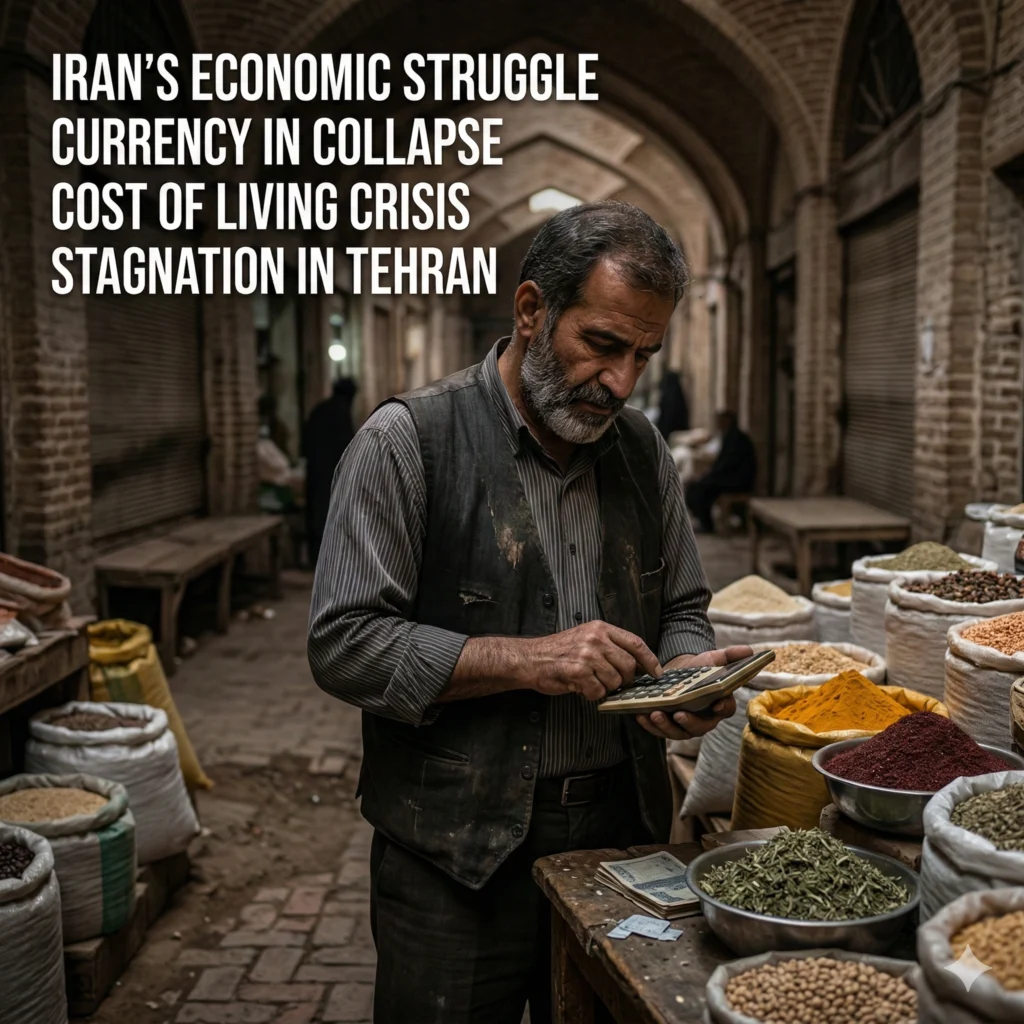
Factors Driving the Collapse of Iran Purchasing Power
The primary driver of the current crisis is the hyperinflation affecting the food sector, where prices have doubled within a single year. This has led to a dramatic shift in dietary habits, with red meat consumption dropping significantly as it becomes a luxury item for the wealthy. When a population can no longer afford protein, the long-term health implications for the next generation become a major concern for public health officials. This nutritional deficit is a direct consequence of the eroded Iran Purchasing Power.
Another critical factor is the collapse of the pension system, which has left retirees in a state of financial despair. While nominal pension amounts have been increased by the state, their actual value in hard currency has plummeted. Elderly citizens who spent decades contributing to the system now find that their monthly checks barely cover a week’s worth of basic supplies. This betrayal of the social contract has fueled widespread resentment and frequent protests among the older demographic.
Persistent infrastructure shortages are also hampering any chance of a domestic industrial recovery. Frequent blackouts and shortages of natural gas and water have forced many factories to operate at half capacity or close entirely. When production drops, the scarcity of goods further drives up prices, creating a vicious cycle that further weakens Iran Purchasing Power. The lack of reliable utilities makes it nearly impossible for the private sector to function effectively or plan for the future.
Iran Purchasing Power
The disparity between urban and rural experiences of the crisis is stark, though both are suffering immensely. In urban centers, real household expenditure has fallen by twenty-five percent over two decades, but in rural areas, it has nearly halved. This rural collapse is driving a wave of migration to the cities, where infrastructure is already buckling under the pressure. The total loss of Iran Purchasing Power in the countryside is destroying traditional agricultural communities and creating a new class of urban poor.
Impact of Sanctions and Geopolitical Tension on Markets
The ongoing tensions between Iran and the United States have created a climate of extreme uncertainty that scares off both domestic and foreign investors. Private capital is no longer being used to build factories or start innovative businesses; instead, it is being diverted into “safe havens” like gold and foreign currency. This flight of capital ensures that the economy remains stagnant, as there is no investment in productive capacity. Iran Purchasing Power cannot recover without a stable investment environment.
International sanctions have effectively cut off the Iranian banking sector from the global financial system, making it incredibly difficult to import essential machinery or raw materials. This isolation has forced the country to rely on expensive and inefficient “shadow” networks to conduct trade. The added costs of these workarounds are ultimately passed down to the consumer, further draining what little Iran Purchasing Power remains. The economic wall around the country is becoming a ceiling for its people’s aspirations.
Moreover, the threat of potential military conflict hangs over every economic decision made by Iranian citizens. When people fear that a war could break out at any moment, they stop spending on non-essential items and begin hoarding resources. This contraction in consumer spending has led to a massive slump in the retail sector. The psychological weight of the “economic apocalypse” is just as damaging as the physical lack of currency, as it prevents any sense of normalcy from returning to the marketplace.
The Plight of Female Entrepreneurs in the Digital Economy
Female entrepreneurs have been particularly hard hit by the recent social and political instability. Many women in Iran had carved out a niche for themselves by selling handmade goods or services through Instagram and other social media apps. However, recent internet blackouts and platform restrictions have caused their monthly sales to plummet by as much as ninety percent. For many families, this second income was the only thing keeping them afloat as Iran Purchasing Power declined.
The loss of these digital businesses is a major setback for gender equality and economic diversification in the region. Without the ability to reach customers online, these women are forced back into a traditional market that is already saturated and failing. The government’s focus on security over connectivity has directly harmed the most vulnerable and innovative segments of the economy. The destruction of these livelihoods is a silent tragedy within the broader collapse of Iran Purchasing Power.
The resilience of these entrepreneurs is being tested to its limit, with many trying to use VPNs and other tools to bypass the filters. However, the inconsistent nature of the internet makes it impossible to run a professional operation. As these businesses fail, the ripple effect is felt throughout the community, as these women often employed other family members or local artisans. The digital divide is now a primary driver of poverty in the modern Iranian state.
Infrastructure Failure and Industrial Productivity
The shortages of natural gas and electricity are not just a domestic inconvenience; they are a death knell for Iranian industry. Heavy industries like steel and cement require constant power to maintain their furnaces and production lines. When the government diverts power to residential areas to prevent social unrest, the industrial sector suffers, leading to layoffs and reduced exports. This loss of national income eventually filters down to the individual, further reducing Iran Purchasing Power.
In many industrial zones, water shortages have also become a permanent fixture of life. Decades of poor water management combined with climate change have left many regions without the resources needed for manufacturing or large-scale agriculture. As these sectors decline, the country becomes even more dependent on expensive imports. This dependency is a major weakness that international sanctions exploit, further squeezing Iran Purchasing Power at every turn.
- Natural gas is being rationed for factories during the winter months.
- Electricity blackouts are a common occurrence during the summer peaks.
- Aging water infrastructure loses up to 30 percent of its volume through leaks.
- The lack of foreign investment prevents the modernization of the energy grid.
Real Household Expenditure Trends in Urban Areas
Data tracking the last twenty years shows a steady and painful decline in the quality of life for city dwellers. Urban families, who once enjoyed a relatively high standard of living, are now cutting back on education, entertainment, and even medical care. The average urban household has seen its real-term expenditure fall by a quarter, reflecting a significant contraction in the middle class. This shrinking middle class is a dangerous sign for the long-term stability of the country.
Housing costs in cities like Tehran have remained high despite the economic downturn, as real estate is seen as one of the few ways to preserve value. This has led to a situation where families spend more than half of their income just on rent, leaving very little for anything else. The loss of Iran Purchasing Power means that homeownership is now a distant dream for the younger generation. They are stuck in a cycle of high rents and stagnant wages that offers no path to financial security.
The result is a sense of “wait-and-see” that has paralyzed the social lives of young Iranians. Marriage rates are falling, and birth rates have dropped as couples realize they cannot afford to start a family. The economic crisis is literally shrinking the future of the nation. The erosion of Iran Purchasing Power is not just a financial issue; it is a demographic one that will haunt the country for decades to come.
The Collapse of Rural Economies and Migration
In the countryside, the situation is even more dire, with household expenditure almost halving in real terms. Many rural families have been forced back into subsistence farming, but even this is difficult due to the aforementioned water shortages. The lack of Iran Purchasing Power in rural areas has led to a total breakdown of local markets. Small village shops are closing because no one has the currency to buy even the most basic processed goods.
This rural poverty is fueling a massive internal migration toward the outskirts of major cities. These migrants often end up in informal settlements or “shanty towns” where they lack access to basic services. The move to the city rarely improves their economic situation, as they find themselves competing for low-wage labor in a shrinking market. This mass displacement is creating new social tensions and placing an unbearable burden on urban infrastructure that is already failing.
The loss of agricultural productivity also means that Iran must spend its precious foreign currency on importing wheat and other staples. This further weakens the rial and contributes to the cycle of inflation that destroys Iran Purchasing Power. The government has attempted to provide subsidies to rural families, but these payments have not kept pace with the rising costs of seeds, fertilizer, and fuel. The rural heartland of Iran is currently in a state of quiet collapse.
Capital Diversion into Gold and Safe Havens
When a currency loses ninety-five percent of its value, the public loses all faith in it. As a result, anyone with any savings is desperately trying to convert their rials into gold or “hard” currencies like the Euro or the Dollar. This panic-buying of gold has pushed its price to record highs in domestic terms. While this protects the individual’s savings, it is devastating for the economy as a whole because that money is not being invested.
The diversion of capital into gold means there is a lack of liquidity for businesses that want to expand or innovate. Banks are unable to lend, and the interest rates are so high that borrowing is impossible for most entrepreneurs. This financial stagnation is a key component of why Iran Purchasing Power remains so low. The nation’s wealth is sitting in safes and jewelry boxes rather than being used to build the infrastructure of the future.
- Gold coins have become a standard unit of value for large transactions like house sales.
- The “black market” for dollars is the only place where true market value is determined.
- Government attempts to fix the exchange rate have only created more corruption.
- Digital currencies are also being used as a way to bypass local financial restrictions.
Social Instability and Public Perception of Policy
Rising social instability is the inevitable result of the economic apocalypse. Citizens are no longer hiding their anger toward the government’s management of the economy and the impact of international sanctions. Public perception is that the country’s resources are being mismanaged while the average person suffers. This loss of Iran Purchasing Power has become the primary driver of political dissent, crossing traditional class and ethnic lines.
The government’s response to this anger has been a mixture of repression and populist economic promises that are rarely fulfilled. Every time a new protest wave begins, the state blames “foreign enemies” for the economic woes, but this narrative is losing its effectiveness with a public that can see the mismanagement first-hand. The lack of Iran Purchasing Power is a daily reminder of the state’s failure to provide basic economic security for its citizens.
As the gap between the wealthy elite and the struggling majority widens, the risk of a major social explosion increases. The feeling of hopelessness among the youth is particularly high, leading to a “brain drain” as the most educated citizens seek to leave the country. The loss of human capital is perhaps the most permanent damage caused by the current crisis. Without its best and brightest, Iran will struggle to rebuild even if the sanctions are eventually lifted.
Future Economic Outlook for Iran in late 2026
Looking toward the end of 2026, the economic outlook for Iran remains grim without a major diplomatic breakthrough. The structural issues of the economy, combined with the external pressure of sanctions, create a “perfect storm” that continues to erode Iran Purchasing Power. There are no quick fixes for hyperinflation and a collapsing currency. The path to recovery will require years of painful reform and a complete reintegration into the global financial community.
The government may try to pivot toward more trade with regional partners or eastern powers, but these relationships are often lopsided and cannot replace the loss of Western markets. Furthermore, the internal issues of corruption and infrastructure failure will continue to plague any new trade deals. The Iran Purchasing Power crisis is a deep-seated problem that requires more than just new trading partners; it requires a fundamental change in how the country is governed.
Until the average Iranian can once again afford a basic basket of goods without fear of the next day’s prices, the country will remain in a state of crisis. The “economic apocalypse” is a lived reality for eighty million people, and its effects will be felt for generations. The global community must watch closely as the situation develops, as the stability of the entire region is tied to the economic health of Iran.
Strategies for Survival Among Iranian Households
Despite the overwhelming odds, Iranian households have developed complex strategies to survive the loss of Iran Purchasing Power. Bartering has become more common in some communities, and many people have taken on multiple jobs to make ends meet. The “informal economy” is now the primary way that many families survive, with people selling everything from home-cooked meals to used car parts to supplement their income.
Community support networks have also stepped in to fill the gap left by the state. Local charities and mosque-based organizations are providing food baskets and medical assistance to those in absolute poverty. However, even these organizations are feeling the strain as the number of people in need continues to grow and the number of donors shrinks. The erosion of Iran Purchasing Power is stretching the nation’s social fabric to its breaking point.
- “Second-hand” markets are thriving as people can no longer afford new clothes or electronics.
- Families are moving back into multi-generational homes to save on rent and utilities.
- Urban gardening is being used to supplement food supplies in some neighborhoods.
- People are delaying medical procedures until they become life-threatening emergencies.
Final Assessment of the Iranian Economic Landscape
The economic crisis in Iran is a tragedy of immense proportions that has effectively erased the Iran Purchasing Power of an entire nation. The combination of internal mismanagement and external sanctions has created an environment where the most basic human needs are becoming luxuries. As we move through 2026, the resilience of the Iranian people is the only thing preventing a total humanitarian catastrophe.
The warnings of an “economic apocalypse” are no longer hyperbole; they are the daily experience of millions. The path forward is fraught with danger, and the potential for further instability is high. Addressing the loss of Iran Purchasing Power must be the top priority for any future government, as it is the only way to restore the dignity and security of the Iranian people. The world must not remain indifferent to the suffering of a nation caught in the crosshairs of global politics and local failure.
For more details & sources visit: BBC News
Read more on Iran news: 360 News Orbit – Iran.