
Iran President Pezeshkian Rejects Nuclear Disarmament remains the central focus of global diplomatic circles as Tehran navigates a complex geopolitical landscape in early 2026. President Masoud Pezeshkian has formally clarified the national stance regarding the country’s atomic ambitions during a high-stakes meeting with civil activists this week.
While the administration appears open to increased international oversight, the fundamental right to maintain a domestic nuclear infrastructure remains a non-negotiable pillar of Iranian state policy. This development comes at a critical juncture as indirect negotiations with the United States continue in Geneva under the mediation of Omani officials. The Iranian leadership is currently balancing the need for sanctions relief with the strategic necessity of maintaining technological sovereignty in the fields of medicine, agriculture, and sustainable energy production.
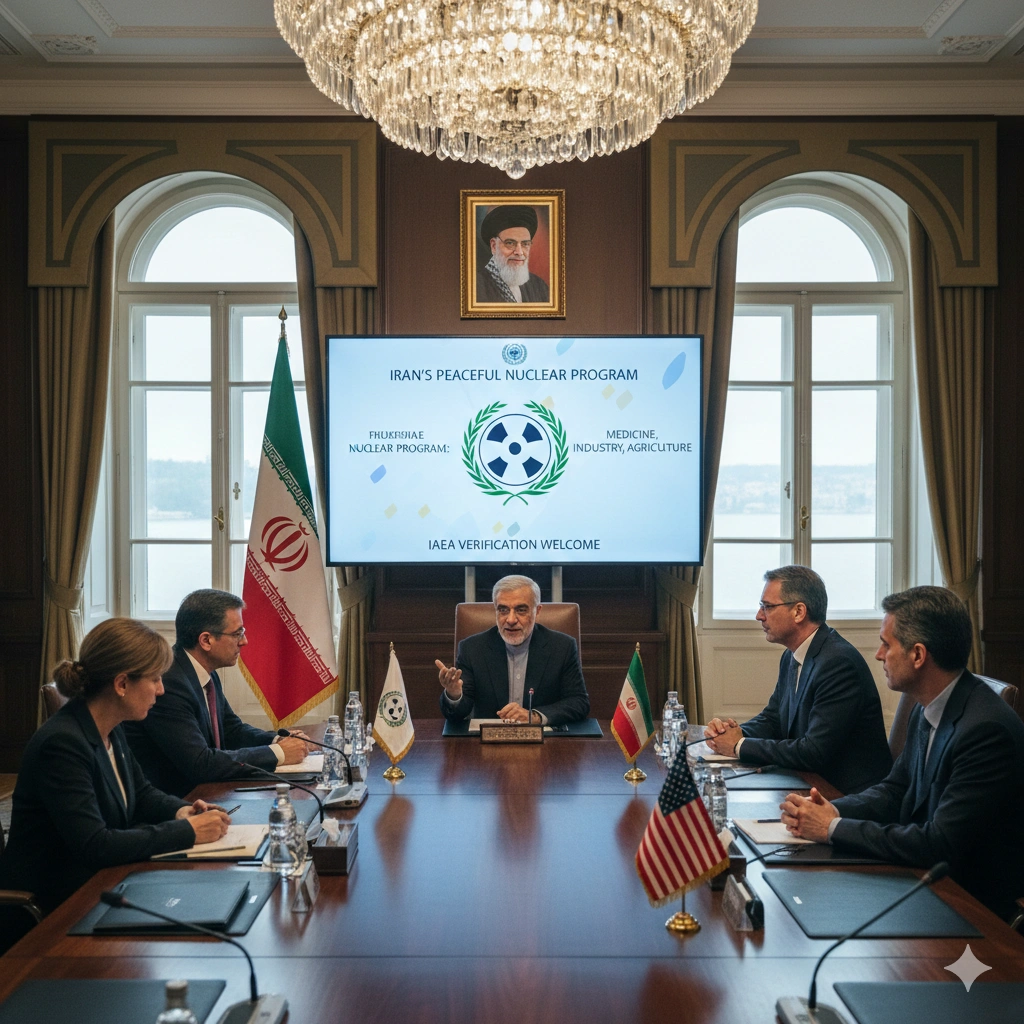
The Strategic Context of the Geneva Negotiations
The current diplomatic atmosphere surrounding the Iran President Pezeshkian Rejects Nuclear Disarmament announcement is defined by the second round of indirect talks hosted at the Omani embassy. Following the initial discussions in Muscat earlier this month, the focus has shifted toward finding a middle ground between Western demands for dismantlement and Tehran’s insistence on verification. Iranian negotiators have signaled a willingness to enhance transparency through the International Atomic Energy Agency. However, they remain firm on the point that uranium enrichment for civilian purposes will continue unabated despite external pressures.
Observers note that the timing of these statements is intended to project strength while maintaining a window for functional diplomacy. By emphasizing the peaceful nature of their research, Iranian officials are attempting to decouple their technological progress from the military concerns voiced by Washington and its regional allies. The presence of enhanced US military deployments in West Asia adds a layer of urgency to these discussions, as both sides seek to avoid a direct kinetic escalation while protecting their respective national interests.
Domestic Policy and the Influence of the Fatwa
A significant portion of the Iran President Pezeshkian Rejects Nuclear Disarmament rhetoric is rooted in the long-standing religious decree issued by Supreme Leader Ali Khamenei. This fatwa, which prohibits the production and use of nuclear weapons, serves as the moral and legal foundation for Iran’s official nuclear doctrine. Pezeshkian has reiterated that this religious commitment is more binding than any international treaty, suggesting that the global community should trust the sincerity of Tehran’s peaceful intentions based on these internal values.
This internal alignment ensures that there is a unified front between the executive branch and the clerical leadership regarding nuclear sovereignty. By citing the Supreme Leader, Pezeshkian effectively narrows the scope of the negotiations, making it clear that the total abandonment of nuclear technology is not an option on the table. This stance resonates with a domestic audience that views scientific advancement as a matter of national pride and essential for future economic independence from fossil fuel revenues.
Iran President Pezeshkian Rejects Nuclear Disarmament
The explicit statement that Iran President Pezeshkian Rejects Nuclear Disarmament serves as a definitive boundary for the ongoing diplomatic engagement with the P5+1 group. This position highlights the reality that Iran views its nuclear program not as a bargaining chip to be discarded, but as a permanent fixture of its industrial identity. The refusal to dismantle facilities reflects a broader strategy to ensure that any future agreement is based on mutual respect rather than a perceived surrender of rights.
Furthermore, this rejection of total disarmament is coupled with an offer for rigorous verification processes. Pezeshkian has invited the IAEA to perform more frequent and intrusive inspections to prove that no diversion to military use is occurring. This “trust but verify” approach is designed to put the onus on Western powers to accept Iran’s civilian status. If the international community refuses to accept verification as a substitute for dismantlement, Tehran argues that the failure of diplomacy lies with the West’s unrealistic expectations.
Technological Advancement in Medicine and Industry
Beyond the political theater, the Iran President Pezeshkian Rejects Nuclear Disarmament narrative is heavily focused on the practical applications of isotopes. Iranian hospitals rely on domestic nuclear production for radiopharmaceuticals used in cancer treatments and advanced diagnostic imaging. For a nation frequently under the shadow of medical sanctions, maintaining a self-sufficient nuclear cycle is viewed as a humanitarian necessity rather than a purely strategic or military choice.
In the agricultural sector, nuclear technology is being utilized for pest control and improving crop resilience in the face of climate change. Pezeshkian has argued that denying Iran access to these tools is an act of scientific apartheid that restricts the development of the Global South. By framing the issue as one of progress and human rights, the Iranian administration seeks to build sympathy among non-aligned nations who also fear technological gatekeeping by major global powers.
Impact of US Military Deployments in West Asia
The regional security environment significantly influences why the Iran President Pezeshkian Rejects Nuclear Disarmament stance remains so rigid today. With increased US naval and aerial presence in the Persian Gulf, Tehran views its nuclear infrastructure as a vital component of its broader deterrence framework. While they deny seeking a bomb, the latent capability provided by advanced enrichment acts as a “breakout” deterrent that complicates any potential plans for foreign military intervention or regime change.
Negotiations in Geneva are taking place against this backdrop of military posturing, where every diplomatic move is scrutinized for signs of weakness. Pezeshkian’s refusal to discuss ballistic missiles or the total halt of enrichment is a signal that Iran will not negotiate under duress. The administration believes that providing too many concessions while facing military threats would only invite further pressure, hence the strategic decision to remain firm on the core nuclear infrastructure while offering transparency.
The Role of International Oversight and IAEA
The offer of verification included in the Iran President Pezeshkian Rejects Nuclear Disarmament announcement is a key olive branch to the International Atomic Energy Agency. Tehran is aware that its relationship with the IAEA has been strained by past disputes over undeclared sites and camera access. By proposing a new framework for cooperation, Pezeshkian is attempting to restore a level of technical legitimacy that could pave the way for a more formal diplomatic breakthrough in the coming months.
However, the effectiveness of this verification offer depends on the specific protocols that Iran is willing to accept. The Western powers are pushing for the implementation of the Additional Protocol, which allows for snap inspections of any site. If Pezeshkian can bridge the gap between Iranian sovereignty and the IAEA’s need for certainty, it could de-escalate the “breakout clock” concerns that currently dominate the intelligence assessments in Washington and Tel Aviv.
Economic Implications of the Nuclear Stance
Maintaining the position that Iran President Pezeshkian Rejects Nuclear Disarmament has profound implications for the Iranian economy, which remains hamstrung by international sanctions. The president’s strategy is to convince the world that the nuclear program is an economic asset rather than a liability. By integrating nuclear energy into the national grid, Iran hopes to free up more oil and gas for export, thereby diversifying its revenue streams and stabilizing the rial.
The civil activists met by Pezeshkian expressed concerns about the continuing inflation and the high cost of living linked to the nuclear standoff. The president responded by asserting that a total surrender of nuclear rights would not guarantee long-term economic relief, as the West would likely find new pretexts for sanctions. Therefore, the goal is to reach a “durable deal” that recognizes Iran’s rights while removing the financial barriers that prevent international trade and foreign direct investment.
Regional Reactions and Diplomatic Repercussions
The news that Iran President Pezeshkian Rejects Nuclear Disarmament has sent ripples through the Middle East, particularly among the Gulf Cooperation Council members. While some neighbors fear a nuclear-armed Iran, others are more concerned about the potential for a regional war resulting from a failed diplomatic process. The role of Oman as a mediator remains crucial, as Muscat seeks to prevent a total collapse of communication between the adversarial powers during this sensitive time.
Israel has remained vocal in its opposition to any deal that allows Iran to retain its enrichment capabilities. The Pezeshkian administration, however, insists that Israeli pressure is the primary obstacle to a peaceful resolution. By standing firm on disarmament while offering verification, Iran is positioning itself as the more reasonable party in the eyes of the global community, contrasting its stance with what it describes as the “warmongering” rhetoric of its regional rivals.
Future Outlook for the Geneva Process
As we look toward the next stages of the Geneva talks, the Iran President Pezeshkian Rejects Nuclear Disarmament declaration will remain the definitive benchmark for Iranian negotiators. The international community must now decide if a monitored, civilian nuclear Iran is an acceptable outcome or if the pursuit of “zero enrichment” remains the only viable goal. This fundamental disagreement is what led to the collapse of previous agreements and remains the primary hurdle for the current diplomatic efforts.
The success of Pezeshkian’s presidency may very well hinge on his ability to navigate this nuclear labyrinth. If he can secure a deal that preserves the technology while ending the isolation, he will be viewed as a transformative figure in Iranian history. However, if the talks fail and the economic pressure mounts, the internal stability of the administration could be tested by both hardliners and a public weary of endless sanctions. The coming weeks will be decisive for the future of the West Asian security architecture.
Comparative Analysis of Nuclear Negotiations
The current situation involving the Iran President Pezeshkian Rejects Nuclear Disarmament stance can be compared to the 2015 JCPOA negotiations. Unlike the previous era, the Iranian side now possesses much higher levels of enriched uranium and more advanced centrifuge technology. This “on-the-ground” reality means that the leverage has shifted, and a return to the exact terms of the old deal is increasingly unlikely as Tehran demands updated terms that reflect its current scientific status.
- Iran insists on the preservation of the Fordow and Natanz enrichment facilities.
- The United States demands a significant reduction in the stockpile of 60% enriched uranium.
- International inspectors require unrestricted access to historical data on centrifuge production.
- Regional partners are calling for a “JCPOA Plus” that includes regional security clauses.
Challenges to Verification and Compliance
Even if the Iran President Pezeshkian Rejects Nuclear Disarmament policy is accepted as a basis for a deal, the technical challenges of verification are immense. The history of “cat and mouse” games between inspectors and Iranian officials has created a deficit of trust that is difficult to overcome. For a new verification regime to work, there must be a clear definition of what constitutes “peaceful use” and a standardized method for reporting any discrepancies in material accounting.
The Pezeshkian administration has expressed a willingness to address these technical hurdles provided the sanctions are lifted in a verifiable and synchronized manner. This “step-for-step” approach is a departure from the “all-or-nothing” demands seen in previous years. By breaking the problem down into smaller, manageable components, there is a slim hope that a new framework can be established before the 2026 election cycle in the United States complicates the diplomatic landscape even further.
The Role of Civil Society in Nuclear Discourse
President Pezeshkian’s meeting with civil activists highlights the growing importance of internal public opinion in the Iran President Pezeshkian Rejects Nuclear Disarmament debate. These activists represent a cross-section of society that wants to see Iran integrated into the global economy without sacrificing its technological achievements. The president is using these dialogues to build a national consensus that supports his “middle path” of defiance on disarmament and flexibility on oversight.
This engagement also serves as a check on the more extremist voices within the Iranian political establishment. By involving civil society, Pezeshkian creates a buffer against those who would prefer to withdraw from the NPT entirely or move toward weaponization. The message is clear: the nuclear program belongs to the Iranian people, and its development should serve the nation’s progress, not lead it into a devastating conflict with the rest of the world.
Geopolitical Realities of 2026
The global order of 2026 is significantly different from the decade prior, and the Iran President Pezeshkian Rejects Nuclear Disarmament stance reflects this shift. With the rise of a multipolar world and the strengthening of ties between Tehran, Moscow, and Beijing, Iran feels less isolated than it did during the original JCPOA negotiations. This increased diplomatic backing allows Pezeshkian to be more assertive in his refusal to accept Western-imposed limitations on his country’s scientific endeavors.
- Strategic partnerships with Russia provide Iran with a diplomatic shield at the UN Security Council.
- Economic cooperation with China offers an alternative to Western financial systems and markets.
- Membership in the BRICS+ alliance has given Iran a new platform for South-South cooperation.
Final Assessment of the Pezeshkian Doctrine
Ultimately, the Iran President Pezeshkian Rejects Nuclear Disarmament position is the centerpiece of what many are calling the “Pezeshkian Doctrine.” This doctrine seeks to modernize Iran while maintaining its revolutionary principles and strategic independence. It is a high-stakes gamble that assumes the West is tired of conflict and will eventually accept a nuclear-capable Iran as a regional reality, provided that capability is under international watch.
Whether this gamble pays off depends on the resilience of the Iranian economy and the political will of the Biden administration’s successors or current leadership. As the Geneva talks enter their most sensitive phase, the world watches to see if a middle ground exists. The rejection of disarmament is not just a policy; it is a declaration of Iran’s intent to remain a significant and technologically advanced power in the 21st century, regardless of the pressures applied by its adversaries.
Strategic Consequences of Policy Persistence
The persistence of the Iran President Pezeshkian Rejects Nuclear Disarmament policy ensures that the nuclear issue will remain the primary lens through which the West views Iran. This focus often overshadows other critical areas of potential cooperation, such as regional stability in Iraq or environmental protection in the Caspian Sea. As long as the nuclear deadlock continues, the potential for a broader rapprochement between Tehran and Washington remains largely theoretical, keeping the region in a state of “no war, no peace.”
However, for Pezeshkian, this is a necessary cost of doing business. He believes that a nation that gives up its core scientific assets will eventually lose its political independence as well. By holding the line on nuclear disarmament, he is attempting to define the terms of Iran’s engagement with the world. The goal is to reach a state where Iran is treated as a normal state with a normal nuclear program, a status that has so far eluded the Islamic Republic since its inception.
Technical Viability of Peaceful Verification
One must consider the technical viability of the verification offers mentioned in the Iran President Pezeshkian Rejects Nuclear Disarmament briefings. The IAEA has the tools to monitor enrichment levels in real-time using online enrichment monitors (OLEMs). If Iran allows these devices to be installed at all its key facilities, it would provide the “gold standard” of verification that could satisfy even the most skeptical observers in the international community.
The challenge remains the political will to allow such deep transparency. For Iran, this is often seen as an infringement on national security, especially given the history of sabotage and cyberattacks against its facilities. Pezeshkian’s task is to convince the security establishment that transparency is actually a defensive measure—by proving the program is peaceful, they remove the justification for foreign attacks. This logic is a key part of the current diplomatic push in Geneva.
Implications for Global Non-Proliferation
The Iran President Pezeshkian Rejects Nuclear Disarmament stance has long-term implications for the global non-proliferation regime. If Iran successfully maintains its enrichment program while under sanctions and pressure, other middle powers may see it as a blueprint for their own nuclear ambitions. This “Iranian Model” of persistent development could challenge the traditional dominance of the nuclear-armed states and lead to a more crowded nuclear landscape in the decades to come.
- Other nations in the region may seek similar enrichment capabilities to maintain a balance of power.
- The NPT may require reforms to address the rights of non-nuclear weapon states to technology.
- The definition of “breakout capacity” will become a central theme in future disarmament treaties.
Conclusion of the Current Diplomatic Standoff
As the second round of Geneva talks concludes, the Iran President Pezeshkian Rejects Nuclear Disarmament sentiment remains the most significant hurdle and the most defined boundary. The Iranian administration has laid out its terms: verification in exchange for recognition and relief. The ball is now in the court of the international community to decide if they can live with a nuclear-sovereign Iran that is open to the world’s eyes but closed to its demands for total dismantlement.
President Pezeshkian has shown that he is a pragmatist, but one who is deeply rooted in the ideological foundations of his country. His rejection of disarmament is not an act of aggression, but a statement of national identity. In the coming months, the success of his “verification for rights” proposal will determine whether the Middle East moves toward a new era of stability or continues down the path of uncertainty and potential conflict.
For more details & sources visit: CGTN / Tasnim News
Read more on Iran news: 360 News Orbit – Iran.