
January 24, 2026
Iran export lifelines to China, Iraq and UAE are facing renewed strain as fresh U.S. trade measures threaten to further constrict Tehran’s already narrow commercial corridors. New WTO-linked trade data shows Iran’s exports remain heavily concentrated among a small group of regional and Asian buyers, a vulnerability now amplified by newly announced Trump tariffs targeting countries that continue doing business with Iran.
According to WTO Tariff & Trade Data compiled via Trade Data Monitor, Iran’s export profile in 2024 underscores its growing dependence on a limited set of partners. At the same time, Reuters reports that U.S. President Donald Trump has declared a sweeping 25 percent tariff on any country conducting trade with Iran—introducing fresh uncertainty for Tehran’s key export destinations and their access to U.S. markets.
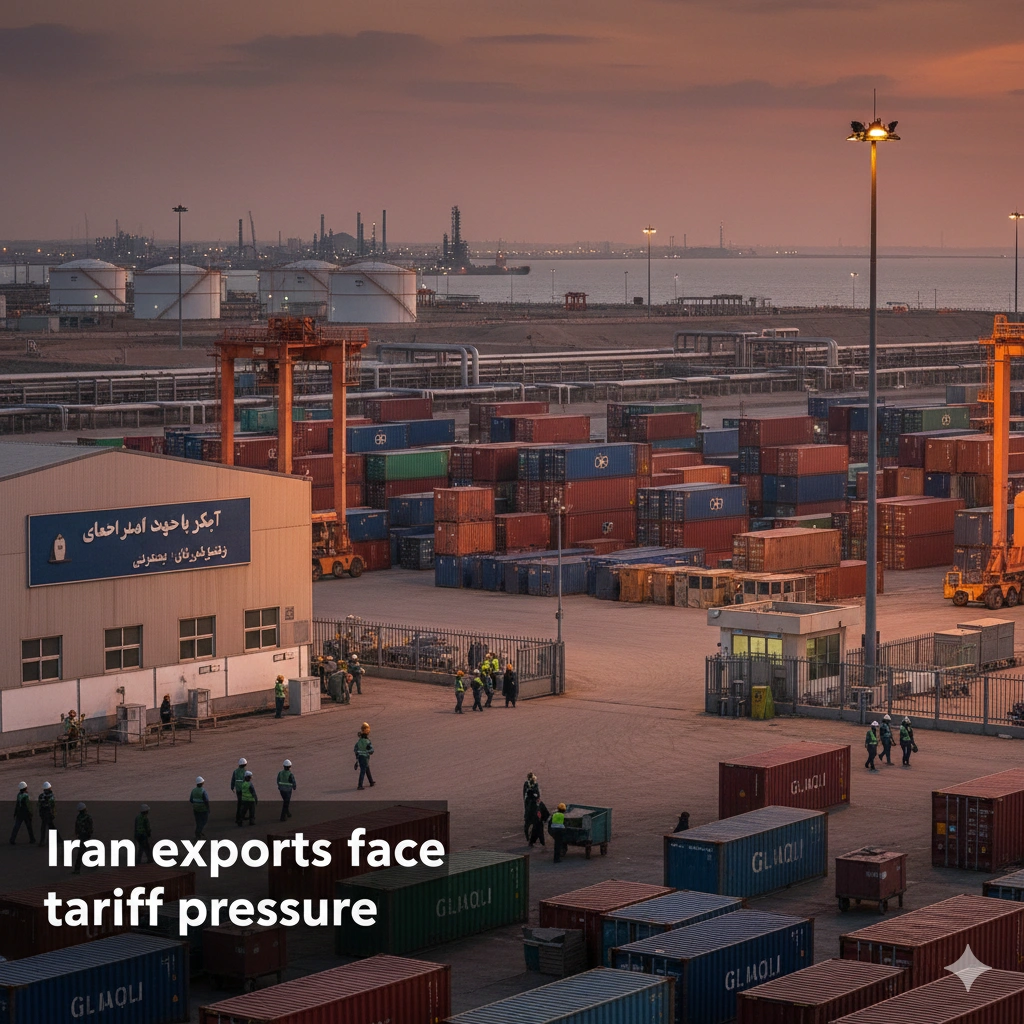
Iran Export Lifelines to China, Iraq and UAE Dominate Trade
The data highlights how concentrated Iran’s trade structure has become under years of sanctions. In 2024, China emerged as Iran’s largest export destination, absorbing approximately $14.6 billion in goods. China’s role is central to sustaining Iran’s export revenues, particularly in energy-linked and industrial flows.
Iraq ranked second, importing roughly $11.7 billion worth of Iranian exports. Much of this trade reflects geographic proximity and Iraq’s reliance on Iranian energy, food products, and consumer goods.
The United Arab Emirates placed third, with imports totaling about $7.2 billion. The UAE has long served as a commercial hub and re-export conduit for Iranian goods, making it a critical node in Iran’s trade network.
Together, these three partners account for a dominant share of Iran’s export earnings, underscoring how exposed Tehran is to policy shifts affecting just a handful of countries.
Regional Markets Fill the Gaps Left by Sanctions
Beyond its top three buyers, Iran’s exports remain anchored in nearby and regional markets rather than globally diversified channels. The WTO dataset lists:
- Türkiye: approximately $6.1 billion
- Afghanistan: around $2.3 billion
- Pakistan: roughly $2.27 billion
In addition, the category labeled “Rest of the World” stands at about $6.6 billion, illustrating how limited Iran’s access to broader international markets remains compared with its primary corridors.
This structure reflects the cumulative impact of sanctions, which have pushed Iran toward neighbors and regional partners willing—or compelled by geography and energy needs—to maintain trade ties.
Trump Tariffs Add New Pressure on Iran Trade
The latest risk comes from Washington. Reuters reports that President Trump announced that “effective immediately”, any country doing business with Iran would face a 25 percent tariff on all business conducted with the United States.
This policy dramatically raises the stakes for Iran’s top trading partners. Countries such as China, Iraq, and the UAE now face a sharper trade-off between maintaining economic ties with Iran and preserving access to the U.S. market.
For Middle Eastern states and Asian economies integrated into global trade systems, the tariff threat could force difficult recalculations—potentially shrinking Iran’s export outlets even further.
Strategic Implications for Iran’s Trade Outlook
The convergence of concentrated trade patterns and punitive tariffs highlights a core vulnerability in Iran’s economic strategy. With exports clustered among a few partners, any disruption—whether political, regulatory, or economic—can have outsized effects on state revenues, currency stability, and domestic prices.
If major buyers reduce exposure to avoid U.S. penalties, Iran could face:
- Further declines in export revenues
- Increased pressure on the rial
- Greater reliance on informal, barter, or gray-market trade
For now, Iran’s export lifelines to China, Iraq, and the UAE remain intact—but the margin for resilience is narrowing as geopolitical pressure intensifies.
Source: Visual Capitalist (WTO Tariff & Trade Data); Reuters
For more news, visit 360 News Orbit