
January 24, 2026
Iran Badr satellite hack incidents have returned to the spotlight after anti-regime hackers briefly seized control of Iran’s Badr satellite, interrupting state television broadcasts to air opposition messages during a period of severe internet restrictions. The coordinated cyber intrusion underscored growing digital activism as Iran protests intensify amid censorship and media blackouts.
According to SC Media, activists infiltrated the Badr satellite at approximately 9:30 p.m. on Sunday, overriding Iranian state television for about 10 minutes. During the breach, viewers reportedly saw protest footage, clips of demonstrations held by the Iranian diaspora worldwide, and a direct video message from exiled Crown Prince Reza Pahlavi, calling for sustained protests and urging members of Iran’s security forces to refuse orders to suppress civilians.
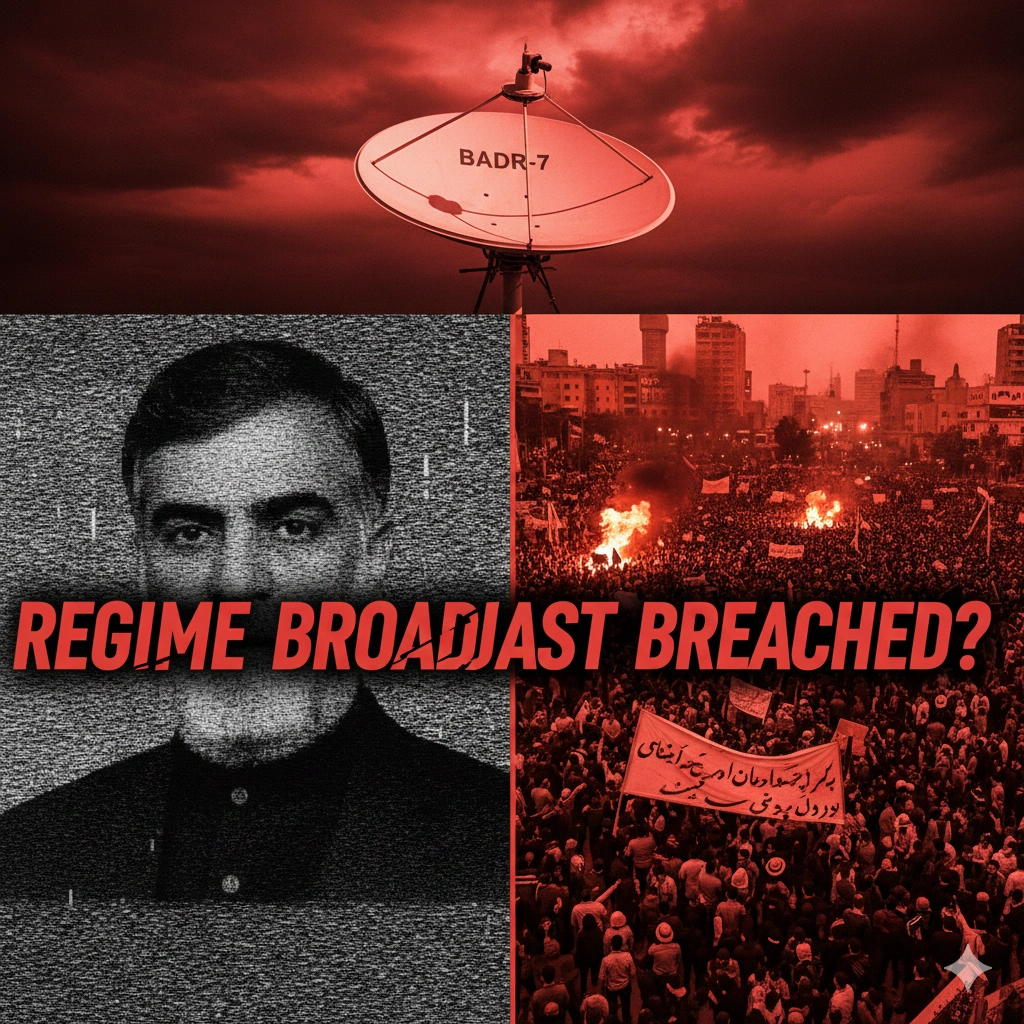
What Happened in the Iran Badr Satellite Hack
The hijacked broadcast replaced regular state programming with a montage of protest imagery and political messaging. Central to the interruption were video appeals from Reza Pahlavi, who addressed both the Iranian public and the country’s military and security personnel.
In the footage, Pahlavi reportedly urged soldiers and police to “join the people” and refrain from firing on civilians, framing the armed forces as “Iran’s national force, not the regime’s.” The messages emphasized perseverance in street demonstrations and highlighted what Pahlavi described as growing international solidarity with protesters.
The hackers’ ability to bypass state-controlled broadcasting infrastructure—even briefly—was seen by analysts as a symbolic challenge to the Islamic Republic’s tight grip on traditional media.
Timing: Internet Blackouts and Media Control
The Iran Badr satellite hack occurred during a period of intensified internet restrictions linked to nationwide unrest. Monitoring group NetBlocks reported sharp drops in internet traffic following brief restorations of service, pointing to rolling shutdowns designed to limit communication and reporting.
With online platforms restricted and access to independent news curtailed, state television remains a dominant source of information inside Iran. As a result, the satellite breach carried heightened impact, temporarily inserting opposition narratives into a media environment usually monopolized by official messaging.
Reza Pahlavi’s Role in the Broadcast
Reza Pahlavi, the son of Iran’s last shah and a prominent opposition figure in exile, has increasingly positioned himself as a unifying voice for anti-regime sentiment abroad. His appearance during the hacked broadcast reinforced calls for nonviolent resistance while appealing directly to the loyalty of Iran’s armed forces.
His team later shared footage of the incident online, framing it as evidence that cracks are emerging in the regime’s information controls and encouraging continued mobilization despite censorship.
A Pattern of Cyber Disruption During Unrest
While not unprecedented, the latest breach highlights a trend of rising cyber sophistication among opposition-linked activists. Previous years have seen intermittent hacks of Iranian state media, digital billboards, and government-linked websites, often timed to coincide with protests or anniversaries of political flashpoints.
Experts note that such actions serve both symbolic and strategic purposes: undermining the perception of regime invulnerability while amplifying dissenting voices when conventional communication channels are restricted.
Why the Hack Resonates Now
The convergence of several factors amplified the significance of the incident:
- Escalating Iran protests driven by economic and political grievances
- Strict internet blackouts limiting online coordination
- State dominance of broadcast media, making TV disruptions especially visible
Media analysts note that satellite signal intrusions carry outsized symbolic weight in tightly controlled information environments like Iran’s. Unlike social media, which can be throttled or blocked, broadcast disruptions briefly force alternative narratives into households nationwide. During periods of unrest and censorship, even short interruptions can undermine state messaging and energize protest movements.
Source: SC Media; NetBlocks
For more news, visit 360 News Orbit