
Indonesia Invasive Species Project is a monumental step toward protecting the nation’s unique biodiversity from the growing threat of ecological displacement. The Indonesian Ministry of Forestry, in a strategic partnership with the Food and Agriculture Organization (FAO), has officially launched a 4.4 million dollar initiative aimed at curbing the spread of non-native organisms. This project, which translates to approximately IDR 74.6 billion, marks a significant financial and political commitment to environmental preservation. By focusing on governance and management, the initiative seeks to safeguard the natural heritage of the archipelago for future generations.
The Indonesia Invasive Species Project was formally introduced during a high-profile inception workshop held in Bogor recently. This gathering brought together policymakers, scientists, and environmental advocates to outline the roadmap for implementation over the coming years. As the world faces an unprecedented loss of wildlife, Indonesia is positioning itself as a leader in conservation through this GEF-funded endeavor. The program is not merely about removal but about creating a resilient framework that can withstand the pressures of global trade and shifting climate patterns.
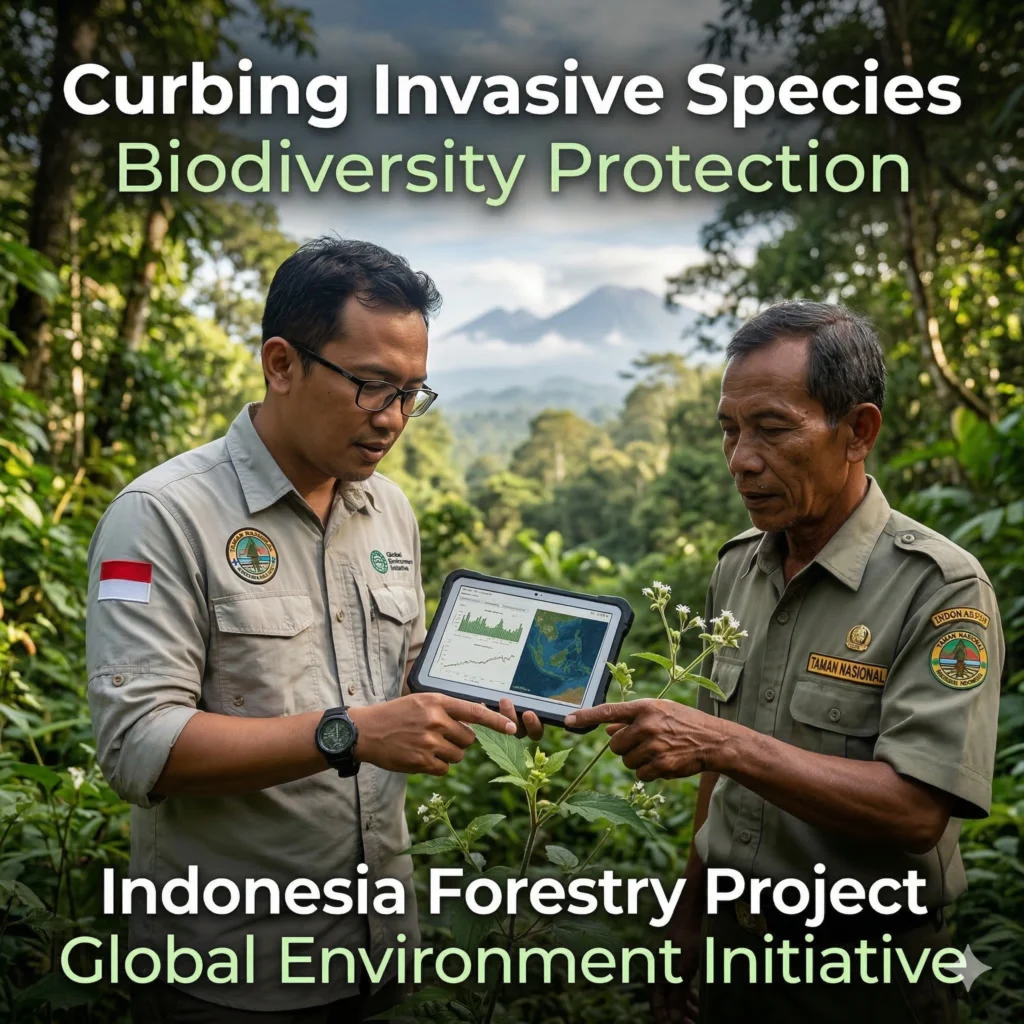
Understanding the Indonesia Invasive Species Project Funding
The financial foundation of the Indonesia Invasive Species Project relies on a substantial grant of 4.4 million dollars from the Global Environment Facility. This funding is critical because managing non-native species requires expensive long-term monitoring and sophisticated laboratory analysis. Without these resources, the Ministry of Forestry would struggle to maintain the technical staff necessary for such a massive undertaking. Consequently, this investment represents a turning point in how the nation prioritizes its natural capital.
Government officials have noted that the Indonesia Invasive Species Project will allocate funds toward both policy development and field-level interventions. While high-level governance is necessary for national coordination, the real battle happens on the ground in dense forest ecosystems. By equipping park rangers and local researchers with better tools, the ministry ensures that every rupiah is spent effectively. This balanced approach between administration and action is what sets this specific initiative apart from previous smaller-scale attempts.
Moreover, the Indonesia Invasive Species Project emphasizes transparency in how these international funds are utilized across various provinces. Detailed reporting structures have been established to ensure that the Global Environment Facility and the FAO can track progress in real-time. This accountability builds trust with international donors, potentially opening doors for more conservation grants in the future. As a result, the project functions as a pilot for future large-scale environmental investments in Southeast Asia.
Indonesia Invasive Species Project
The Indonesia Invasive Species Project is currently targeting several high-priority conservation areas that are under immediate threat from biological invasion. Specifically, the Bromo Tengger Semeru and Bantimurung Bulusaraung National Parks have been identified as the primary focus zones for the first phase of implementation. These parks are home to thousands of endemic species that cannot be found anywhere else on the planet. Therefore, the successful management of these areas is paramount to preventing irreversible extinction events.
In these specific regions, the Indonesia Invasive Species Project will implement rigorous biosecurity measures to prevent the accidental introduction of new pests. This includes training local staff to identify suspicious plants and animals that might have been brought in by tourists or cargo. Because these parks are popular destinations, the risk of human-mediated dispersal is exceptionally high. By educating the public and tightening entry protocols, the project creates a defensive perimeter around Indonesia’s most precious ecosystems.
Additionally, the Indonesia Invasive Species Project involves direct eradication efforts for species that have already established a foothold. These interventions are guided by scientific data to ensure that the removal process does not inadvertently harm native flora and fauna. Using a combination of physical removal and biological controls, experts hope to restore the natural balance within the parks. This active restoration is a core component of the project’s strategy to revitalize degraded habitats across the archipelago.
Strategic Governance in the Indonesia Invasive Species Project
A major pillar of the Indonesia Invasive Species Project is the strengthening of institutional coordination among various government agencies. Often, environmental efforts are hindered by overlapping jurisdictions or a lack of clear communication between departments. This project seeks to bridge those gaps by creating a unified task force dedicated solely to invasive species management. Such a streamlined hierarchy allows for faster decision-making when a new ecological threat is detected in a remote area.
The Indonesia Invasive Species Project also focuses on legislative reforms that will codify invasive species management into national law. By establishing clear legal definitions and penalties for the illegal introduction of non-native species, the government adds a layer of deterrence. These legal frameworks are essential for long-term sustainability, ensuring that the project’s goals outlast its initial funding cycle. Strengthening the law provides the Ministry of Forestry with the authority needed to enforce strict biosecurity at ports and borders.
Furthermore, the Indonesia Invasive Species Project encourages cross-sectoral collaboration with the Ministry of Trade and the Ministry of Transportation. Since most invasive species arrive via commercial routes, involving these sectors is a logical necessity for successful prevention. By integrating ecological checks into the standard flow of commerce, Indonesia can significantly reduce the volume of biological “hitchhikers” entering the country. This holistic view of governance is a primary objective of the current administration’s environmental policy.
Community Involvement in the Indonesia Invasive Species Project
Local indigenous communities are central to the success of the Indonesia Invasive Species Project because they are the first line of defense. These groups possess deep traditional knowledge of the land and can often spot changes in the ecosystem before modern technology can. By integrating this traditional wisdom with scientific methods, the project gains a more nuanced understanding of forest health. This partnership empowers local people to take ownership of the conservation efforts in their own backyards.
The Indonesia Invasive Species Project provides training and employment opportunities for over two thousand individuals living near protected forests. These roles include forest monitoring, data collection, and participating in habitat restoration activities. Not only does this provide a sustainable source of income, but it also fosters a culture of environmental stewardship. When the community benefits from a healthy forest, they become the strongest advocates for its continued protection and management.
Education is another vital component of the Indonesia Invasive Species Project within these local populations. Workshops are held to explain the dangers of invasive species and how simple actions, like cleaning boots or vehicles, can prevent their spread. As awareness grows, the likelihood of accidental introductions decreases significantly across the targeted regions. This grassroots approach ensures that the impact of the project is felt at every level of Indonesian society, from the village to the capital.
- Project targets over 2,000 direct beneficiaries in forest-dependent communities.
- Training programs focus on identification and reporting of non-native organisms.
- Indigenous knowledge is utilized to map the historical range of native species.
- Local cooperatives are encouraged to develop eco-friendly livelihoods that support biodiversity.
Global Impact of the Indonesia Invasive Species Project
The Indonesia Invasive Species Project serves as a critical contribution to the global fight against the loss of biodiversity. According to recent international reports, invasive species are a primary driver in 60 percent of global extinctions recorded in modern history. By tackling this issue head-on, Indonesia is helping to stabilize a vital part of the world’s ecological web. The success of this project could provide a blueprint for other tropical nations facing similar biological threats.
Because Indonesia is an archipelago, the Indonesia Invasive Species Project must account for the unique challenges of island biogeography. Islands are often more vulnerable to invasive species because their native wildlife has evolved in isolation without natural predators. Therefore, the lessons learned here regarding island-specific biosecurity are of immense value to the global scientific community. The FAO is closely monitoring these outcomes to share best practices with other island nations in the Pacific and Caribbean.
Moreover, the Indonesia Invasive Species Project addresses the economic losses associated with invasive pests, which total billions of dollars annually worldwide. In Indonesia, invasive insects and weeds can devastate agricultural yields and damage critical infrastructure. By protecting the natural ecosystem, the project also safeguards the nation’s food security and economic stability. This intersection of ecology and economy highlights the urgent need for the continued expansion of the Indonesia Invasive Species Project across all provinces.
- Invasive species cause massive annual economic losses through crop destruction and infrastructure damage.
- The project aligns with the 2030 targets of the Kunming-Montreal Global Biodiversity Framework.
- Indonesia’s archipelagic nature makes it a unique laboratory for studying island biosecurity.
- International cooperation via the FAO ensures global visibility for Indonesia’s conservation efforts.
Technical Challenges Faced by the Indonesia Invasive Species Project
One of the primary technical hurdles for the Indonesia Invasive Species Project is the sheer scale of the Indonesian archipelago. With over 17,000 islands, monitoring every potential entry point for invasive species is a logistical nightmare. This requires the use of advanced technology, such as satellite imaging and DNA metabarcoding, to track biological shifts. Implementing these high-tech solutions in remote areas is one of the project’s most ambitious goals.
Another challenge for the Indonesia Invasive Species Project involves the rapid adaptation of invasive species to changing climate conditions. As temperatures rise, some non-native plants are able to outcompete native species that are stressed by heat or drought. This means the project must be adaptive, constantly updating its strategies based on the latest climate data. Success requires a proactive approach rather than a reactive one, necessitating constant vigilance from the Ministry of Forestry.
Despite these difficulties, the Indonesia Invasive Species Project remains optimistic due to the strong support from international experts. The collaboration with the FAO provides access to a global network of scientists who specialize in invasive biology. This pool of expertise helps Indonesian researchers overcome technical bottlenecks and implement the most effective eradication techniques available. By leveraging global knowledge, the project increases its chances of achieving long-term ecological stability across the nation.
Future Outlook for the Indonesia Invasive Species Project
As the Indonesia Invasive Species Project moves into its second year, the focus will shift toward scaling up successful interventions. The data gathered from the initial pilot sites in Bromo and Bantimurung will be used to refine management plans for other national parks. This iterative process ensures that the project remains efficient and effective as it expands its geographical reach. The ultimate goal is to create a national monitoring system that covers every major conservation area in Indonesia.
The Indonesia Invasive Species Project is also expected to influence future policy regarding international trade and travel. As the government sees the benefits of strict biosecurity, it may implement more permanent regulations at international airports and seaports. This would create a lasting legacy for the project, providing a permanent shield against the introduction of harmful organisms. Such systemic changes are necessary to protect Indonesia’s biodiversity in an increasingly connected world.
In conclusion, the Indonesia Invasive Species Project represents a bold and necessary intervention in the face of a global ecological crisis. By combining international funding, government leadership, and community engagement, the initiative provides a comprehensive solution to a complex problem. As the project progresses, it will continue to serve as a beacon of hope for conservationists everywhere. The commitment shown by the Ministry of Forestry and the FAO ensures that Indonesia’s natural wonders will remain intact for years to come.
- Future expansion will include a national database for tracking invasive species sightings.
- Policy recommendations from the project will be integrated into the National Biodiversity Strategy.
- Long-term monitoring will continue beyond the initial grant period through government funding.
- Collaboration with regional neighbors will be sought to create a Southeast Asian biosecurity network.
Restoring Balance via the Indonesia Invasive Species Project
Restoring the natural equilibrium of a forest is a slow and meticulous process that the Indonesia Invasive Species Project is prepared to undertake. It is not enough to simply remove an invasive plant; the native species must be actively encouraged to return and thrive. This often involves replanting native seedlings and monitoring soil health to ensure the ecosystem can support them. The project’s commitment to “sustainable practices” means focusing on the long-term health of the entire biological community.
The Indonesia Invasive Species Project also recognizes that some invasive species have become integrated into local economies, creating a social challenge. In some areas, non-native plants might be used for firewood or animal feed, making their removal controversial. The project addresses this by providing alternative resources to local communities, ensuring that conservation does not come at the cost of human survival. This empathetic approach is crucial for maintaining public support for the Indonesia Invasive Species Project over the long term.
Ultimately, the Indonesia Invasive Species Project is about more than just biology; it is about the sovereignty of Indonesia’s natural resources. By taking control of its borders and ecosystems, the nation asserts its right to protect its unique biological heritage. This sense of national pride is a powerful motivator for the officials and volunteers involved in the project. As they work to restore the balance of nature, they are also building a more sustainable and secure future for all Indonesians.
Verifying the Success of the Indonesia Invasive Species Project
To ensure the Indonesia Invasive Species Project stays on track, a rigorous verification process has been established. Scientists use biodiversity indices to measure the recovery of native populations following the removal of invasive competitors. If the numbers of endemic birds or insects increase, it is a clear sign that the management strategies are working. These data-driven evaluations allow the Indonesia Invasive Species Project to pivot if certain methods are not yielding the desired results.
Furthermore, the Indonesia Invasive Species Project undergoes regular audits by the Global Environment Facility to ensure financial and operational compliance. These audits provide an objective look at the project’s progress and help identify areas where efficiency can be improved. By maintaining high standards of transparency, the project ensures that its impact is both measurable and meaningful. This commitment to excellence is what makes the Indonesia Invasive Species Project a flagship initiative for the Ministry of Forestry.
In the final analysis, the Indonesia Invasive Species Project is a testament to what can be achieved through international cooperation and local dedication. The project stands as a shield against the silent invasion that threatens to undermine the world’s most diverse ecosystems. With continued support and scientific rigor, the Indonesia Invasive Species Project will succeed in preserving the emerald of the equator for the generations that follow. The fight for biodiversity is far from over, but with initiatives like this, the tide is beginning to turn in favor of conservation.
For more details & sources visit: Tanah Air
For the latest updates from Indonesia, visit our Indonesia news page.