
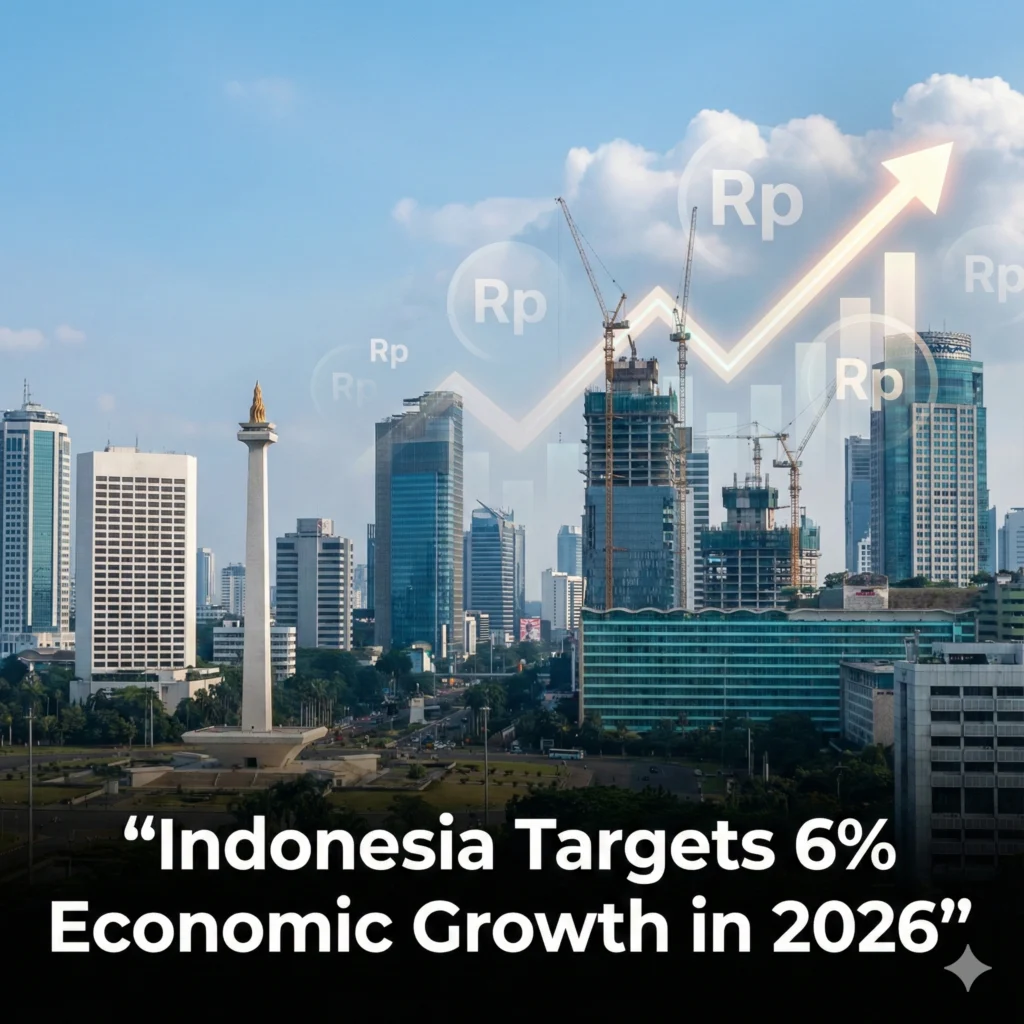
Indonesia faces a critical year as it aims to accelerate its economy beyond the government’s official 5.4% target. Indonesia economic growth 2026 is projected to reach 6% if strategic investments and efficiency improvements are implemented, according to BCA Chief Economist David Sumual.
Sumual highlights that achieving this ambitious growth rate requires both higher investment levels and sharper productivity gains. Without these measures, the economy risks falling short of its potential despite coordinated fiscal and monetary policies.
Investment Levels Must Increase Significantly
One of the key factors for Indonesia economic growth 2026 is the scale of investment. Currently, investment accounts for roughly 30% of GDP. Sumual emphasizes that this needs to rise to 40% of GDP to sustain 6% growth.
He stresses that increasing the quantity of investment alone is not enough; improving the quality and efficiency of capital deployment is equally essential. Higher investment can stimulate job creation, expand infrastructure, and strengthen industrial productivity, all critical for accelerating economic expansion.
Improving Investment Efficiency: The Role of ICOR
The Incremental Capital Output Ratio (ICOR) measures the efficiency of investment in generating economic output. Sumual points out that Indonesia’s ICOR currently stands at 6, which indicates relatively low efficiency. To achieve Indonesia economic growth 2026 at 6%, the ICOR must drop to 4.
Reducing the ICOR requires addressing inefficiencies in both public and private investments. Streamlining bureaucratic procedures, improving regulatory frameworks, and enhancing workforce skills are critical steps. Efficient capital use ensures that each dollar invested produces maximum economic impact.
Policy Recommendations to Stimulate Growth
David Sumual also advises immediate policy actions to support Indonesia economic growth 2026:
- Reduce licensing and regulatory hurdles to attract domestic and foreign investors.
- Close workforce skill gaps through targeted training and education programs.
- Accelerate public spending in the first quarter to boost demand and confidence.
- Strengthen coordination between fiscal and monetary policy, leveraging Bank Indonesia’s tools to maintain stability while promoting expansion.
These measures are expected to create an environment conducive to higher investment efficiency, stronger productivity, and sustained economic momentum.
Government and Fiscal Outlook
Finance Minister Purbaya Yudhi Sadewa previously projected 6% growth for 2026, citing combined efforts from government spending and monetary measures. This projection exceeds the official budget target of 5.4%, reflecting optimism in Indonesia’s capacity to mobilize resources and implement reforms.
The government plans to prioritize infrastructure projects, improve public service delivery, and incentivize private sector participation. By aligning fiscal stimulus with investment efficiency goals, policymakers aim to create conditions favorable for rapid economic expansion.
Challenges Ahead
Despite optimism, several challenges could hinder Indonesia economic growth 2026:
- Bureaucratic inefficiencies slowing down project approvals.
- Skill gaps limiting labor productivity in key sectors.
- Global economic uncertainty affecting trade and investment inflows.
- Delays in public spending could reduce the impact of fiscal stimulus in the first half of the year.
Overcoming these hurdles is crucial to ensure that Indonesia can not only meet but potentially exceed the 6% growth target.
Final Takeaway
Indonesia economic growth 2026 hinges on a combination of higher investment levels, improved efficiency, and coordinated policy measures. Raising investment to 40% of GDP, reducing ICOR to 4, and accelerating early-year public spending are essential steps.
If these reforms are effectively implemented, Indonesia can achieve a sustainable 6% growth, strengthen its economic resilience, and signal its commitment to both domestic development and regional economic leadership.
For more details & sources visit: Tempo.co
For the latest updates from Indonesia, visit our Indonesia news page.