
The Indian rupee trade pact narrative continues to dominate market sentiment as the currency is expected to open steady against the U.S. dollar on November 19, 2025. With traders closely monitoring progress on the anticipated U.S.-India trade agreement, the rupee is likely to remain confined within a narrow trading band. Limited breakthroughs on the bilateral trade pact and a cautious global risk environment are contributing to its stable but subdued performance.
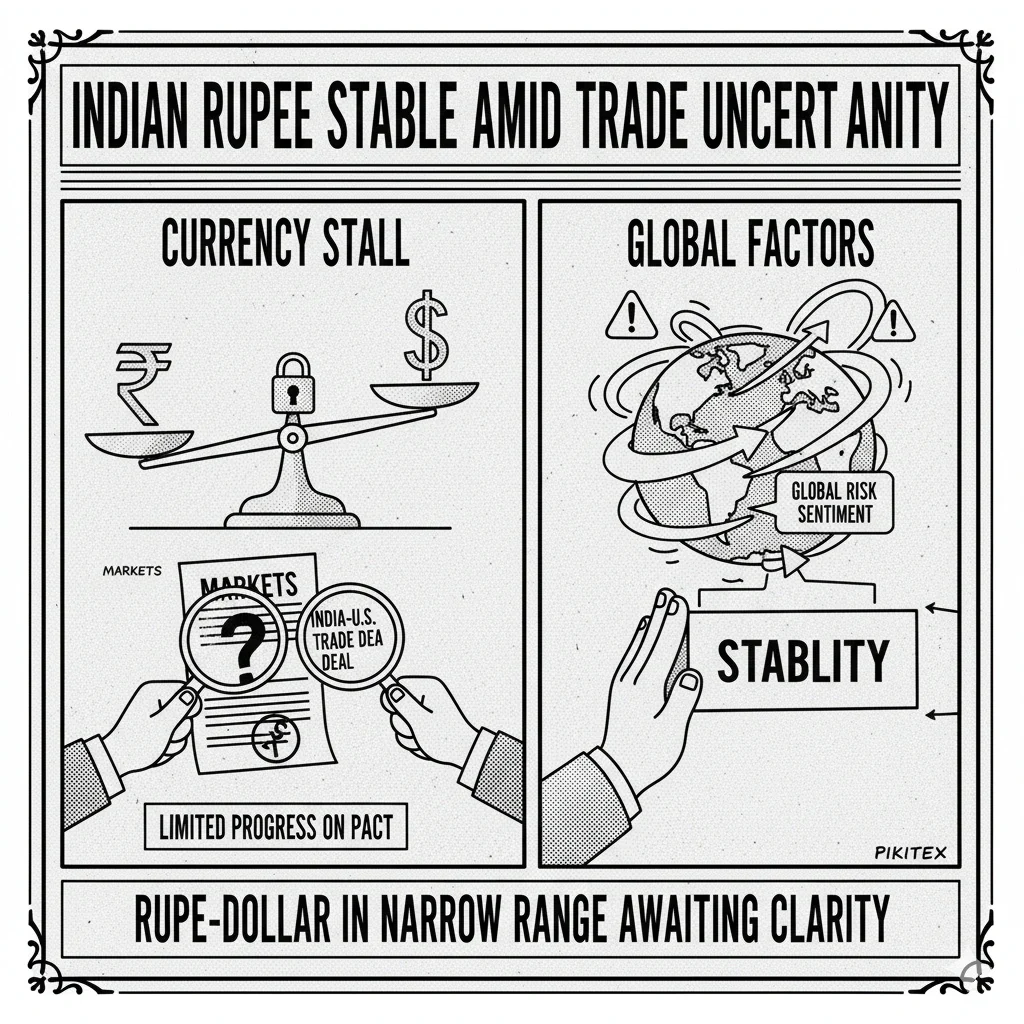
Early indicators from the 1-month non-deliverable forward (NDF) market suggest the rupee will open between 88.58–88.62 per dollar, marginally changed from Wednesday’s close at 88.6050. This steady outlook reflects a broader pattern seen in other Asian currencies, many of which are trading slightly weaker as the U.S. dollar extends modest gains.
Traders note that although there have been incremental updates surrounding the U.S.-India trade discussions, no substantial progress has been announced. The absence of a clear breakthrough on tariff reductions or market access measures has prevented any strong directional move in the currency. Market participants expect the Indian rupee trade pact news cycle to continue influencing sentiment throughout the week.
Another major factor supporting the rupee is the Reserve Bank of India’s ongoing intervention. The RBI has been reportedly active around the 88.80 level, stepping in to prevent excessive depreciation and ensure orderly market conditions. These targeted interventions, along with natural inflows from exporters, have helped cushion downside pressures.
Exporters have contributed steady—but not exceptional—dollar flows, while importers continue to hedge cautiously amid global uncertainty. This balanced flow dynamic is helping the rupee remain firm despite external volatility.
Global market cues, however, have been less supportive. Losses in U.S. equities, especially within the high-growth AI sector, reflect renewed investor caution. Analysts link these declines to fading expectations of a third Federal Reserve rate cut, a development that is boosting the dollar’s strength relative to most Asian currencies. A stronger dollar environment typically weighs on emerging market currencies, but in the case of the Indian rupee, the impact has been softened by RBI actions and the wait-and-watch stance ahead of trade negotiations.
Investors and currency strategists are closely evaluating how the potential U.S.-India trade deal might influence India’s export competitiveness, tariff structures, technology partnerships, and overall economic outlook. Any significant progress could inject fresh momentum into the rupee, while continued delays may keep the currency consolidating near current levels.
For now, the market consensus is that the Indian rupee trade pact narrative will continue to drive short-term movement until a definitive announcement is made. Until then, the rupee is likely to remain stable, supported by manageable flows, strategic RBI intervention, and subdued global appetite for risk.
As currency markets remain sensitive to geopolitical and macroeconomic triggers, traders expect volatility to rise if U.S. data releases or Federal Reserve commentary signal stronger tightening pressures. Conversely, any positive commentary from New Delhi or Washington regarding the trade pact could quickly strengthen sentiment in favor of the rupee.
With global markets in a cautious phase and domestic flows evenly balanced, the rupee’s stability may persist in the near term—making the outcome of the U.S.-India trade negotiations a key determining factor for the currency’s next major move.