
The Indian rupee slides past the 90 mark against the US dollar for the first time, sparking political debate and concerns about India’s trade and energy balance. On December 17, 2025, the rupee closed near 90.38 per dollar, marking a depreciation of over 6% compared to the beginning of the year. The trend has drawn attention from economists, policymakers, and international markets, raising questions about short-term stability and long-term economic management.
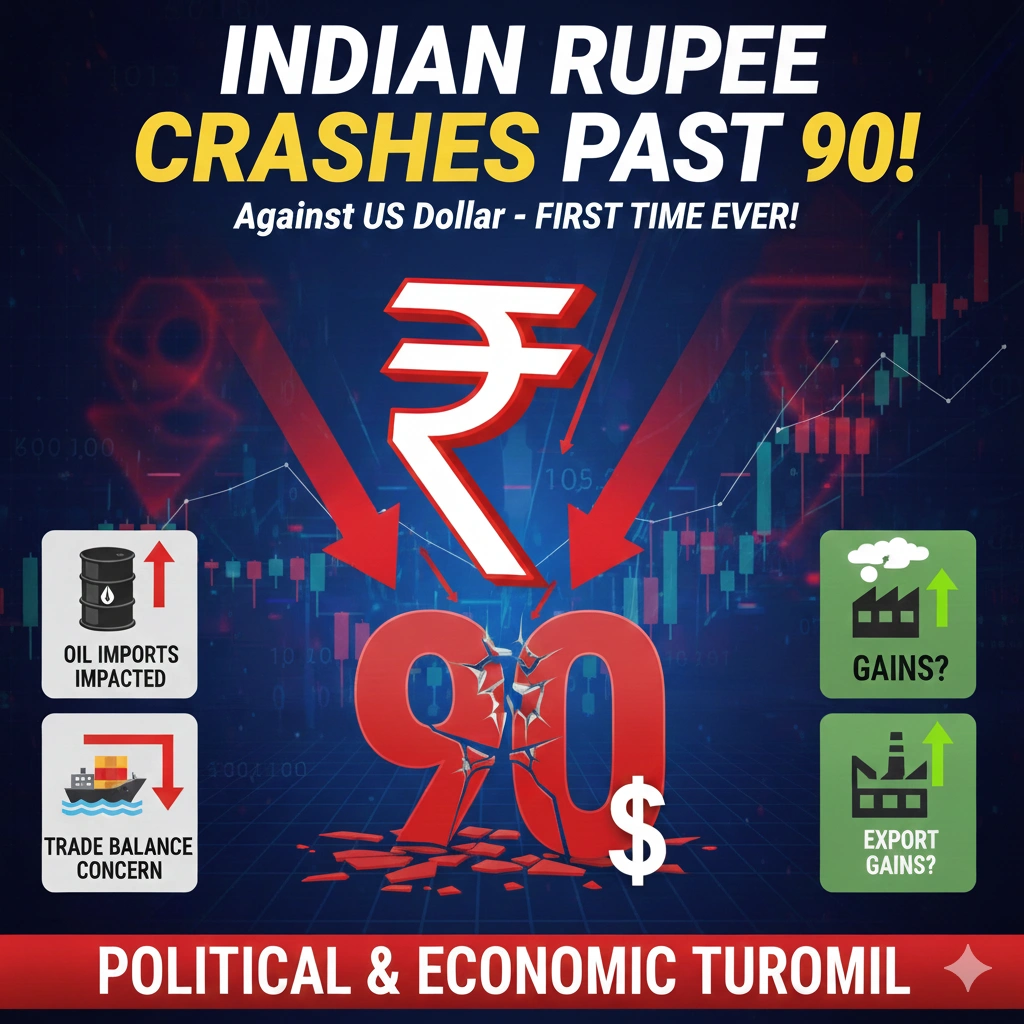
Why the Indian Rupee Slides Past 90
The Indian rupee slides due to a combination of domestic and global factors:
- Global Dollar Strength: Rising US interest rates and strong economic data have increased demand for the dollar.
- Trade Deficit Pressure: India imports over 80% of its oil, making fuel costs highly sensitive to currency fluctuations.
- Monetary Policy Adjustments: The International Monetary Fund (IMF) recently shifted India’s exchange-rate regime to a “crawl-like arrangement,” allowing controlled, incremental depreciation to support exports.
Economists argue that while the rupee’s depreciation may benefit export-oriented sectors like textiles, pharmaceuticals, and IT services, it simultaneously raises import costs, particularly for crude oil and energy-intensive industries.
Economic Implications of a Weakening Rupee
As the Indian rupee slides, the impact on India’s economy is multifaceted:
- Rising Import Costs: Increased oil and fuel prices can fuel inflation and strain household budgets.
- Export Competitiveness: A weaker rupee may make Indian goods cheaper abroad, potentially boosting exports in textiles, pharmaceuticals, and IT services.
- Foreign Investment Concerns: Currency depreciation can create volatility that may deter some foreign portfolio investors.
- Debt Servicing Pressures: India’s foreign-denominated debt becomes costlier, affecting government finances and corporate balance sheets.
Analysts caution that while controlled depreciation can help certain sectors, rapid currency swings could undermine overall economic confidence.
Political Reactions to Indian Rupee Slides
The Indian rupee slides have prompted political scrutiny. Opposition parties have criticized the government, suggesting that currency weakness reflects mismanagement of the economy under Prime Minister Narendra Modi. Public concern has also grown, as rising energy costs directly affect household expenses and inflation expectations.
In response, the Reserve Bank of India (RBI) has emphasized that the rupee’s movement remains within manageable levels compared to other emerging-market currencies, citing policy flexibility and foreign exchange reserves as stabilizing factors.
Global Context and Emerging-Market Trends
India is not alone. Several emerging-market currencies have experienced depreciation due to a strong US dollar, geopolitical tensions, and global trade dynamics. However, India’s unique exposure to oil imports amplifies the domestic impact of currency movements.
Analysts note that the crawl-like arrangement adopted with IMF guidance allows gradual adjustments to prevent sudden shocks while maintaining export competitiveness, but vigilance is required to manage inflationary pressures.
What This Means for Consumers and Businesses
For consumers, the Indian rupee slides translate to higher fuel, transportation, and imported goods costs. For businesses, especially importers, costs rise while exporters may gain a pricing advantage abroad. Financial markets have already begun pricing in currency volatility, with forward contracts and hedging strategies becoming more widely utilized.
Long-term strategies for mitigating currency risk include increasing local production of critical imports, diversifying energy sources, and leveraging export sectors to offset import costs.
Outlook for the Indian Rupee
Market watchers predict that the Indian rupee slides may continue in the near term, with fluctuations driven by global interest rates, oil prices, and investor sentiment. Analysts expect the rupee to remain relatively stable within the 90–92 range, provided RBI interventions and fiscal measures maintain balance.
Policymakers are closely monitoring inflation, trade deficits, and external debt exposure to ensure that the depreciation does not translate into broader economic instability.
Source: Asia Times
For the latest updates from India, visit our India news page.