
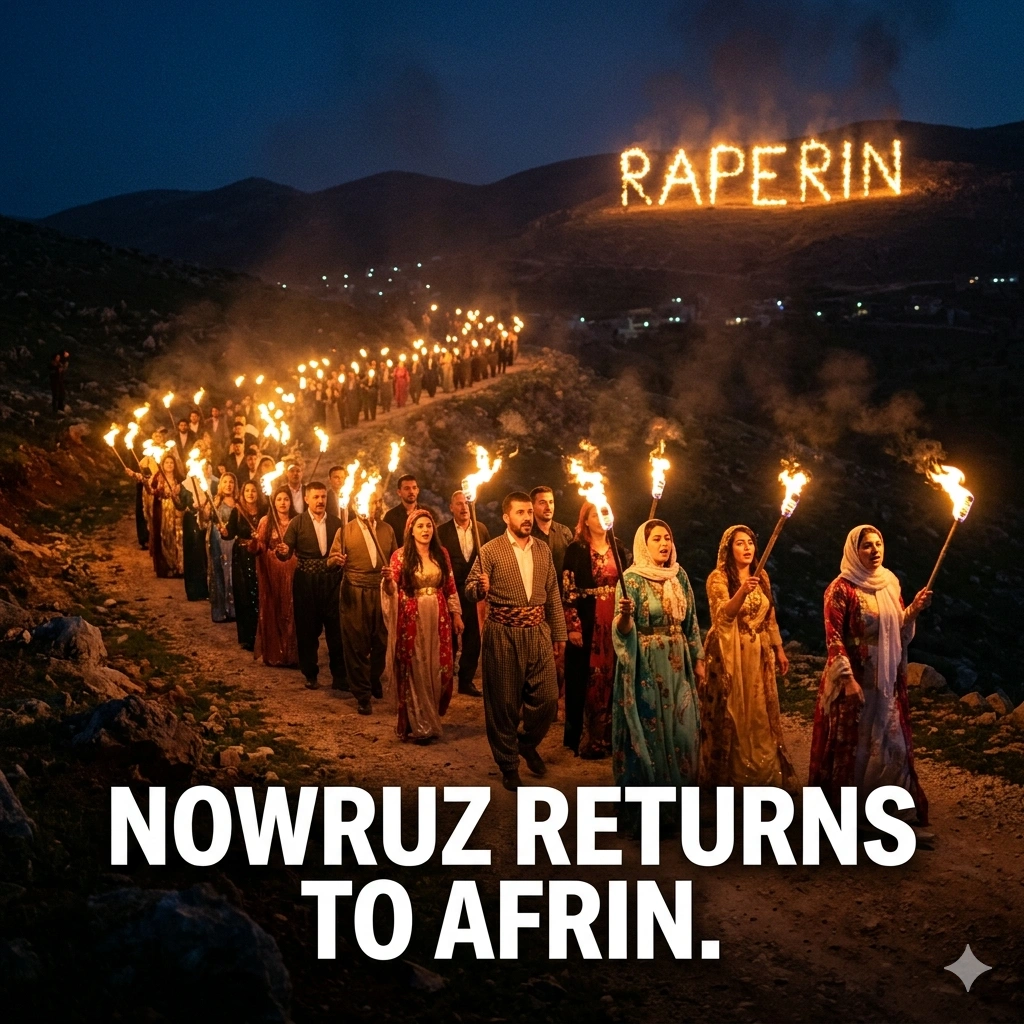
The historic Nowruz celebration has marked a transformative moment for the Middle East as hundreds of displaced Kurdish families returned to Afrin after eight years of exile. This homecoming follows a landmark integration deal that aims to stabilize Northern Syria and bring an end to nearly a decade of regional fragmentation. While the holiday was celebrated with newfound national recognition, the atmosphere remained heavy with the weight of past conflicts and the hope for a peaceful future. The return of these families signifies a major shift in the demographic and political landscape of the district, which has been under Turkish-backed control since 2018.
A significant shift in domestic policy has facilitated this historic Nowruz celebration, allowing for the open expression of Kurdish identity that was previously suppressed. Under the interim administration of President Ahmad Al-Sharaa, the government has moved to strengthen Kurdish rights, declaring Kurdish an official language. This policy change is a stark contrast to decades of marginalization and is seen as a cornerstone of the new national unity strategy. By recognizing the cultural importance of the spring equinox, the state is attempting to heal long-standing divisions and build a more inclusive Syrian identity that respects all its ethnic components.
Syrian National Integration and the SDF Merger
The historic Nowruz celebration coincides with a strategic agreement to merge the Kurdish-led Syrian Democratic Forces into the national army. This military integration is a critical step toward ending the dual-governance structures that have defined Northern Syria for years. By bringing the SDF under the umbrella of the national military, the interim government hopes to create a unified defense force capable of protecting the country’s borders. Military leaders from both sides have framed this merger as a necessary evolution to ensure long-term stability and to prevent further foreign intervention in domestic affairs.
Despite the optimism surrounding the historic Nowruz celebration, the transition remains incredibly fragile as the merger is implemented on the ground. Integrating two formerly distinct military cultures requires significant trust-building and administrative coordination. There are concerns about how rank structures and local command units will be managed to avoid internal friction. However, the successful joint security operations seen during the holiday festivities in Afrin suggest that a cooperative framework is already beginning to take shape. This military unity is seen as the primary shield against extremist elements looking to exploit any perceived weakness in the peace process.
Historic Nowruz Celebration
The historic Nowruz celebration in Afrin was characterized by the vibrant display of traditional Kurdish colors and the lighting of ceremonial fires. For many returnees, this was the first time in nearly a decade they could celebrate their heritage on their ancestral lands without fear of reprisal. The streets were filled with music and dancing as families reunited after years of displacement in camps and neighboring regions. This public display of culture is a powerful symbol of the changing political tides in a region once defined by strict cultural restrictions.
Observers noted that the historic Nowruz celebration served as a litmus test for the new administration’s ability to maintain order during sensitive cultural events. While the majority of the festivities were peaceful, the symbolic nature of the holiday also attracted those who oppose the new integration deal. The government’s decision to make the day a national holiday was a bold move intended to demonstrate a commitment to pluralism. However, the true success of the event will be measured by whether this cultural recognition leads to lasting political and social harmony between the diverse groups living in the north.
The Return of Displaced Families to Afrin
The logistics of the historic Nowruz celebration involved the coordinated return of hundreds of families across checkpoints that were previously closed. The Syrian interim government worked alongside local councils to ensure that returnees had access to their former homes and basic services. Many of these families found their properties occupied or damaged, highlighting the complex legal challenges that lie ahead for the restitution process. Despite these hurdles, the emotional impact of returning to Afrin has provided a much-needed boost to the collective morale of the Kurdish community.
- Returnees were provided with temporary identification papers to facilitate their movement.
- Local NGOs distributed food and water to families arriving from displacement camps.
- Specialized teams were deployed to clear any remaining unexploded ordnance from residential areas.
- Schools in Afrin have begun preparing to introduce Kurdish language curriculum.
For many, the historic Nowruz celebration was the primary motivation to make the arduous journey back to a district that is still recovering from war. The presence of international observers helped to provide a sense of security for the returning civilians. As these families settle back into their original neighborhoods, the focus is shifting toward economic revitalization and the restoration of local businesses. The success of this return program is vital for the overall legitimacy of the national integration plan and the stability of the border regions.
Addressing Outbreaks of Communal Violence
The historic Nowruz celebration was unfortunately shadowed by scattered outbreaks of communal violence in some mixed-population areas. In districts like Kobani and Afrin, tensions flared between different ethnic and political factions, leading to isolated clashes. These incidents often started over symbolic disputes, such as the placement of flags or the use of specific slogans during the parades. The interim government’s security forces were forced to intervene to prevent these localized skirmishes from escalating into a broader conflict that could derail the peace process.
Investigations into the violence during the historic Nowruz celebration revealed that the removal of a Syrian national flag in one instance led to retaliatory vandalism of Kurdish property. These provocations are seen by military leaders as deliberate attempts by “spoilers” to undermine the ongoing national reconciliation. In response, a temporary curfew was imposed in specific neighborhoods to restore order and allow for cooling-off periods. The government has vowed to prosecute anyone caught inciting ethnic hatred, emphasizing that the new Syria has no room for sectarian or communal aggression.
Challenges of Regional Integration and Governance
The historic Nowruz celebration highlights the broader challenges of regional integration in a post-conflict society. Transitioning from autonomous Kurdish rule to a unified national governance system requires delicate negotiations over local administrative powers. The interim President has promised that local councils will retain a degree of self-governance to ensure that the specific needs of different communities are met. This decentralized approach is intended to balance national sovereignty with the cultural and political aspirations of the Kurdish population in the north.
- A new commission has been formed to oversee the fair distribution of resources to the northern provinces.
- Joint police forces composed of various ethnic backgrounds are being trained for urban patrols.
- Administrative offices in Afrin are now being staffed by both former SDF officials and national appointees.
Successfully managing the historic Nowruz celebration was a key goal for these new administrative bodies. By proving they can manage complex public events, they are building the credibility needed to tackle more difficult issues like property rights and judicial reform. The integration process is expected to take several years, with the cultural recognition of Nowruz serving as a foundational milestone. International donors are watching closely, as the stability of this region is essential for the broader reconstruction of the Syrian state.
Kurdish Identity and National Recognition
The recognition of Kurdish identity during the historic Nowruz celebration represents a fundamental shift in the social contract of the nation. For decades, the Kurdish language and culture were suppressed in public life, leading to deep-seated resentment and periodic unrest. By elevating Kurdish to an official status alongside Arabic, the interim government is acknowledging the multi-ethnic reality of the population. This move is designed to foster a sense of belonging and loyalty to the central state among Kurdish citizens who previously felt like outsiders in their own country.
During the historic Nowruz celebration, public speeches were delivered in both Arabic and Kurdish, a sight that would have been unthinkable just a few years ago. This bilingualism is being extended to government documents and signage throughout the northern districts. While some nationalists have expressed concern over these changes, the administration argues that inclusivity is the only way to prevent future separatist movements. The holiday has become a platform for promoting a “New Syrian” identity that is defined by civic participation rather than ethnic purity.
Impact on Regional Geopolitics and Turkey
The historic Nowruz celebration and the return of Kurds to Afrin have significant implications for the relationship between Syria and its neighbor, Turkey. Ankara has long viewed the presence of Kurdish-led forces on its border as a national security threat. The merger of the SDF into the Syrian national army is intended to provide a diplomatic solution that addresses Turkey’s concerns while preserving Kurdish rights. However, the presence of Turkish-backed factions still in the region adds another layer of complexity to the security situation during such sensitive holidays.
The peaceful conduct of the historic Nowruz celebration is a signal to the international community that the new Syrian administration is capable of managing its own borders. By reducing the influence of autonomous militias and replacing them with a professional national force, the government hopes to remove the justification for foreign military incursions. Diplomatic channels between Damascus and Ankara remain open, with the status of Afrin being a primary topic of discussion. The success of the integration deal could eventually lead to a full withdrawal of foreign troops from northern Syrian soil.
Security Protocols and Military Cooperation
To ensure the safety of the historic Nowruz celebration, a joint security command was established between the national army and former SDF units. This command center monitored the movement of crowds and coordinated the response to the communal tensions that arose. The use of advanced surveillance drones and ground sensors helped security forces identify potential flashpoints before they turned into full-scale riots. This level of technical and tactical cooperation is a positive sign for the future of the unified military.
- Security checkpoints were briefed on the cultural sensitivities of the returning families.
- Mobile response units were stationed near major gathering sites to provide rapid assistance.
- Intelligence sharing between local councils and the central government was at an all-time high.
The historic Nowruz celebration provided a “live fire” test for these security protocols, revealing both strengths and areas for improvement. The ability to quickly impose a curfew and de-escalate tensions in Kobani showed that the new command structure is responsive and effective. Military leaders have praised the rank-and-file soldiers for their restraint during the provocations involving national symbols. Continuing this professional development is essential for the military to become a true national institution that serves all citizens equally.
Economic Revitalization of the Afrin District
The historic Nowruz celebration has also brought a much-needed economic boost to the Afrin district, which has suffered from years of stagnation. The return of hundreds of families has increased the demand for local goods and services, leading to a surge in market activity. Small businesses, particularly in the hospitality and retail sectors, reported their highest earnings in years during the holiday week. The government is planning to follow up this cultural success with infrastructure projects aimed at restoring the region’s agricultural and industrial output.
- Micro-loans are being offered to returning families to help them restart small businesses.
- Repairs to the local power grid and water systems have been fast-tracked by the ministry.
- A new trade corridor connecting Afrin to the central markets in Aleppo is being established.
By linking the historic Nowruz celebration to economic opportunity, the government is making a practical case for the benefits of national integration. If people see that their quality of life improves under the new system, they are more likely to support the political changes. The olive groves of Afrin, which are a primary source of income for the region, are also the focus of a new environmental and economic protection program. The goal is to turn the district into a model of post-conflict recovery and ethnic coexistence.
Future Outlook for Kurdish Rights in Syria
The success of the historic Nowruz celebration is seen as a baseline for the future development of Kurdish rights within the Syrian constitutional framework. Ongoing talks in the capital are focusing on how to codify the official status of the Kurdish language and culture into the new constitution. There is a strong push for educational reforms that would allow for Kurdish-language instruction in schools alongside the national curriculum. These structural changes are intended to ensure that the recognition seen during the holiday becomes a permanent feature of the state.
However, the communal violence that occurred during the historic Nowruz celebration serves as a warning that legal changes alone are not enough to change hearts and minds. A long-term program of social reconciliation and anti-discrimination training will be necessary to bridge the gap between different communities. The interim government is considering the creation of a national truth and reconciliation commission to address the grievances of all sides. The journey toward a truly unified Syria is just beginning, and the lessons learned in Afrin this March will be vital for the path ahead.
International Support for the Peace Process
The global community has reacted positively to the news of the historic Nowruz celebration and the peaceful return of displaced families. Several European and Arab nations have pledged increased humanitarian aid to support the integration process in northern Syria. This international backing is crucial for the interim government, as it provides the resources needed to rebuild destroyed infrastructure and provide for the returning population. The UN has also expressed its support for the SDF merger, calling it a “pragmatic step toward regional peace.”
The historic Nowruz celebration was attended by a handful of international diplomats who served as witnesses to the cultural recognition and the challenges on the ground. Their presence helped to internationalize the peace process and provide a level of accountability for the interim administration. The reports from these observers will play a key role in determining the future of sanctions and diplomatic relations with the new Syrian government. The world is watching to see if this model of integration can be sustained in the face of both domestic and regional pressures.
The Role of Media and Public Perception
Reporting on the historic Nowruz celebration has been a central part of the government’s effort to shape public perception of the integration deal. State-run and independent media outlets have provided extensive coverage of the festivities, highlighting the themes of unity and homecoming. By broadcasting images of Kurds and Arabs celebrating together, the media is helping to normalize the idea of a multi-ethnic Syria. This positive narrative is a counterweight to the extremist propaganda that seeks to inflame sectarian tensions and promote division.
During the historic Nowruz celebration, social media played a dual role, both as a tool for connection and a platform for spreading misinformation. The government worked to quickly debunk false reports of large-scale massacres that were intended to spark panic among returnees. Moving forward, the administration is looking to improve its strategic communications to ensure that the public is accurately informed about the progress of the peace process. Transparent reporting is seen as a key component of building the trust necessary for long-term national stability.
Cultural Heritage and Post-Conflict Healing
The preservation of cultural heritage during the historic Nowruz celebration is an essential part of the healing process for the Kurdish community. After years of being told their identity was a threat to the state, the ability to openly celebrate their traditions provides a sense of dignity and closure. The government has expressed interest in protecting historic Kurdish sites in Afrin and Kobani as part of a broader national heritage program. This recognition of the diverse roots of the Syrian people is a powerful tool for de-radicalization and social cohesion.
The historic Nowruz celebration featured traditional poetry, crafts, and food that have been passed down through generations. These cultural touchstones provide a sense of continuity and resilience in the face of the trauma caused by years of war. By supporting these expressions of identity, the state is demonstrating that it no longer views its own people as enemies. The psychological impact of this cultural validation cannot be overstated, as it lays the groundwork for a more peaceful and empathetic society.
Conclusion: A Milestone in National Reconciliation
The historic Nowruz celebration of 2026 will be remembered as a significant milestone in the history of the modern Middle East. It demonstrated that even after years of bitter conflict and displacement, it is possible to find a path toward reconciliation and integration. The return of Kurdish families to Afrin and the national recognition of their culture are bold steps that have fundamentally changed the character of the Syrian state. While challenges remain, the spirit of unity and hope that defined the holiday provides a strong foundation for the future.
The historic Nowruz celebration has proven that the integration of diverse ethnic and military groups is not only possible but necessary for lasting peace. The lessons learned from the tensions in Kobani and the successful joint security operations in Afrin will guide the next steps of the national peace process. As the fires of Nowruz fade, the work of building a new, inclusive Syria continues with a renewed sense of purpose. The commitment to Kurdish rights and regional stability remains the best hope for a prosperous and peaceful Middle East.
For more details & sources visit: Arab News
Read more about Syria news on 360 News Orbit – Syria.