
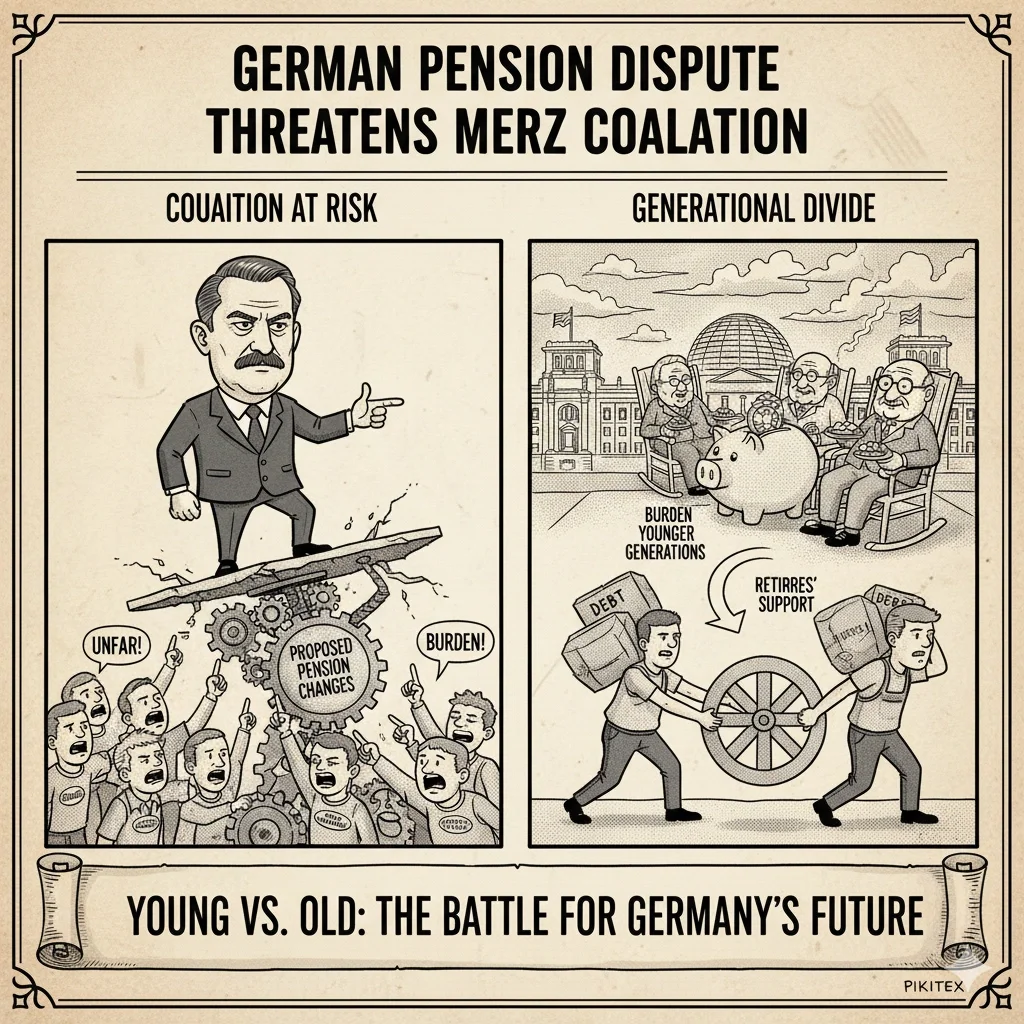
The proposed Germany pension reform 2025 is threatening to destabilize Chancellor Friedrich Merz’s coalition government. A dispute over pension increases has emerged between senior party leaders and the youth wing, the Junge Union, raising concerns about whether the legislation can pass amid growing political and demographic pressures.
The Controversy
The current reform plan guarantees pension increases for the next six years but comes at a projected cost of approximately €120 billion by 2040. The Junge Union, representing young conservative MPs, argues that this approach unfairly burdens younger generations to support retirees. With Germany’s workforce shrinking relative to its aging population, younger contributors are increasingly concerned about long-term sustainability.
Merz’s coalition holds a slim 12-seat majority, making opposition from 18–50 MPs a serious risk for the bill’s passage. Analysts warn that if these internal disagreements persist, the reform could fail, potentially endangering broader initiatives in the German welfare system.
Demographic and Economic Pressures
Germany faces a rapidly aging population, with fewer workers per retiree, pushing compulsory pension contributions close to 19% of salaries. Experts suggest incremental measures, such as slightly reducing pension replacement rates from 48% to 47% of salary, could alleviate intergenerational burdens while maintaining retirees’ financial security.
Public confidence in the pension system is already low. Many Germans are turning to private savings to supplement retirement income, highlighting the urgency of reforming state pensions to ensure sustainability without disproportionately affecting younger workers.
Political Implications
The pension reform debate exposes fractures within Merz’s coalition. While senior leaders stress the importance of guaranteeing retiree benefits, younger MPs insist on a fairer balance that does not compromise the financial stability of future generations. The impasse could stall other planned welfare reforms, including measures aimed at modernizing unemployment benefits, childcare support, and healthcare provisions.
Political analysts note that navigating this conflict requires careful compromise. Merz may need to engage in cross-party discussions or adjust pension guarantees to maintain coalition cohesion. Public communication will also be essential to reassure citizens that Germany’s pension system remains reliable.
Potential Solutions
Experts and economists have proposed several strategies to ease tension around Germany pension reform 2025:
- Minor adjustments to pension replacement rates to reduce future liabilities.
- Gradual increases in retirement age, reflecting longer life expectancy.
- Enhanced promotion of private savings plans to supplement state pensions.
- Targeted reforms for higher-income retirees to reduce strain on younger contributors.
Such measures could preserve political support while addressing demographic challenges and maintaining public confidence in the system.
Conclusion
The debate over Germany pension reform 2025 underscores the intersection of politics, economics, and social responsibility. Chancellor Merz’s coalition must reconcile the needs of older retirees with the financial security of younger generations. With a slim majority and vocal opposition within the Junge Union, the government faces a delicate balancing act. The outcome of this pension reform could shape Germany’s welfare policy trajectory for decades, affecting public trust, coalition stability, and the nation’s economic resilience.
For the latest news from Germany, visit our Germany news page.