
Germany 2026 World Cup strategy relies heavily on the tactical evolution of a squad hungry for international redemption after years of underwhelming performances. The national team enters this global tournament with a clear objective to secure a fifth star, balancing the weight of history with the energy of a new generation. Manager Julian Nagelsmann has spent the last two years refining a system that prioritizes high-intensity pressing and fluid positional rotations to dismantle modern defensive blocks.
At the heart of this tactical revolution is a commitment to technical excellence and a departure from the rigid structures that plagued previous campaigns. Fans across the globe are watching closely as the German side prepares to prove that their recent period of transition has finally reached its peak. The expectations are immense, yet the focus within the camp remains fixed on executing a game plan that can withstand the pressure of the world stage.
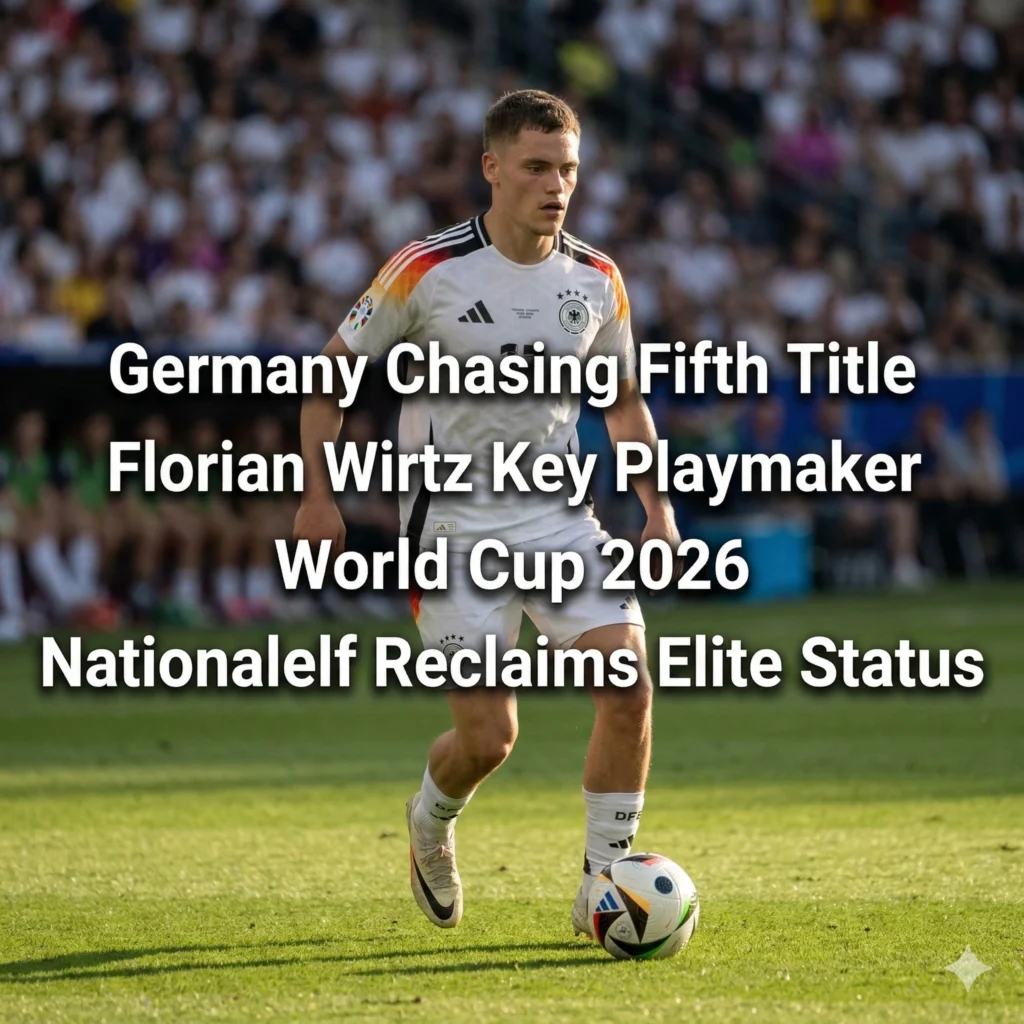
Germany 2026 World Cup
The Germany 2026 World Cup campaign is built upon a foundation of tactical flexibility that allows the team to adapt to various opponents without losing its core identity. Julian Nagelsmann has successfully implemented a hybrid system that often transitions from a traditional 4-2-3-1 into an aggressive 3-2-5 during the attacking phase. This fluidity ensures that the team always has a numerical advantage in the midfield, allowing them to control the tempo of every match.
By utilizing inverted fullbacks, the coaching staff has created a secondary layer of playmaking that frees up the creative attackers to operate in the half-spaces. This structural adjustment is specifically designed to maximize the influence of elite talents who can exploit tiny gaps in the opposition’s defensive line.
The defensive transition remains a critical focus for the Germany 2026 World Cup squad as they seek to avoid the counter-attacking vulnerabilities seen in 2018 and 2022. Nagelsmann has emphasized a “five-second rule” for ball recovery, demanding an immediate and coordinated press the moment possession is lost in the final third. This aggressive approach requires peak physical conditioning and a high level of tactical intelligence from every player on the pitch.
The integration of faster center-backs has provided the insurance policy needed to maintain a high defensive line with confidence. Such strategic depth is essential for a tournament format where a single defensive lapse can result in an early and painful exit from the competition.
The Role of Florian Wirtz
Florian Wirtz has emerged as the definitive heartbeat of this refreshed German side, offering a blend of vision and execution that is rare for his age. Operating primarily as a left-sided playmaker, he possesses the unique ability to drift inside and dictate play while maintaining a goal-scoring threat. His partnership with other young attackers has created a dynamic frontline that is difficult for even the most disciplined defenders to track. Wirtz is not just a creator; he is a tactical trigger who signals when the team should accelerate their passing sequences. His maturity on the ball ensures that the Germany 2026 World Cup aspirations are supported by a player who thrives under extreme pressure.
Beyond his individual brilliance, Wirtz serves as the connective tissue between the midfield and the strikers, ensuring that possession translates into high-quality scoring chances. His statistical output in terms of progressive carries and key passes puts him among the elite tier of global midfielders heading into the summer. Nagelsmann has given him the freedom to roam, trusting his spatial awareness to find the “pockets” that unbalance the opponent’s structure. This trust has been repaid with consistent performances that have galvanized the entire national team during the qualifying rounds. The reliance on his creative engine is a testament to how vital he has become to the overall Germany 2026 World Cup success.
Tactical Innovation Under Nagelsmann
Julian Nagelsmann has introduced a sophisticated training regime that focuses on cognitive speed and rapid decision-making to prepare for the Germany 2026 World Cup. The coaching staff uses advanced data analytics to simulate specific match scenarios, ensuring that players are prepared for any tactical shift an opponent might employ. This data-driven approach has allowed Germany to optimize their set-piece routines and defensive positioning with surgical precision. The result is a team that looks more organized and cohesive than it has in nearly a decade of international play. Every movement on the pitch is calculated to create maximum disruption for the opposing team’s defensive shape.
The selection process for the Germany 2026 World Cup roster reflected a shift toward players who possess high tactical versatility and defensive work rates. Nagelsmann has moved away from specialists in favor of multi-functional athletes who can occupy different roles depending on the phase of play. This versatility allows Germany to change their shape mid-game without making substitutions, keeping opponents constantly guessing about their intentions. The use of a “box” midfield has become a hallmark of their recent success, providing both defensive stability and multiple passing lanes. This innovation is key to Germany’s quest to reclaim their status as the dominant force in world football.
Rebuilding National Confidence
The road to the Germany 2026 World Cup has been a journey of emotional and professional rebuilding for a nation that considers football part of its cultural DNA. After the disappointments of previous cycles, the German Football Association made radical changes to the youth development pipelines to foster more creative individual talent. This long-term investment is finally bearing fruit as the current squad reflects a more modern and adventurous style of play. The fans have responded with renewed enthusiasm, filling stadiums and creating an atmosphere of genuine belief. This synergy between the team and the public is a powerful motivator as the tournament approaches.
Maintaining this positive momentum is crucial for the players as they face the intense media scrutiny that accompanies every Germany 2026 World Cup campaign. Nagelsmann has worked hard to create a “bubble” of focus, protecting his athletes from outside noise while fostering a culture of internal accountability. The veterans in the squad play a vital role in this process, sharing their experiences of both triumph and failure to guide the younger stars. This blend of youthful fearlessness and veteran wisdom creates a balanced locker room capable of navigating the highs and lows of a month-long tournament. The internal harmony is currently at its highest point in years.
Key Players to Watch
- Florian Wirtz: The primary playmaker whose vision and dribbling skills are essential for breaking down low-block defenses during the tournament.
- Jamal Musiala: A master of tight-space dribbling who complements the passing range of his teammates with direct, goal-oriented runs.
- Joshua Kimmich: The experienced leader in the middle of the park who provides the tactical discipline and passing accuracy required to control games.
- Kai Havertz: A versatile forward whose movement off the ball creates space for others and offers a reliable finishing touch in the box.
Defensive Solidity and Structure
A successful Germany 2026 World Cup run will depend heavily on the ability of the backline to remain composed during high-pressure transitions. The center-back pairing has been stabilized, focusing on a combination of physical strength and the ability to play accurate long balls to the wingers. By improving their communication and spacing, the defenders have significantly reduced the number of high-quality chances conceded during the recent friendly matches. The goalkeeper position also remains a source of strength, providing a reliable “sweeper-keeper” who can initiate attacks from the very back. This comprehensive defensive organization is the platform upon which the creative players can take risks.
Training sessions leading up to the Germany 2026 World Cup have focused on defending against quick transitions, which was a notable weakness in previous years. The coaching staff utilizes specialized drills to improve the recovery speed of the fullbacks and the tracking back of the wide midfielders. This holistic approach to defending ensures that the team does not become stretched or fragmented when they lose possession. By staying compact and maintaining short distances between the lines, Germany can suffocate the opponent’s creative outlets before they become dangerous. This structural integrity is a non-negotiable requirement for any team harboring genuine title ambitions.
Historical Context and Ambition
Germany’s history in the tournament provides both a source of inspiration and a significant amount of pressure for the Germany 2026 World Cup squad. Having won the trophy four times, the “Nationalelf” is always expected to reach the final stages, regardless of their current world ranking. The memory of the 2014 victory in Brazil serves as a reminder of what is possible when a talented group aligns perfectly with a clear tactical vision. However, the failures that followed have instilled a sense of humility and a hunger to prove the critics wrong. This combination of pride and desperation makes Germany one of the most dangerous teams in the current international landscape.
The ambition for the Germany 2026 World Cup is not merely to participate but to dominate the narrative of the tournament through superior technical play. The German footballing philosophy has evolved to embrace a more proactive and entertaining style that reflects the modern game’s demands. This shift is part of a broader strategy to ensure that the national team remains relevant and competitive for decades to come. By prioritizing the development of intelligent, adaptable players, Germany is positioning itself at the forefront of tactical innovation once again. The world will soon see if this new era can result in the ultimate prize.
Scouting the Opposition
The preparation for the Germany 2026 World Cup involves an exhaustive analysis of potential opponents from every confederation. The scouting department has been working around the clock to identify the strengths and weaknesses of top-tier rivals such as France, Brazil, and Argentina. By understanding the tactical nuances of different regional styles, Nagelsmann can tailor his game plans to exploit specific vulnerabilities. This level of preparation is what separates elite contenders from the rest of the field in a tournament of this magnitude. Information is power, and the German staff is leaving no stone unturned in their quest for a tactical edge.
Analyzing the physical demands of playing in North American climates has also been a priority for the Germany 2026 World Cup performance team. They have developed customized hydration and recovery protocols to ensure that the players remain at peak physical condition throughout the grueling schedule. The logistics of traveling between host cities require a meticulous plan to minimize fatigue and maximize training time. Every detail, from sleep patterns to nutritional intake, is being managed to provide the players with the best possible chance of success on the pitch. This professional approach reflects the seriousness with which Germany is approaching this championship.
The Road to the Final
- Group Stage Consistency: Germany must secure maximum points early to build confidence and allow for potential rotation of key players in the final group match.
- Tactical Adaptability: The ability to switch systems mid-match will be crucial when facing teams that employ unconventional or highly defensive strategies.
- Set-Piece Efficiency: In tight knockout matches, the ability to score from corners and free-kicks often becomes the deciding factor between progression and elimination.
Impact of Youth Integration
The decision to integrate younger players early in the cycle has given the Germany 2026 World Cup team a sense of fearlessness that was missing in 2022. These athletes have grown up in a system that encourages individual flair within a collective framework, resulting in a more unpredictable attacking force. The lack of “tournament scarring” among the newcomers allows them to play with a freedom that can unnerve more experienced opponents. This injection of energy has revitalized the training camp and created a healthy competition for starting spots across the entire roster. The future of German football looks bright, but the focus remains firmly on the immediate challenge.
Nagelsmann’s ability to manage these young egos while maintaining a disciplined environment is central to the Germany 2026 World Cup mission. He treats the players with a level of transparency that fosters mutual respect and a shared commitment to the team’s objectives. By involving the players in tactical discussions, he ensures that they fully understand the “why” behind every instruction. This intellectual engagement leads to better execution on the pitch, as players can anticipate movements and react intuitively to changing match conditions. The synergy between the coaching staff and the squad is a significant intangible asset.
Final Preparations and Outlook
As the start date of the Germany 2026 World Cup draws near, the intensity of the preparations has reached its maximum level. The final friendly matches will serve as a testing ground for the starting eleven and a chance to fine-tune the pressing triggers. There is a palpable sense of excitement within the country, as fans prepare to support their team on the global stage once again. The narrative of redemption is powerful, and the players are eager to write a new, successful chapter in the history of German football. All the pieces are in place for a deep run into the latter stages of the competition.
Success in the Germany 2026 World Cup would not only add a fifth star to the jersey but also validate the structural changes made to the national program. It would serve as a blueprint for how a traditional powerhouse can modernize its approach without losing its historical strengths. The journey will undoubtedly be difficult, featuring challenges that will test the character and resolve of every individual involved. However, with a clear plan, a talented squad, and a world-class playmaker like Florian Wirtz, Germany is as prepared as they have ever been. The quest for glory begins now, and the world is ready to witness the return of a giant.
The tactical evolution observed in recent months suggests that the Germany 2026 World Cup performance will be characterized by a high degree of control and creative spark. The team has moved past the era of predictable sideways passing, opting instead for verticality and rapid transitions. This shift in philosophy is designed to keep opponents on the back foot and create a high volume of scoring opportunities. If the team can maintain their defensive focus while allowing their creative stars to shine, they will be a formidable opponent for any nation. The dream of a fifth title is no longer just a hope; it is a realistic objective supported by evidence on the pitch.
Ultimately, the Germany 2026 World Cup will be a defining moment for Julian Nagelsmann and his tactical philosophy. His ability to blend various footballing schools of thought into a cohesive unit has set the stage for a potential masterclass in international football. The players have bought into the vision, and the results during the build-up have been overwhelmingly positive. As the eyes of the world turn to the tournament, Germany stands ready to reclaim its place at the summit of the sport. The journey to the final will be a test of tactical ingenuity, physical endurance, and mental toughness.
For more details & sources visit: Yahoo Sports
For the latest news from Germany, visit our Germany news page.