
A daring Gelsenkirchen bank heist has stunned Germany, leaving thousands of customers in shock after more than 3,000 safe deposit boxes were emptied overnight. Authorities estimate the total loss at approximately €30 million, making it one of the most audacious bank robberies in recent German history. The incident occurred during the Christmas holiday, exploiting the bank’s closure and giving criminals ample time to execute their plan.
The heist took place at a local savings bank branch in Gelsenkirchen, where thieves used heavy drilling equipment to breach the main vault. Investigators report that the suspects systematically looted cash, gold, jewelry, and other valuables from the private safes. Each safe was insured for an average of €10,000, underscoring the scale of the financial impact.
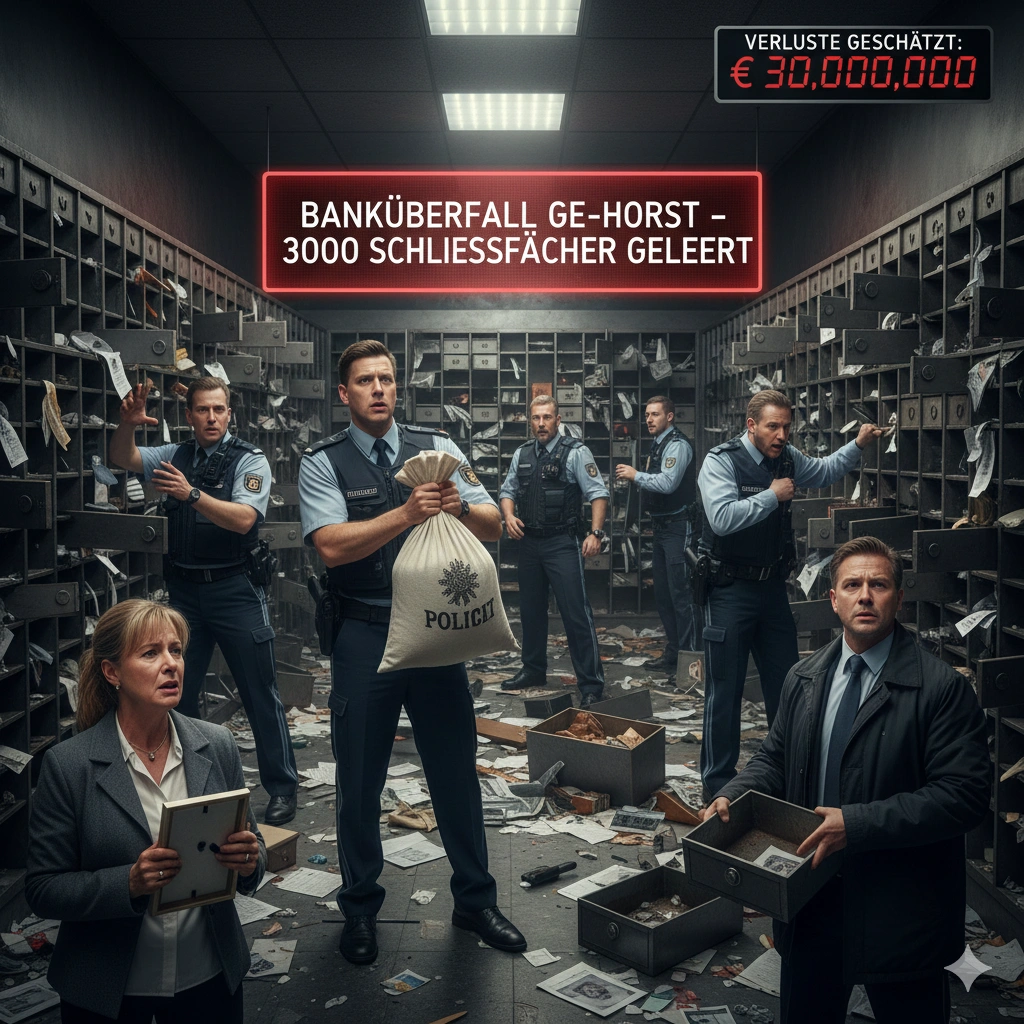
How the Gelsenkirchen Bank Heist Was Executed
Police sources indicate that the criminals exploited the holiday closure, arriving under the cover of night to carry out the heist. Surveillance footage shows masked men fleeing the scene in a black Audi equipped with stolen license plates. Witnesses reported seeing suspects carrying large bags filled with valuables through a nearby parking area.
Investigators describe the operation as highly organized and methodical, suggesting the suspects had detailed knowledge of the bank’s layout, security routines, and vault mechanisms. The thieves used specialized drilling tools to bypass advanced locks and gain access to over 3,000 safe deposit boxes in a single night. Authorities note that the speed and efficiency of the heist indicate a well-coordinated team with prior planning, likely including reconnaissance of the premises and timing to exploit staff absence.
Police Investigation and Security Response
The Gelsenkirchen bank heist has triggered an intensive police investigation. Law enforcement agencies are reviewing surveillance video, eyewitness accounts, and forensic evidence to identify and apprehend the suspects. Officers have increased security around financial institutions in the region to prevent copycat crimes.
The bank remains closed as security systems are re-evaluated and reinforced. Investigators are also coordinating with insurance companies and tracking the movement of stolen goods to recover lost assets. Authorities emphasized that rapid reporting of stolen items by customers and detailed forensic analysis are critical for building a case and mitigating long-term losses. This incident has prompted discussions on integrating advanced alarm and monitoring technologies across other branches.
Impact on Customers and the Community
The heist has created panic and anger among customers, many of whom rely on safe deposit boxes for storing irreplaceable valuables. The sudden loss has affected personal finances, family heirlooms, and important documents. Community members expressed disbelief that such a large-scale robbery could occur without immediate detection.
Local authorities and banking institutions are now working closely with affected customers to provide support and clarify insurance procedures. Community members have demanded stronger security measures, including improved surveillance coverage, reinforced vault structures, and emergency response plans. Analysts predict that the fallout from this heist will influence nationwide protocols, encouraging banks to adopt more comprehensive risk assessment and asset protection strategies to prevent future large-scale robberies.
Broader Implications for Banking Security
This robbery underscores the vulnerability of physical banking infrastructure, even in countries with stringent security measures. The incident highlights the need for:
- Enhanced vault and alarm systems
- Real-time monitoring and remote alerts
- Comprehensive insurance coverage for customers
- Emergency protocols for large-scale breaches
Financial experts argue that the Gelsenkirchen bank heist could drive policy updates, including the requirement for real-time monitoring systems, enhanced alarm mechanisms, and stricter insurance guidelines. Banks may also adopt proactive emergency protocols, staff training for crisis situations, and regular security audits to safeguard both customer assets and institutional integrity. The incident serves as a cautionary example for the industry, emphasizing the need for continuous innovation in security technology and risk management practices.
Ongoing Updates and What to Watch
The Gelsenkirchen bank heist remains under active investigation. Authorities continue to search for the suspects, reviewing data from border checkpoints and vehicle records linked to the stolen Audi. Customers are advised to stay informed through official police and bank announcements.
The scale and precision of the robbery make it a key case study in modern bank security and criminal methodology. Analysts expect updates in the coming days as investigators follow leads and forensic evidence is analyzed.
For more details & sources visit: AFP
For the latest news from Germany, visit our Germany news page.