
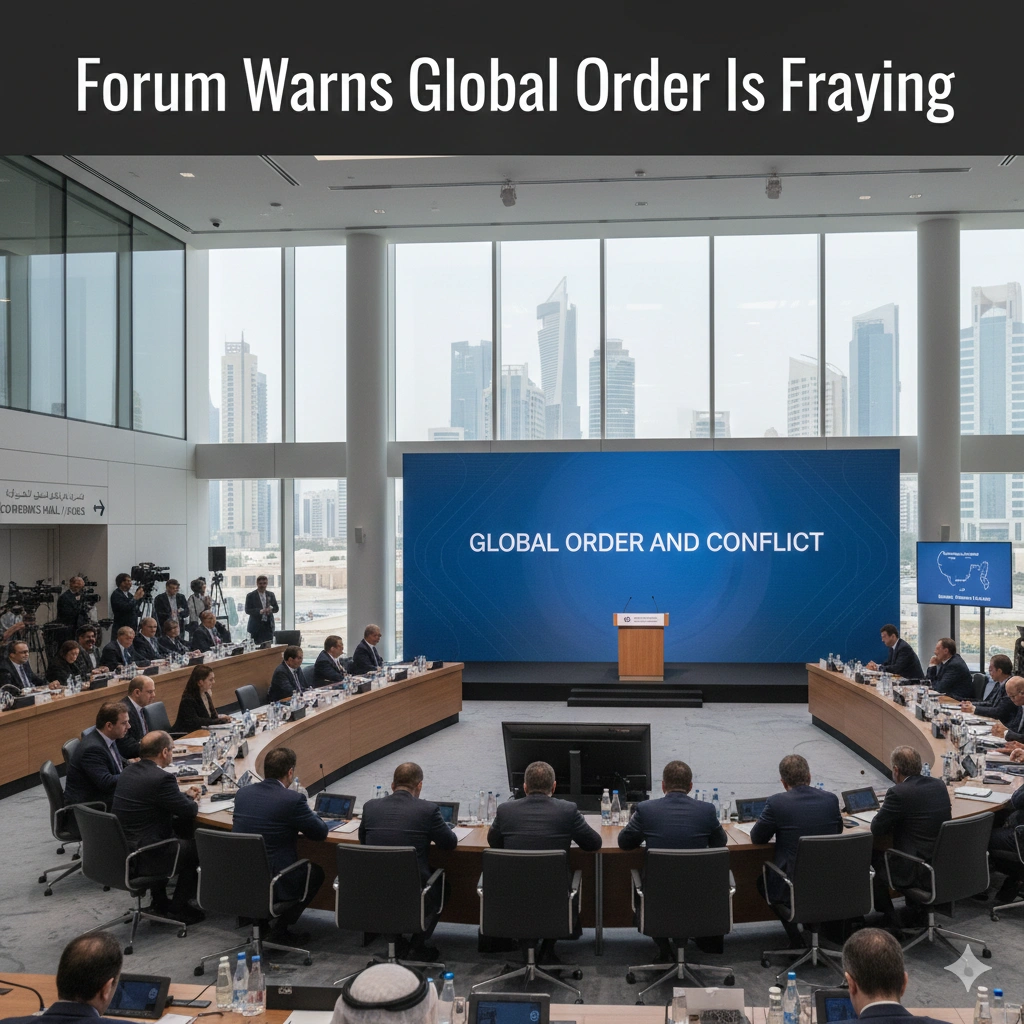
Gaza War International Law is under threat, as leaders at the 17th Al Jazeera Forum in Doha warned that the ongoing conflict is accelerating the erosion of legal norms while reshaping power dynamics in the Middle East. The forum emphasized the Palestinian issue as central to regional stability, with Iranian officials calling for coordinated diplomatic and economic measures, including an arms embargo on Israel.
Speakers emphasized that the conflict in Gaza is not just a local issue but a global challenge affecting the credibility of international institutions designed to prevent atrocities and maintain peace.
Iran Calls for Arms Embargo and Sanctions
Iranian Foreign Minister Abbas Araghchi stated that the Palestinian question is a defining strategic issue for the Middle East. He warned that Israel’s conduct in Gaza is undermining the global legal order, calling for “comprehensive and targeted sanctions”, including an immediate arms embargo, suspension of military and intelligence cooperation, and accountability measures under international law.
Araghchi emphasized that coordinated international pressure is necessary to prevent further violations of human rights and international norms. He also noted that Iran and the United States had agreed to a second round of talks, though no date was specified, signaling continued diplomatic engagement despite regional tensions.
Regional Leaders Highlight Threats to Stability
Sheikh Hamad bin Thamer bin Mohammed Al Thani, chair of Al Jazeera Media Network’s board, warned that Israel’s actions in Gaza risk displacing populations and undermining the potential for a Palestinian state. He framed these developments as destabilizing forces with consequences beyond Gaza, impacting regional diplomacy and security.
Similarly, Somalia’s President Hassan Sheikh Mohamud linked the Gaza conflict to broader instability, noting that unilateral actions by Israel, such as recognizing Somaliland, weaken the rules-based international order and threaten Red Sea security and trade. These concerns underscore how local conflicts can ripple into regional economic and political systems.
Broader Geopolitical Implications
Turkiye’s communications chief, Burhanettin Duran, described the Gaza war as part of a historic rupture in global politics. He cautioned that international institutions meant to prevent atrocities are failing, increasing the risk of conflicts spreading and eroding trust in global governance.
The forum collectively warned that unless corrective actions are taken, the Gaza conflict could permanently alter the balance of power in the Middle East and challenge longstanding norms of international law. The speakers stressed that accountability, sanctions, and diplomatic engagement are essential to maintain stability.
War International Law and Humanitarian Accountability
The ongoing Gaza conflict continues to raise concerns about compliance with international humanitarian standards. Observers at the Doha Forum emphasized that violations of civilian protection norms not only threaten lives but also weaken the global legal framework designed to safeguard populations in conflict zones. Ensuring accountability under Gaza War International Law is critical for preventing further escalation and deterring future breaches.
Humanitarian organizations have called for independent investigations into reported attacks on civilian infrastructure and medical facilities. Strengthening legal mechanisms and transparent reporting can reinforce the norms of Gaza War International Law, signaling to all parties that violations carry both diplomatic and legal consequences.
Gaza War International Law and Regional Diplomacy
The Gaza conflict has increasingly become a diplomatic flashpoint in the Middle East. Countries across the region are navigating a delicate balance between security concerns and upholding legal standards, with the principles of Gaza War International Law shaping negotiations and peace initiatives. Maintaining respect for these laws is seen as essential to sustaining regional trust and cooperation.
International mediation efforts emphasize that diplomatic progress cannot succeed without acknowledging legal obligations under Gaza War International Law. Regional powers and international organizations are therefore considering structured mechanisms for conflict resolution that integrate both humanitarian safeguards and legal accountability, ensuring that peace initiatives are grounded in enforceable norms.
Diplomatic Prospects and Next Steps
While tensions remain high, the forum highlighted opportunities for dialogue. Araghchi’s announcement of future Iran-U.S. talks indicates potential diplomatic pathways. Forum organizers argued that multilateral coordination, adherence to international law, and transparent mechanisms for sanctions could prevent further deterioration of global norms.
The Gaza War International Law discussion at Doha signals a growing international consensus: ongoing conflicts cannot be treated as purely local disputes without risking broader destabilization.
For more details & sources visit: Al Jazeera
For the latest updates from Palestine, visit our Palestine news page.