
French Economy Growth is the primary driver of current European market stability as we enter the first quarter of 2026. While the previous two years were defined by significant political shifts and legislative gridlock following the Assemblée dissolution, the underlying industrial fabric of the nation has proven remarkably resilient. Investors are increasingly looking past the noise of partisan debates to focus on the tangible expansion seen in the high-tech and energy sectors.
This renewed sense of optimism is not merely a psychological shift but is backed by substantial capital inflows and a rebounding manufacturing base. Business leaders across the Hexagon are reporting a stabilization in order books that suggests a long-term recovery is finally taking hold. As we examine the specific drivers of this upward trend, it becomes clear that French Economy Growth is currently outperforming many of its neighboring peers in the Eurozone.
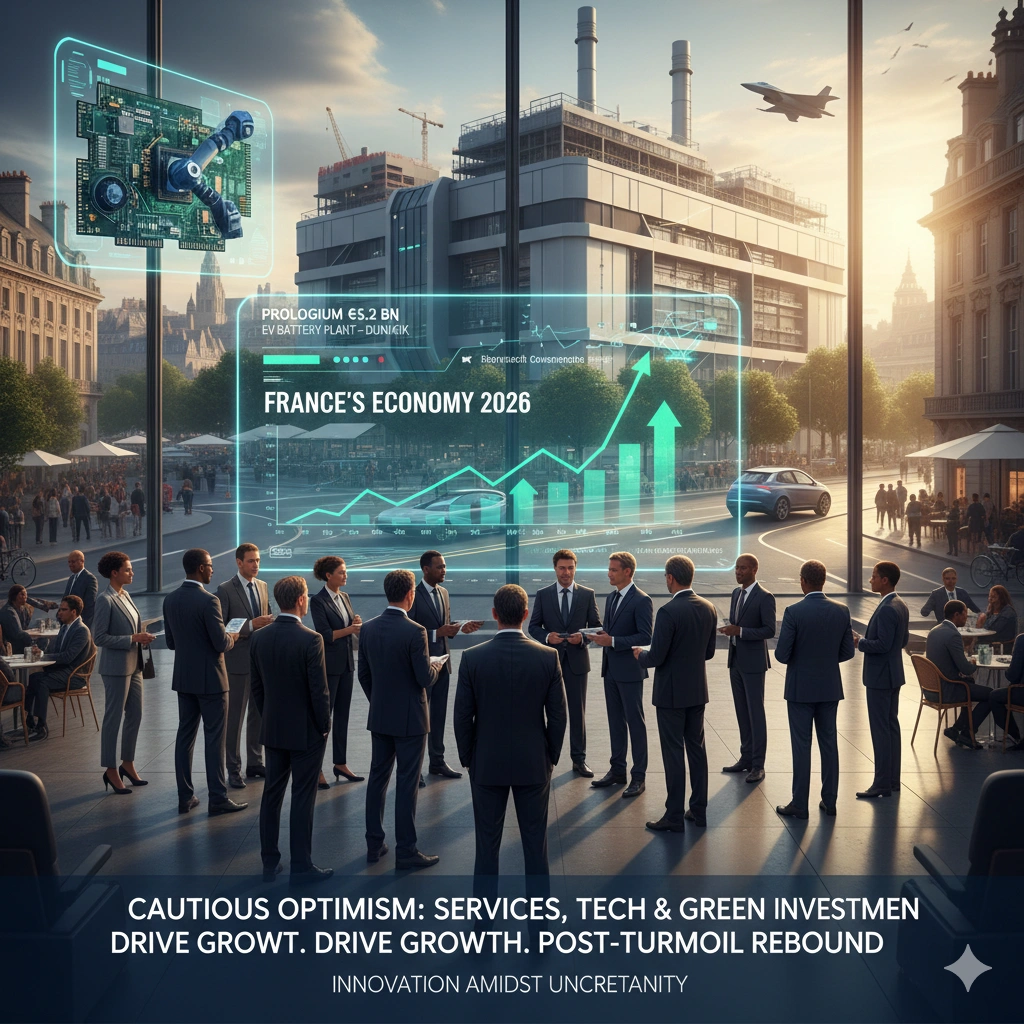
French Economy Growth
The acceleration of French Economy Growth has surprised many analysts who predicted a period of prolonged stagnation following the 2024 political turmoil. Instead, the nation has leveraged its strengths in aerospace, defense, and green energy to secure a competitive edge in the global marketplace. The current trajectory indicates that the strategy of diversifying trade partners and investing in domestic high-value manufacturing is paying off significantly.
Domestic consumption, which remains a cornerstone of the French model, has also shown signs of a robust recovery as inflation pressures finally begin to ease. Experts now suggest that the “wait and see” approach of 2025 has been replaced by a “build and expand” mindset among the French elite. This shift in corporate sentiment is a vital component of the broader European recovery narrative this year.
Industrial Investments Lead the Way
Large-scale industrial projects are serving as the backbone of the current economic narrative across the various French regions. For instance, the massive €5.2 billion investment by ProLogium for their electric vehicle battery plant in Dunkirk represents a major milestone for the “Electric Valley.” These types of projects provide long-term employment stability and foster a sophisticated ecosystem of local subcontractors and service providers.
Furthermore, the focus on decarbonization has turned traditional industrial hubs into centers of green innovation. Local governments are coordinating with the central administration to ensure that infrastructure keeps pace with these massive private sector commitments. Consequently, the industrial sector is no longer seen as a relic of the past but as a high-tech engine for the future.
Aerospace and Defense Sector Strength
The aerospace sector continues to be a crown jewel of the national export strategy, providing a steady stream of revenue and technical prestige. Airbus and its vast network of suppliers are currently managing record-level order books as global demand for fuel-efficient aircraft reaches new heights. Simultaneously, the defense industry has seen a surge in international contracts driven by the shifting geopolitical landscape in Eastern Europe and the Indo-Pacific.
These sectors provide high-paying jobs that sustain the middle class and drive consumer spending in key urban centers like Toulouse and Bordeaux. Innovation in carbon-neutral aviation is also positioning France as a leader in the next generation of global transport. By maintaining a dominant position in these strategic fields, the country ensures its relevance in the global supply chain for decades to come.
The Rise of AI and Electrical Engineering
Artificial intelligence is being integrated into the French electrical and electronics sectors at an unprecedented rate, boosting productivity across the board. Companies specializing in data center infrastructure and smart grid technology are seeing exponential growth as Europe digitizes its economy. This technological leap is allowing French firms to compete more effectively with American and Chinese rivals on a technical level.
French Economy Growth is heavily dependent on these “sectors of the future” which attract young talent and venture capital. The government’s continued support for the “French Tech” initiative has created a fertile environment for startups to scale into global players. As a result, the digital economy is now a major contributor to the annual GDP figures.
Resilience Amid Political Uncertainty
Despite the lack of a clear parliamentary majority, the French business community has learned to operate effectively within a state of “permanent crisis.” Executives have adopted agile management styles that allow them to pivot quickly in response to legislative changes or global market shocks. This adaptability is a testament to the sophistication of the French corporate structure and its ability to withstand external pressures.
While the budget debates regarding pensions and aging populations remain unresolved, the private sector has largely decoupled its performance from the daily political drama. This resilience is a key reason why international rating agencies have maintained a stable outlook for the country. The ability to maintain operational continuity during political transitions is a major strength of the current economic climate.
Comparative Advantage Over Germany
In a surprising turn of events, the French economic model is currently showing more vitality than the traditional German powerhouse. While Germany struggles with high energy costs and a heavy reliance on a slowing Chinese market, France has benefited from its diverse energy mix and service-oriented economy. The anti-inflation measures implemented by the French government have also been more effective at shielding consumers from the worst of the price hikes.
This has allowed for a more consistent level of domestic demand which supports the retail and hospitality industries. French Economy Growth is benefiting from this relative stability, making it an attractive destination for capital fleeing more volatile markets. This shift in the European power dynamic is one of the most significant trends of 2026.
Future Outlook and Structural Challenges
Looking ahead to the remainder of 2026, the focus will remain on managing structural challenges like the public deficit and the aging workforce. While the private sector is thriving, the state must find a way to balance the books without stifling the current momentum. Investments in education and vocational training are essential to ensure that the labor market can meet the demands of the new green and digital industries.
There is also the constant threat of global trade volatility, particularly concerning relations with the United States and China. However, the current data suggests that the French economy has built enough internal strength to navigate these potential headwinds. The goal now is to turn this period of “cautious optimism” into a decade of sustained and inclusive expansion.
Strategic Market Drivers in 2026
The convergence of green technology and digital transformation is creating new market niches that did not exist five years ago. French Economy Growth is being fueled by a surge in “deep tech” investments that focus on solving complex environmental problems through engineering. These innovations are being exported globally, further improving the national trade balance which has been under pressure. Small and medium-sized enterprises (SMEs) are also playing a larger role by adopting these new technologies to improve their niche market positions.
The synergy between large industrial groups and agile startups is creating a uniquely French innovation model. This collaborative approach is proving to be highly effective at bringing new products to market quickly.
- Investment in EV battery gigafactories has reached a cumulative €15 billion across northern France.
- The service sector has expanded by 3.2% in the last quarter, driven by business consulting and IT services.
- Export volumes for luxury goods and agricultural products remain at record highs despite global tariffs.
- Public-private partnerships in hydrogen energy are beginning to produce commercial-scale results.
The Role of Sustainable Finance
Paris has solidified its position as the leading hub for sustainable finance and green bonds within the European Union. Investors are increasingly prioritizing ESG (Environmental, Social, and Governance) criteria, and French firms are among the best-rated in these categories. This access to “green capital” allows French companies to fund their transition to net-zero emissions at lower interest rates.
The financial sector itself is evolving, with major banks redirecting billions of euros toward renewable energy projects. This alignment of financial interests with environmental goals is a powerful driver of long-term French Economy Growth. It also ensures that the nation remains at the forefront of the global movement toward a more sustainable economic system.
Consumer Confidence and Retail Trends
As the labor market remains tight, wage growth has started to catch up with previous inflation, putting more disposable income in the hands of citizens. This has led to a noticeable uptick in the retail sector, particularly in high-quality sustainable products and local services. Consumers are showing a preference for “Made in France” goods, which supports local manufacturers and reduces the carbon footprint of logistics.
The hospitality and tourism industry is also benefiting from a renewed interest in domestic travel and high-spending international visitors. This broad-based recovery in consumption is providing a vital safety net for the economy during periods of global export volatility. Retailers are adapting by integrating digital platforms with traditional physical storefronts to enhance the customer experience.
Addressing the Labor Shortage
One of the primary obstacles to even faster French Economy Growth is the persistent shortage of skilled workers in technical fields. To combat this, the government and private sector are launching massive retraining programs focused on coding, renewable energy maintenance, and advanced manufacturing. These initiatives aim to bridge the gap between the existing workforce and the needs of the 2026 economy.
Companies are also offering more flexible working arrangements and better benefits to attract and retain top talent. This focus on “human capital” is essential for maintaining the high levels of productivity required to compete globally. By investing in its people, France is ensuring that its economic success is built on a solid and sustainable foundation.
Geopolitical Stability and Trade
In an era of increasing protectionism, France has been a vocal advocate for “European sovereignty” in critical supply chains. This policy encourages the reshoring of vital industries like pharmaceuticals and semiconductor packaging to European soil. French Economy Growth is a direct beneficiary of this strategic shift, as the country offers a stable legal environment and high-quality infrastructure. Trade agreements with emerging markets in Africa and Southeast Asia are also being strengthened to reduce reliance on any single trade partner.
This diversification strategy is crucial for mitigating the risks associated with geopolitical tensions between major global powers. By acting as a stable bridge between different global blocs, France enhances its economic security and influence.
- The unemployment rate has stabilized at its lowest level in two decades, encouraging more labor participation.
- Energy prices have normalized thanks to the refurbishment of the nuclear fleet and new solar installations.
- Digital exports now account for over 12% of the total service export value for the first time.
Innovation in the Agricultural Sector
The French agricultural sector, long a cornerstone of the national identity, is undergoing a high-tech revolution of its own. Precision farming techniques, powered by satellite data and AI, are helping farmers increase yields while reducing the use of fertilizers and pesticides. This not only improves the profitability of farms but also aligns with the strict environmental regulations of the European Union.
French Economy Growth is bolstered by the continued global demand for high-end food and wine products, which command a significant premium. The “AgriTech” movement is attracting significant investment, turning traditional farming regions into hubs of biological and technological research. This evolution ensures that the rural economy remains vibrant and integrated into the national growth strategy.
The Impact of Infrastructure Modernization
The government has committed hundreds of billions of euros to modernizing the national rail and broadband networks through 2030. High-speed internet is now available in even the most remote areas, allowing for the decentralization of the economy as more people work remotely. The expansion of the “Grand Paris Express” and other regional transport projects is facilitating the movement of goods and people more efficiently.
These infrastructure investments provide an immediate boost to the construction sector and long-term benefits to overall economic efficiency. French Economy Growth relies on this world-class infrastructure to attract foreign direct investment and support domestic commerce. A well-connected nation is a more competitive and equitable nation in the modern global economy.
Corporate Strategy in a Volatile World
French corporations have become masters of navigating global volatility by maintaining strong balance sheets and diversified revenue streams. Many firms have shifted from “just-in-time” to “just-in-case” inventory management to protect against supply chain disruptions. This cautious but proactive approach has allowed them to maintain production levels even during periods of international shipping crises. French Economy Growth is supported by this sophisticated corporate governance which prioritizes long-term stability over short-term gains.
The emphasis on research and development ensures that French products remain at the cutting edge of their respective industries. In 2026, the “French brand” is synonymous with quality, reliability, and innovation.
- Total R&D spending by private firms increased by 6% year-on-year, the highest growth in the EU.
- New business registrations reached a record high of 1.1 million in the rolling 12-month period.
- The tourism sector reported a 10% increase in revenue compared to the pre-pandemic peak.
Social Stability and Economic Inclusion
Maintaining social cohesion is a vital, if often overlooked, component of a healthy economy. The French social model, while expensive, provides a level of security that allows individuals to take entrepreneurial risks without the fear of total ruin. Efforts to integrate marginalized communities into the workforce through targeted training and tax incentives are starting to show positive results.
French Economy Growth is more sustainable when it is inclusive, reducing the potential for social unrest that can disrupt business operations. The focus on “social dialogue” between unions and employers, while often contentious, ultimately leads to more stable labor relations. This commitment to social welfare remains a defining characteristic of the French approach to capitalism in the 21st century.
Conclusion and Summary of Trends
The story of the French economy in 2026 is one of remarkable endurance and strategic foresight. By focusing on high-growth sectors like AI, green energy, and advanced manufacturing, the nation has successfully navigated a period of intense political and global uncertainty. French Economy Growth is not a fluke but the result of sustained investment in technology, infrastructure, and people.
While challenges remain, particularly regarding the national debt and global trade tensions, the foundation of the economy is stronger than it has been in years. The “renewed optimism” mentioned by business leaders is a reflection of a country that has found its footing in a rapidly changing world. As we look to the future, France is well-positioned to remain a leading force in the global economic landscape.
For more details & sources visit: Le Monde
For the latest updates from France, visit our France news page.