
Spain’s film industry under Francisco Franco Censorship from 1939 to 1975 endured strict censorship that enforced a conservative Catholic ideology, profoundly influencing its creative output and pushing filmmakers toward genre cinema and international collaborations. This oppressive regime controlled narratives to align with fascist values, yet economic needs in the 1960s opened doors to exportable films like Westerns, horror, and action, which generated vital foreign revenue. As detailed in a recent IndieWire analysis, these shifts allowed subtle boundary-pushing through co-productions that distanced controversial content from “Spanish values,” laying groundwork for post-Franco cinematic freedom.
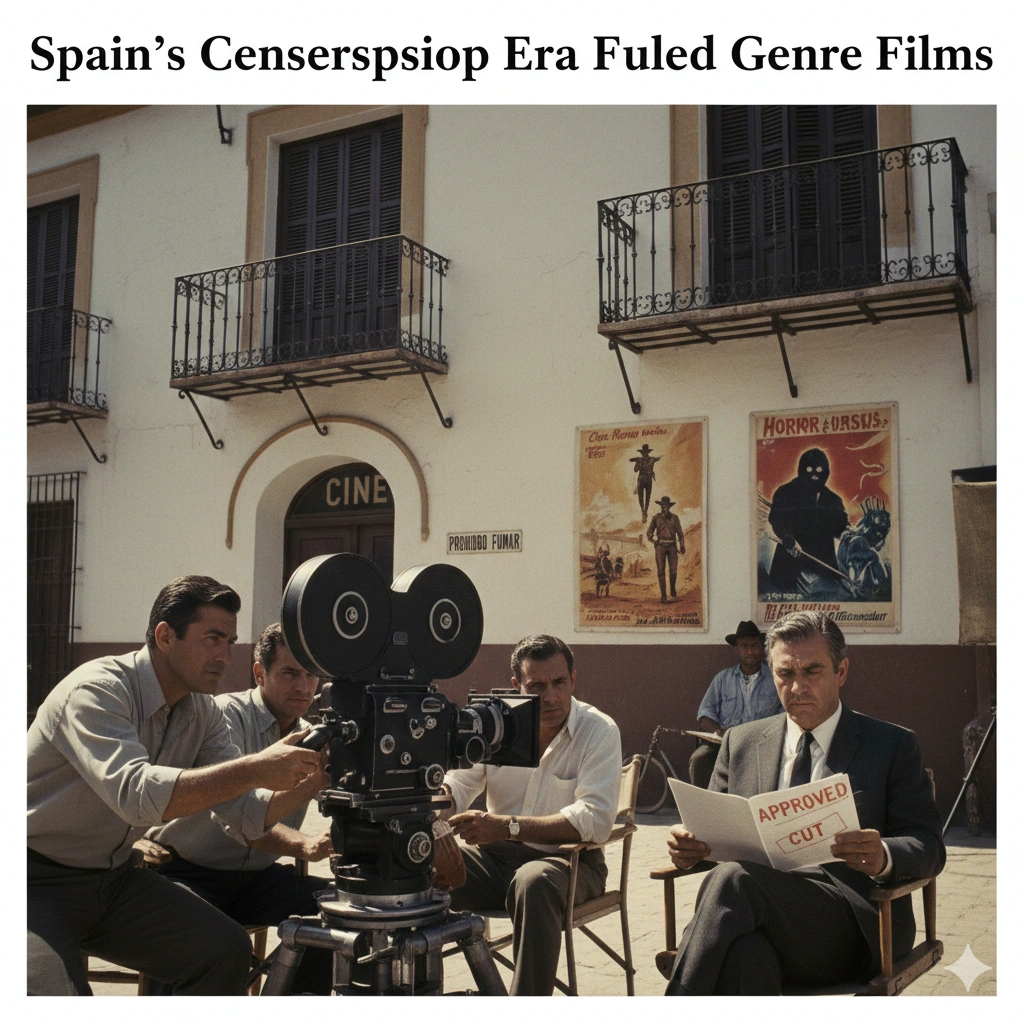
Censorship’s Iron Grip on Spanish Filmmaking
From Franco’s victory in 1939 until his death in 1975, authorities imposed rigorous controls via bodies like the Junta Superior de Censura Cinematográfica, established in 1937, and the Comisión Nacional de Cinematografía in 1938. These boards reviewed scripts, footage, and final cuts to suppress dissent, immorality, or anything clashing with the regime’s moral worldview—far stricter than Hollywood’s Hays Code. Films faced bans, heavy edits, or mandates for dubbing into Spanish, with provincial governors wielding decentralized power to block offensive content dating back to 1913 precedents.
Directors adapted through symbolism and subtlety; explicit sex, violence, or social critique risked rejection. Iconic works like Luis Buñuel’s Viridiana (1961) were banned for religious satire, while others like Marcelino, Pan y Vino (1955) underwent alterations to comply. This environment stifled artistic freedom, forcing Spanish cinema into propaganda or sanitized dramas, but it inadvertently honed resilient storytelling techniques that later exploded in genre experimentation.
Rise of Genre Cinema for Economic Survival
By the 1960s, amid Spain’s economic “miracle” and mounting pressures, the regime pragmatically embraced international co-productions to earn hard currency. Genres like Spaghetti Westerns (with Italy), horror, and action films thrived because they appealed globally without overt political messaging. Collaborations with Italy and West Germany provided “political cover,” enabling onscreen sex and violence framed as foreign exotica rather than domestic vice.
Productions often avoided explicit Spanish settings to maintain ideological compliance, yet they smuggled in subversive elements. This era birthed cult classics, transforming censorship’s constraints into creative detours. Filmmakers tested limits, using genre tropes to critique society indirectly, while box-office success abroad—unfettered by local taboos—bolstered the industry financially.
Subtle Political Commentary Amid Restrictions
Even under Franco Censorship, Spanish filmmakers found ways to embed political and social commentary beneath the surface. Comedies, melodramas, and musicals often contained veiled critiques of authority, gender roles, and social hierarchies. Clever use of allegory and double meanings allowed directors to address taboo subjects without triggering bans. For example, urban settings and character archetypes were carefully chosen to symbolize tensions in Spanish society, offering a coded lens for audiences who could read between the lines.
This form of storytelling cultivated a sophisticated cinematic literacy among viewers, who learned to interpret nuanced symbols and metaphors. Franco Censorship inadvertently fostered an audience attuned to subtext, which later facilitated the rapid acceptance of experimental and politically charged narratives after the dictatorship ended. Filmmakers had, in a sense, trained the public to appreciate cinema as a medium of layered meaning rather than straightforward messaging.
The Legacy of Franco Censorship on Contemporary Spanish Cinema
The long shadow of Franco Censorship continues to influence Spanish cinema, even decades after the regime’s collapse. Modern filmmakers often draw inspiration from the resourcefulness required to navigate strict oversight, applying similar techniques in creating suspense, moral tension, or social critique. Horror and thriller genres, in particular, show echoes of coded symbolism and indirect messaging, reflecting lessons learned during decades of imposed limitations.
Moreover, the period’s emphasis on international collaboration laid the foundation for Spain’s thriving co-production culture today. Contemporary directors frequently partner with global studios, combining market appeal with creative storytelling—a model first shaped under Franco Censorship. This legacy highlights how constraints, while restrictive, inadvertently equipped Spanish filmmakers with tools to craft bold, globally resonant cinema that continues to push boundaries.
Modern Revival Through Severin Films’ Exorcismo
IndieWire spotlights Severin Films’ Exorcismo Blu-ray set as a gateway to this legacy—a 10-disc collection of post-Franco Spanish genre gems, including features and a documentary on the era’s culture clash. Released amid renewed interest, it curates titles embodying the shift from repression to raw expression, highlighting directors who weaponized genre against decades of control. This project underscores how Franco-era restrictions paradoxically fueled a vibrant, boundary-defying cinema that resonates globally today.
For more details & sources visit: IndieWire
For more updates, visit 360 News Orbit.