
France’s government has activated an emergency budget law to maintain public services as political divisions stall approval of a full fiscal plan for 2026. Prime Minister Sébastien Lecornu secured temporary relief by rolling over the 2025 budget, giving the government critical time to negotiate funding allocations while averting a shutdown of state operations. The move highlights the ongoing fiscal gridlock facing France’s parliament and underscores the challenges of managing high public debt and mounting deficits.
The temporary budget measure, known as the “Loi Spéciale”, allows the state to function while post-holiday negotiations resume. Although the law provides immediate breathing space, analysts caution that it does not solve underlying fiscal imbalances, with France’s public debt exceeding 115% of GDP and deficits staying above 5%. Rising interest rates add further pressure, threatening to crowd out investment under strategic programs like France 2030.
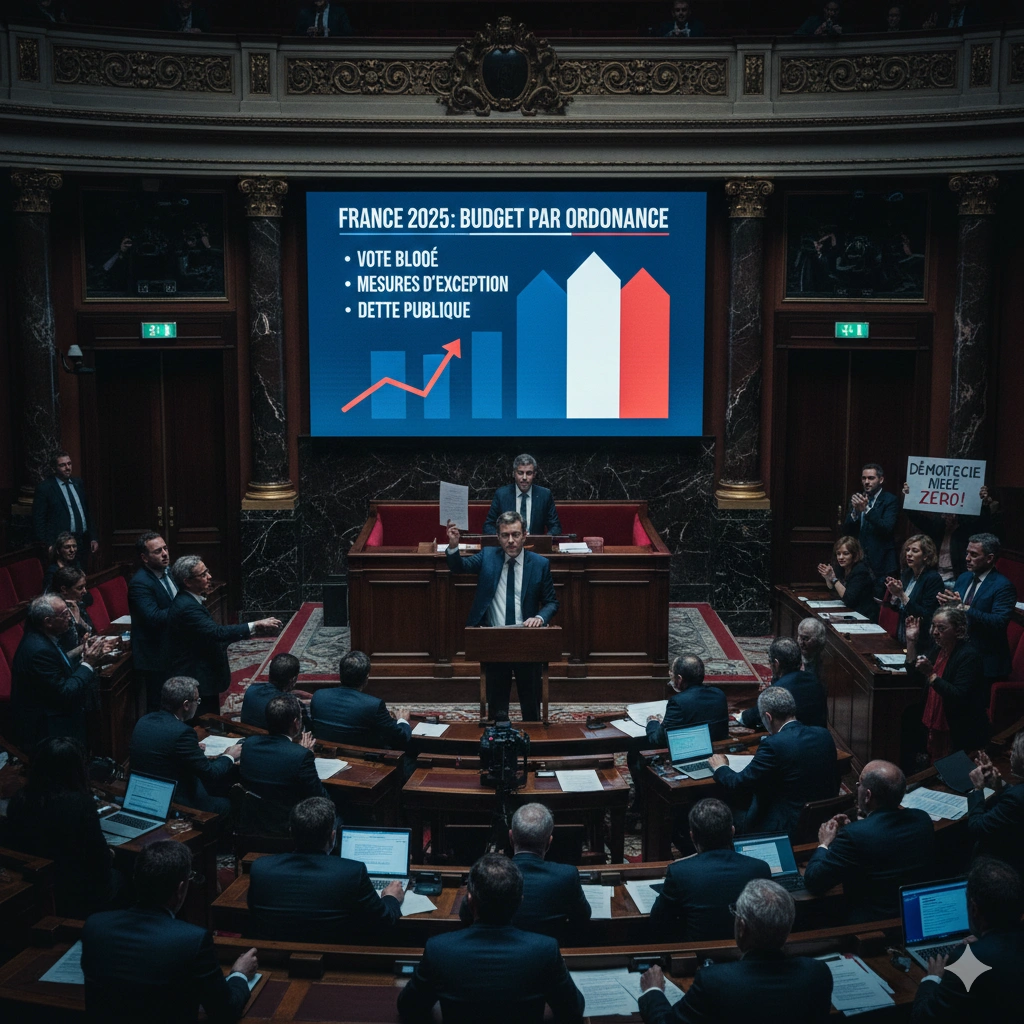
Political Deadlock and Budget Challenges
The emergency measure comes amid intense parliamentary fragmentation and repeated no-confidence threats against Lecornu’s government. By pushing through a Social Security budget with support from Socialist lawmakers, the prime minister achieved partial success, easing tension around pensions and welfare spending.
Despite these short-term victories, the fiscal outlook remains fragile, as competing factions continue to resist compromise. The emergency budget allows essential operations to continue, including healthcare, education, and defense, but any prolonged political deadlock could escalate into a full budget crisis, risking economic instability and public dissatisfaction. Analysts note that failure to reach consensus might even trigger early elections, a scenario the far right could leverage ahead of the 2027 electoral cycle.
Debt Pressures and Economic Implications
France’s reliance on a temporary budget rollover underscores structural fiscal pressures. With public debt above 115% of GDP and annual deficits exceeding 5%, interest payments are consuming an increasing share of government revenue. This limits the capacity for new investments, particularly in innovation and infrastructure initiatives under the France 2030 strategy.
Economists warn that without reform or consensus on the 2026 budget, France may face higher borrowing costs, reduced investor confidence, and constrained social spending. The emergency budget law provides short-term relief but does not address these long-term fiscal risks, making negotiations in early 2026 critical for sustainable public finance.
What the Emergency Budget Law Means for Citizens
For ordinary citizens, the France emergency budget law ensures continuity of public services, including healthcare, pensions, and welfare benefits, avoiding a government shutdown during the transition period. Social programs funded under the rolled-over 2025 allocations remain operational, providing temporary security for vulnerable populations.
However, prolonged political disagreement could delay future social spending, infrastructure projects, and strategic investments, impacting economic growth and public confidence. Experts suggest that citizens should monitor government announcements for potential policy changes and fiscal adjustments throughout the early months of 2026.
Risks and Opportunities Ahead for France
While the emergency budget law provides short-term stability, the prolonged political deadlock presents both risks and potential opportunities. If negotiations drag on, France could face downgrades in its credit rating, higher borrowing costs, and decreased investor confidence. Public services may remain functional under the temporary budget, but delays in approving the full 2026 plan could hinder infrastructure projects, technological investments, and social programs, affecting long-term economic growth.
On the other hand, the current situation gives Prime Minister Sébastien Lecornu a chance to build broader consensus among parliament factions. By engaging in targeted negotiations and prioritizing critical sectors such as healthcare, education, and green energy initiatives under the France 2030 strategy, the government could turn this fiscal impasse into an opportunity to implement more efficient spending reforms. Success in these talks would not only stabilize the economy but also reinforce public trust in the government’s ability to manage fiscal challenges.
Outlook for 2026 Fiscal Negotiations
The emergency budget law buys time for Sébastien Lecornu to negotiate a comprehensive 2026 fiscal plan with parliament. Lawmakers will need to reconcile competing priorities, including debt reduction, welfare funding, and investment in strategic programs. Observers warn that continued gridlock could affect market stability, investment confidence, and France’s ability to achieve its economic growth targets.
The coming months will test Lecornu’s political skill in balancing fiscal responsibility with public expectations, as the government seeks to maintain essential services while navigating deep-seated divisions in parliament.
For more details & sources visit: Agenda Pública
For the latest updates from France, visit our France news page.