
Formula 1 Calendar Crisis has reached a boiling point as elite drivers express serious doubts about the viability of upcoming rounds in the Middle East. Private discussions between Red Bull’s Isack Hadjar and Mercedes’ Kimi Antonelli suggest that the paddock is bracing for a significant reduction in the year’s racing schedule. With regional instability affecting both air travel and ground logistics, the safety of personnel has become the primary concern for team principals and the FIA. This uncertainty arrives just as the sport was gaining momentum following the Australian season opener. The Formula 1 Calendar Crisis is now the most discussed topic among fans and sponsors alike.
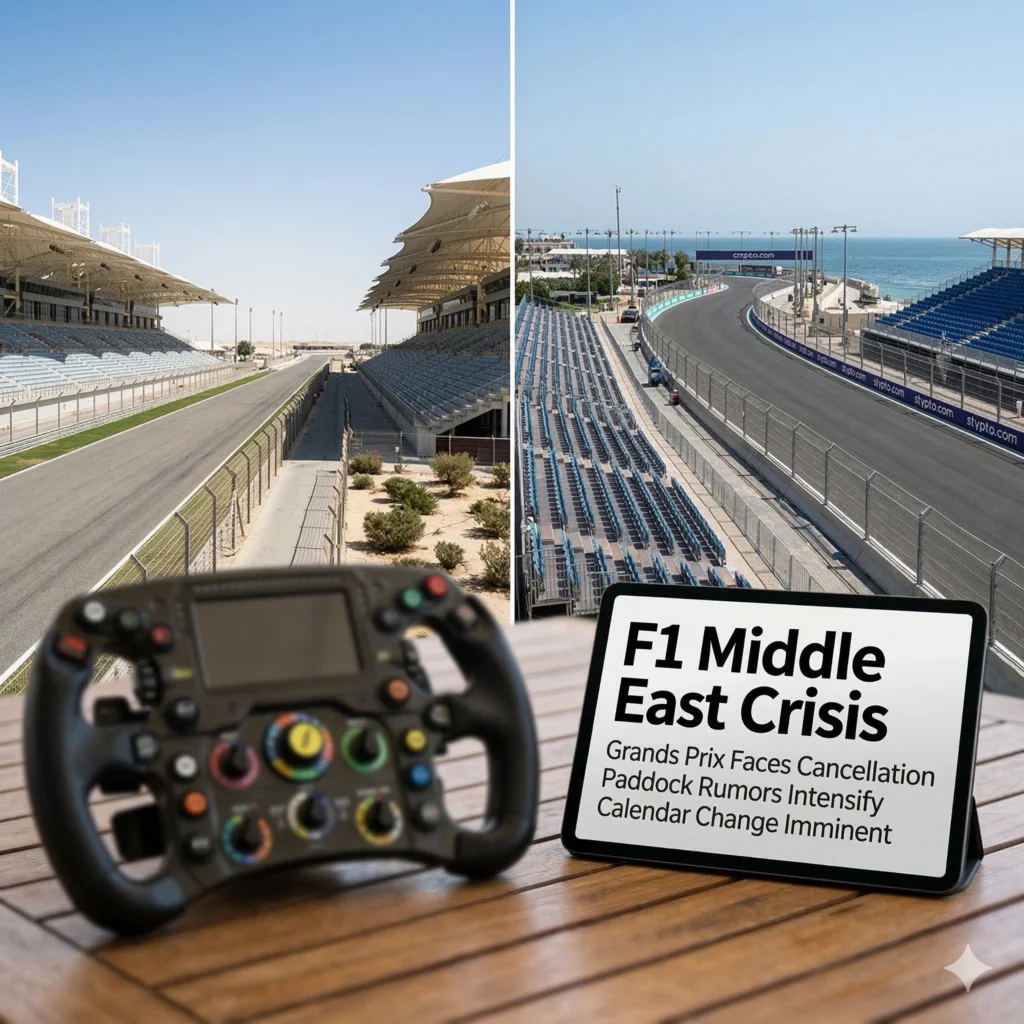
Investigating the Rumors of the Formula 1 Calendar Crisis
The Formula 1 Calendar Crisis gained traction after an overheard conversation during a flight to Shanghai, where two of the sport’s youngest stars discussed the likely removal of the Bahrain and Saudi Arabian rounds. These races, scheduled for mid-April, are crucial for the championship standings but are currently under threat due to the escalating regional conflict. Hadjar and Antonelli’s remarks reflect a growing consensus within the paddock that the risks may soon outweigh the rewards of competing in the Gulf.
Management at Formula 1 has been under immense pressure to provide clarity as the logistical clock ticks toward the Chinese Grand Prix. Moving the massive amount of freight required for a race weekend is a complex operation that must be planned weeks in advance. The Formula 1 Calendar Crisis is complicated by the fact that the traditional shipping routes and flight paths over the Gulf are currently restricted. Without a clear and safe passage, the teams cannot guarantee the arrival of their cars and equipment.
Furthermore, the FIA has a history of prioritizing safety, as seen with the recent postponement of the World Endurance Championship opener in Qatar. This precedent suggests that a similar fate may befall the April F1 rounds if the security situation does not stabilize immediately. The Formula 1 Calendar Crisis is therefore a matter of both logistical feasibility and institutional caution. Fans are anxiously waiting for an official announcement that could reshape the entire 2026 championship.
Logistical Deadlines and the Threat of Race Removal
The Formula 1 Calendar Crisis is defined by a hard deadline that is rapidly approaching for the sport’s logistical partners. Freight for the Middle Eastern legs must be dispatched shortly after the conclusion of the race in China to ensure everything is in place for the Bahrain weekend. If the FIA does not confirm the status of these races by the end of the week, the sheer momentum of the logistics cycle may force a cancellation.
Alternative venues such as Imola and Portimao were initially considered as backup options to maintain the record-breaking 24-race schedule. However, recent reports indicate that no substitute races will be added if Bahrain and Saudi Arabia are removed, leading to a shorter season. This change in strategy during the Formula 1 Calendar Crisis highlights the difficulty of organizing a Grand Prix on short notice in the current global climate.
Teams are also worried about the health and safety of their engineers and mechanics who must travel frequently through the affected region. The Formula 1 Calendar Crisis has already caused significant delays in personnel rotation, with some staff facing long detours to avoid sensitive airspace. This added stress is a major factor in the push for a final decision sooner rather than later. The mental and physical toll on the traveling circus is a hidden cost of the ongoing uncertainty.
Formula 1 Calendar Crisis
The Formula 1 Calendar Crisis is not just a sporting issue but a massive financial challenge for the series and its stakeholders. The Bahrain and Saudi Arabian Grands Prix are among the most lucrative events on the calendar, contributing significantly to the sport’s bottom line. A cancellation would result in a revenue loss estimated at over one hundred million dollars, affecting prize money and team budgets. This economic reality is why the decision-makers are moving so carefully during the Formula 1 Calendar Crisis.
For the drivers, the removal of two high-speed circuits changes the tactical landscape of the championship. High-downforce cars that excel on the street circuit of Jeddah or the abrasive surface of Sakhir will lose their advantage if these rounds are deleted. The Formula 1 Calendar Crisis could inadvertently favor certain teams over others based on their car’s aerodynamic philosophy. This adds a layer of competitive intrigue to what is already a high-stakes administrative battle.
Despite the financial and competitive implications, the FIA has maintained that safety remains the “non-negotiable” priority. The Formula 1 Calendar Crisis has forced the governing body to balance the commercial interests of the sport against the very real risks posed by regional unrest. As the paddock arrives in China, the tension is palpable, with many expecting a definitive statement before the first practice session. The resolution of this crisis will define the narrative of the 2026 season.
Security Concerns and Aerial Defense Realities
The primary driver of the Formula 1 Calendar Crisis is the recent increase in aerial strikes that have impacted infrastructure in the Gulf. For a sport that relies on high-profile, open-air venues, the threat of nearby military activity is a scenario that cannot be ignored. Security experts have been consulting with the FIA to determine the “active threat level” for the upcoming race weekends.
- Airspace Restrictions: Flight paths over the Gulf are frequently changing, making the movement of 2,000+ staff members extremely difficult.
- Infrastructure Risk: Recent strikes near regional hubs have raised questions about the safety of circuit surroundings.
- Emergency Protocols: The FIA must ensure that medical evacuation flights can operate without interference from military air traffic.
- Public Safety: Managing the security of tens of thousands of international fans is a massive undertaking during periods of unrest.
These factors make the Formula 1 Calendar Crisis a multifaceted problem that requires more than just a “yes or no” answer. Each layer of the event—from the drivers on the track to the fans in the grandstands—must be accounted for in the safety plan. The high interception rates of local defense systems provide some comfort, but they do not eliminate the risk of disruption or falling debris. This is the reality that the sport must navigate in 2026.
Financial Consequences for Teams and Promoters
The Formula 1 Calendar Crisis has a direct impact on the commercial agreements between the sport and the local promoters. Contracts for hosting a Grand Prix involve hundreds of millions of dollars in fees, many of which are tied to the successful completion of the event. A cancellation due to “force majeure” triggers complex legal clauses that can take months to resolve. This financial uncertainty is a heavy burden for the smaller teams who rely on consistent prize pool distributions.
Promoters in Bahrain and Saudi Arabia have invested heavily in their facilities to ensure they meet the highest global standards. For them, the Formula 1 Calendar Crisis is a disappointing setback that affects tourism and national branding efforts. The loss of the global television audience—which numbers in the hundreds of millions—is a significant blow to their long-term visibility. Both nations remain committed to the sport but are at the mercy of the wider regional climate.
For the teams, the Formula 1 Calendar Crisis means a potential reduction in sponsorship value. Partners who pay for 24 races of exposure may seek rebates or alternative marketing activations if the season is shortened to 22 rounds. This requires the marketing departments of teams like Ferrari, McLaren, and Red Bull to work overtime to keep their sponsors satisfied. The business side of F1 is just as fast-moving and high-pressure as the on-track action.
Impact on the 2026 Championship Standings
The potential removal of two races mid-season could have a profound effect on the hunt for the World Championship. In a close battle, every point matters, and losing two opportunities to score can change the trajectory of a driver’s year. The Formula 1 Calendar Crisis means that the season could become a sprint rather than a marathon, rewarding those who are fast right out of the gate.
Young drivers like Kimi Antonelli and Isack Hadjar, who are looking to establish themselves, lose valuable seat time if the races are canceled. These Middle Eastern tracks are known for being physically and technically demanding, providing a perfect stage for rookies to prove their worth. The Formula 1 Calendar Crisis is therefore particularly detrimental to the next generation of talent. Every lap of experience is vital for those in their debut season.
Established veterans like Max Verstappen and Lewis Hamilton might view a shorter calendar differently, perhaps welcoming the reduced travel load but regretting the loss of favorite circuits. Regardless of the driver’s perspective, the Formula 1 Calendar Crisis creates a sense of “what if” that will linger throughout the year. If the title is decided by a handful of points, the missing races in Bahrain and Saudi Arabia will be remembered as the ultimate turning point.
Comparing F1 to Other International Sporting Responses
The Formula 1 Calendar Crisis is being handled in a way that mirrors other major international sports facing similar challenges. The ATP and WTA tennis tours, as well as various golf associations, have all had to make tough calls on regional events in recent years. F1, however, is unique due to the massive scale of its traveling infrastructure. You cannot simply “move” a Grand Prix to a different city as easily as a tennis tournament.
The FIA’s coordination with other motorsport bodies, like the WEC, shows a unified front in the face of the Formula 1 Calendar Crisis. By sharing intelligence and logistical data, these organizations can make more informed decisions about the safety of their personnel. This collective approach is essential in a globalized world where sports are increasingly affected by geopolitical shifts. The Formula 1 Calendar Crisis is a test case for how modern sports can adapt to a volatile environment.
Looking back at previous instances of race cancellations, such as during the 2020 pandemic, the sport has shown a remarkable ability to pivot. While no replacement races are currently planned, the lessons learned from past disruptions are being used to manage the current Formula 1 Calendar Crisis. The focus is on clear communication and the preservation of the sport’s long-term integrity. The goal is to return to a full calendar as soon as it is safe to do so.
The Role of Driver Influence in Calendar Decisions
The overheard chat between Hadjar and Antonelli highlights the significant influence that drivers now have on the sport’s direction. In the modern era, drivers are more than just athletes; they are powerful brand ambassadors whose opinions can sway public and corporate perception. If the drivers are openly questioning the safety of a race, it becomes very difficult for the FIA to ignore those concerns. The Formula 1 Calendar Crisis has given the grid a unified voice.
The Grand Prix Drivers’ Association (GPDA) has been active behind the scenes, meeting with F1 CEO Stefano Domenicali to discuss the Formula 1 Calendar Crisis. These discussions focus on the specific security protocols in place and the contingency plans for any potential incidents. The drivers want to race, but they also want to ensure that their teams and the thousands of fans in attendance are not being put at unnecessary risk.
This driver-led pressure is a relatively new phenomenon in the sport’s history. In decades past, drivers were often expected to race regardless of the political or security situation. Today, the Formula 1 Calendar Crisis shows that the sport has evolved to prioritize the well-being of its participants. This shift toward a more human-centric approach is a positive development for the long-term health of Formula 1. The drivers are no longer just passengers in the decision-making process.
Alternative Scenarios: Postponement vs. Cancellation
One of the options being debated during the Formula 1 Calendar Crisis is the possibility of postponing the races until later in the year rather than canceling them outright. However, the 2026 schedule is already so densely packed that finding a new slot for two Middle Eastern rounds is nearly impossible. The logistics of adding two flyaway races to the “triple-header” sections of the season would be a nightmare for the teams.
Postponement also requires the local promoters to maintain their facilities and staff in a state of readiness for an indefinite period. This is often more expensive and logistically challenging than a clean cancellation. The Formula 1 Calendar Crisis is therefore leaning toward a full removal of the Bahrain and Saudi Arabian dates from the 2026 record. This allows teams to focus their resources on the remaining rounds without the distraction of “TBC” dates.
If the races are permanently removed, the season will conclude earlier than planned, giving teams a longer winter break to prepare for 2027. While this might be a small silver lining, it does not compensate for the lost revenue and sporting opportunities. The Formula 1 Calendar Crisis remains a predominantly negative situation that the sport is working hard to resolve. The priority is to provide a definitive answer so that everyone can move forward.
Public Reaction and the Sentiment of Global Fans
Fans around the world have had a mixed reaction to the unfolding Formula 1 Calendar Crisis. Many supporters in the Middle East are understandably disappointed at the prospect of losing their local Grand Prix. For others, the safety concerns are paramount, and they support the FIA’s cautious approach. The Formula 1 Calendar Crisis has sparked a global debate on social media about the intersection of sport and politics.
The transparency of the FIA and Formula 1 Management during this time is being scrutinized. Fans are calling for regular updates and a clear explanation of the criteria used to make the final decision. The Formula 1 Calendar Crisis is a reminder that the sport belongs to a global community that values integrity and safety. Keeping the fans informed is the best way to maintain their trust during this period of uncertainty.
Ticket holders for the Bahrain and Saudi Arabian races are currently in a state of limbo, waiting for news on refunds or rescheduling. The Formula 1 Calendar Crisis has a direct impact on the travel plans and finances of thousands of dedicated fans. Dealing with these consumer concerns is a massive task for the local organizers, who are working closely with F1 to provide clear guidance. The goal is to ensure that fans are treated fairly regardless of the final outcome.
Future Projections for Middle Eastern Races
Despite the current Formula 1 Calendar Crisis, the long-term future of racing in the Middle East remains strong. Both Bahrain and Saudi Arabia have long-term contracts with the sport and have proven themselves to be excellent hosts. Once the regional situation stabilizes, it is expected that these races will return to their prominent positions at the start of the season. The Formula 1 Calendar Crisis is seen as a temporary interruption rather than a permanent exit.
The sport may use this period to re-evaluate how it handles regional unrest in the future. This could lead to more robust “force majeure” clauses in contracts and the development of a more flexible “reserve circuit” system. The lessons of the Formula 1 Calendar Crisis will be used to make the sport more resilient to global shocks. The 2026 season will be remembered as a year of adaptation and tough choices.
As the paddock prepares for the Chinese Grand Prix, the focus remains on the immediate future. The resolution of the Formula 1 Calendar Crisis will set the tone for the rest of the year. Whether the season continues with 22 or 24 races, the competition on the track will be as fierce as ever. The drivers, teams, and fans are all ready for the green light, wherever it may be.
Conclusion: Adapting to a Changing Global Landscape
The Formula 1 Calendar Crisis is a complex challenge that reflects the world we live in today. By prioritizing safety and logistical stability, the FIA is ensuring the long-term viability of the sport. While the potential loss of two iconic races is unfortunate, the resilience of the Formula 1 community is unmatched. The 2026 season will continue to provide world-class entertainment, even in the face of significant administrative hurdles.
As the situation evolves, the sport’s ability to communicate clearly and act decisively will be key. The Formula 1 Calendar Crisis has shown that even the most prestigious global series must be prepared for the unexpected. With the support of its drivers, teams, and fans, Formula 1 will navigate this period of uncertainty and emerge stronger. The race for the championship is far from over, and every turn brings a new challenge.
For more details & sources visit: Turkiye Today
Read more about Behrain news on 360 News Orbit-Behrain.